Indoor Air Pollution - the Killer in the Kitchen

To mark World Rural Women's Day 2004, the World Health Organisation (WHO) and the UN Development Programme (UNDP) issued a global statement calling for the world to wake up to this "killer in the kitchen".

Cowan Coventry, ITDGPractical Action chief executive, and Kurt Hoffman, director of the Shell Foundation, ask whether there is the political will to match the solutions being implemented across the developing world.

Children in Nepal tending to their kitchen fire

It's responsible for killing more people than malaria and nearly as many as unsafe water and poor sanitation. Over 1.6 million people die each year and two billion are at risk.

What is it? It's the biggest killer you've never heard of - it's Indoor Air Pollution (IAP). That's smoke to you. Not the type that wafts from cigarettes, but the thick acrid variety that rises from burning wood on open-cooking stoves and fires inside millions of homes across the developing world.

To mark World Rural Women's Day 2004, the World Health Organisation (WHO) issued a global statement calling for the world to wake up to this "killer in the kitchen".

And not before time. Each year smoke from cooking in poorly ventilated homes claims the lives of 1.6 million people in poor countries - that's a life lost every 20 seconds (WHO World Health Report 2002). Because poor rural women cannot afford to cook with clean fuels such as gas or kerosene, they burn what they can find. In poor rural regions of the world this means wood, animal dung and crop waste.

The smoke from these fires fills homes with a noxious cocktail of particles and chemicals. These particles bypass the body's defences and double the risk of respiratory diseases such as bronchitis and pneumonia (WHO). But while death from diseases such as Aids and malaria make sobering headlines, Indoor Air Pollution remains a silent and unreported killer.

For years, the excuse for not dealing with this killer has been there is not enough evidence. This is no longer the case. Just as it took years of medical research to prove smoking kills, the same is true of indoor air pollution.

Day in day out, and for hours at a time, women and their children are subjected to levels of smoke in their homes often 100 times above agreed international safety standards. But while we in the West spend millions of dollars on trying to reduce relatively small amounts of exposure to pollution in our cities, there is precious little being spent on reducing massive levels of pollution in poor women's homes.

Of course, it's difficult to imagine squatting beside an open fire without ventilation in the corner of a small home. If the smoke doesn't make your eyes red with tears and irritation, you're likely to suffer a coughing fit to rid your lungs of harmful smoke particles.

So why do these women choose to cook inside at all? For very practical reasons many poor people choose not to cook outside. In the dry season it's too hot, in the rainy season it's too wet and when it's windy the wind blows the heat away from the pot wasting a great deal of fuel and taking an age for the food to cook. In addition, rural families generally eat their main meal during the evening rather than at midday since they are working in the fields or away from the home.

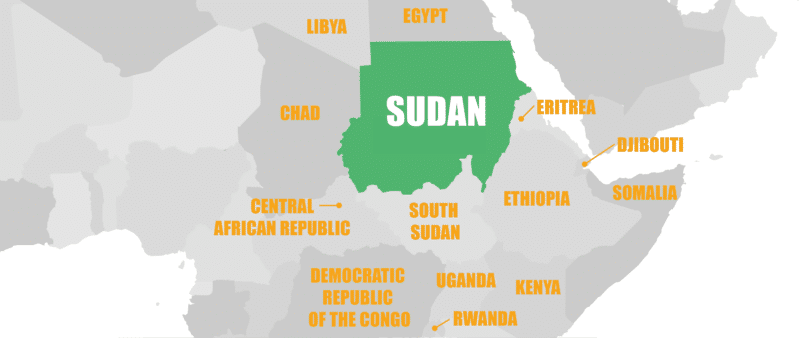
Above all, it is poverty that condemns more than a third of humanity - 2.4 billion people - to cook on wood, animal dung and crop waste. They simply cannot afford to buy cleaner fuels. The minimum of two to three mornings a week spent by many rural women collecting fuel may not cost them any money, but this perpetual toil casts a long shadow over their lives. It denies them the chance to secure, for example, paid work that would lift their family's income and standard of living. And in the crisis-stricken Darfur region of Sudan, the chore has taken on a sinister dimension following the rape, kidnap, beatings and murder of women leaving refugee camps to search for wood.

That said, breakthroughs for ending Indoor Air Pollution are already in hand. Access to cleaner fuel and stoves, improved ventilation and health education can all work in tandem - even among the very poorest. And there's a good chance that if properly set up, these life-saving solutions could get to the people who need them most - not via charity but in a financially self-sustaining way.

But this will not happen until concerned parties come together. That's why the Shell Foundation and ITDGPractical Action, along with other organisations, are jointly finding ways for the poor to access cleaner stoves and cleaner fuels across the developing world. This means producing, marketing and selling stoves that are both affordable and desirable to the two billion plus people at risk from IAP.

But this is just the beginning. We need the same attention paid to this "killer in the kitchen" as is paid to other major killers such as malaria. We have solutions at hand. What we now need is the political will to act and the resources to scale up already successful solutions.

back to top

WHO statement

Joint statement WHO/UNDP/15
14 October 2004

Indoor Air Pollution - the killer in the kitchen

Geneva - The World Health Organization (WHO) and the United Nations Development Programme (UNDP) are marking World Rural Women's Day on 15 October 2004 by drawing attention to Indoor Air Pollution - one of the major causes of death and disease in the world's poorest countries. While the millions of deaths from well-known communicable diseases often make headlines, indoor air pollution remains a silent and unreported killer. Rural women and children are the most at risk.

Thick acrid smoke rising from stoves and fires inside homes is associated with around 1.6 million deaths per year in developing countries - that's one life lost every 20 seconds to the killer in the kitchen.

Nearly half of the world continues to cook with solid fuels such as dung, wood, agricultural residues and coal. Smoke from burning these fuels gives off a poisonous cocktail of particles and chemicals that bypass the body's defences and more than doubles the risk of respiratory illnesses such as bronchitis and pneumonia.

The indoor concentration of health-damaging pollutants from a typical wood-fired cooking stove creates carbon monoxide and other noxious fumes at anywhere between seven and 500 times over the allowable limits (see table at end of Statement).

Day in day out, and for hours at a time, rural women and their children in particular are subjected to levels of smoke in their homes that far exceed international safety standards. The World Energy Assessment estimates that the amount of smoke from these fires is the equivalent of consuming two packs of cigarettes a day - and yet, these families are faced with what amounts to a non-choice - not cooking using these fuels, or not eating.

Rural women and their families also pay a high economic price for keeping the fire burning. Up to three mornings a week are spent collecting fuel such as wood. This perpetual toil denies poor rural women the chance to be more productive through paid work that would raise their family's income, improve the standard of living and enhance their nutritional and health status. And in the crisis-stricken Darfur region of Sudan, the chore has taken on a perilous dimension following the rape, kidnap, beatings and murder of women leaving refugee camps to search for wood.

So what can be done to put an end to indoor air pollution? Finding cleaner solutions is the main challenge. Gases, liquids and electricity are the main alternatives. Although today these energy sources derive mainly from fossil fuels, this needs not be the case in the future when renewable energies may ease the pressure on natural ecosystems. Other steps include the recognition and action by governments, the aid community, civil society and other key actors that indoor smoke is a huge blight on the lives of rural women and their children.

Two years ago, at the World Summit on Sustainable Development (WSSD) in Johannesburg the Global Partnership for Clean Indoor Air was launched with the backing of WHO and the international community. As such, a growing network of experts and organizations are responding to the challenge by finding innovative and affordable solutions that deploy cleaner stoves, fuels and smoke hoods. Their implementation will require the development of viable and sustainable markets, as created through the Liquefied Petroleum Gas (LPG) Rural Energy Challenge for LPG delivery and consumption, a public-private partnership including UNDP, also established at the WSSD. .But this is just the beginning. WHO recently published the first-ever comprehensive Atlas of Children's Environmental Health as a means of drawing attention to and increasing support for reducing indoor air pollution (and other environmental health issues). We need the same attention paid to this "killer in the kitchen" as is paid to other major killers.


Note: using 1 Kg of wood/hour in 15 ACH 40 m3 kitchens emits, among other pollutants, the following:

Pollutant Emission (mg/m3) Allowable standard (mg/m3)
Carbon Monoxide 150 10
Particles 3.3 0.1
Benzene 0.8 0.002
1,3-Butadiene 0.002 0.0003
Formaldehyde 0.7 0.1

Source: Based on the UNDP/DESA/WEC World Energy Assessment


For further information on this statement please contact Nada Osseiran, Technical Officer, Sustainable Development and Healthy Environments, Tel: +41 22 791 4475, email: osseirann@who.int or Eva Rehfuess, Technical Officer, Indoor Air Pollution, Tel: +41 22 791 4979, email: rehfuesse@who.int.