ELMECC

Powering Kenya’s shift to clean cooking

Across Kenya, millions of households still rely on firewood, charcoal or kerosene for cooking.

These fuels are often the most accessible option, but they come at a high cost to health, the environment and household incomes. The burden falls hardest on women, girls and people with disabilities, especially in low-income areas.

Kenya has committed to universal access to clean cooking by 2028. Yet 68.5% of households, around 9.1 million, still depend on polluting fuels. Closing this gap means more than introducing new technologies. It requires stronger, more reliable supply chains that make clean cooking solutions available, affordable and trusted.

The Enhancement of local manufacturing and energy crop cultivation for clean cooking supply chains in Kenya (ELMECC) project works across five counties to strengthen those supply chains. By supporting local manufacturers, fuel producers, businesses and public institutions, the project helps increase the availability of high-quality clean cooking appliances and cleaner fuels. In doing so, it supports a more inclusive market that creates green jobs and attracts investment, in line with Kenya’s clean energy and development priorities.

An orange calendar icon with a black outline featuring a square marking a day.
Dates

October 2025 – December 2026

A globe with a circle.
Country

Kenya

A lightning bolt on a grey background, representing the practical action we take.
Themes

Energy

The reality of cooking across Kenya

ELMECC operates in Nairobi, Nakuru, Kisumu, Kilifi and Kajiado—counties that together reflect the full clean cooking value chain, from production and trade to public institutions and end users. They also reflect the diversity of Kenya’s cooking challenge, spanning large urban markets as well as rural and peri-urban communities where daily decisions are shaped by cost, availability and practical needs.

For many households, polluting fuels like firewood, charcoal and kerosene remain the default, contributing to poor health, deforestation and climate emissions. Cleaner alternatives do exist, but they are often unaffordable, unreliable or not well understood.

The disproportionate burden faced by women and girls is linked to exposure to smoke and the time they have to spend collecting fuel. They also do not have equative chances of participating in manufacturing, distribution and sales of fuels, hindering their potential chances of economic independence.

At the same time, market systems are still weak. Quality standards are inconsistent, access to finance is limited and producers struggle to connect with buyers.

To tackle these issues, we are strengthening local manufacturing, supporting communities to work with agro-energy crops for biofuel production, improving fuel supply, and building stronger market connections. This work is helping drive lasting change for communities and the environment.

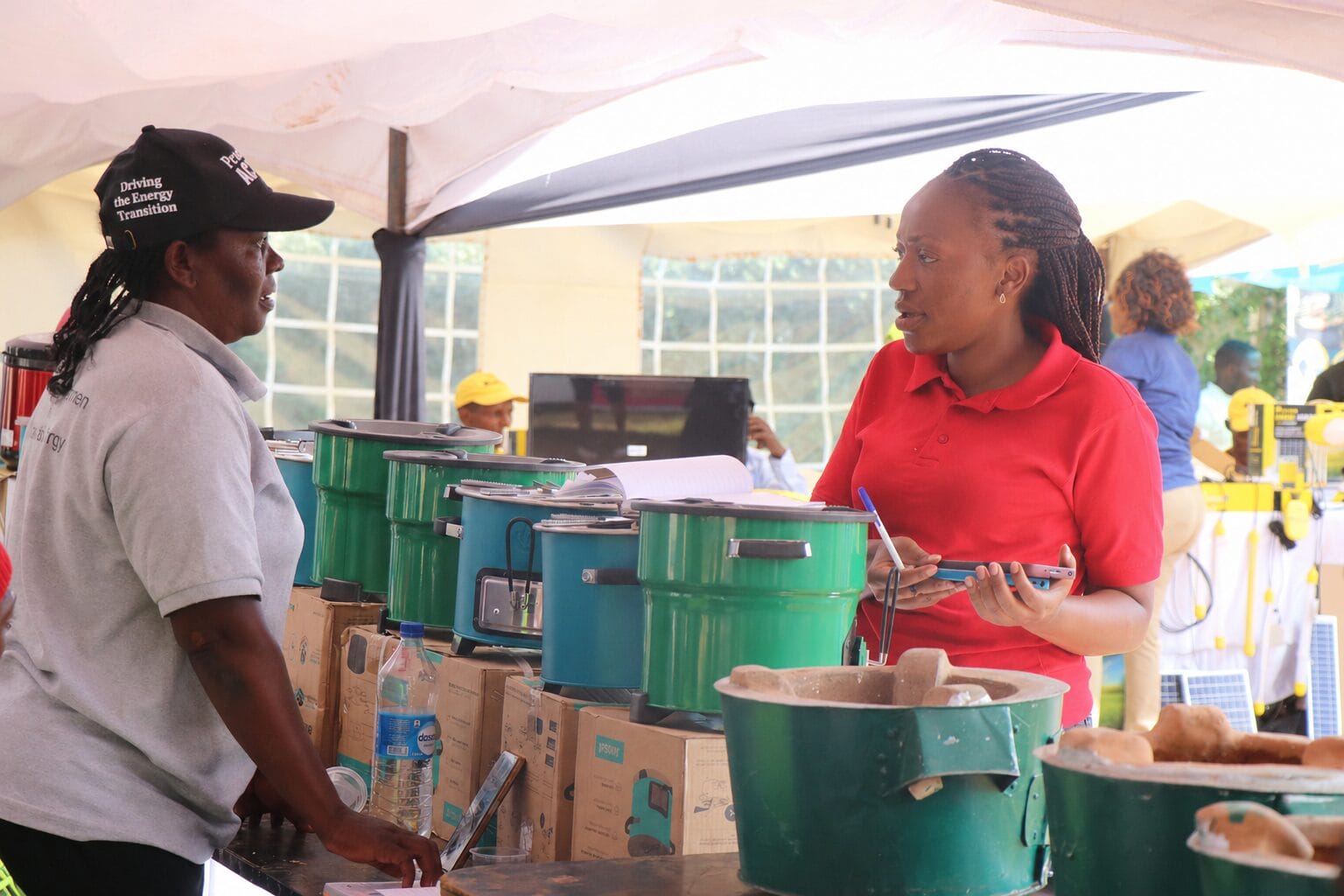
Two women talk at a stand displaying green and blue cooking stoves. One woman wears a red shirt and holds a notebook, while the other wears a grey shirt and black hat. Other people and equipment are visible in the background.

Project overview

Full title: Enhancement of local manufacturing and energy crop cultivation for clean cooking supply chains in Kenya (ELMECC)

Dates: October 2025-December 2026

Location: Keya (Nairobi, Nakuru, Kisumu, Kilifi and Kajiado counties)

Our role: Practical Action leads the implementing consortium. We focus on project coordination, market development, capacity strengthening and leadership on gender equality, disability and social inclusion. Building on our years of experience in systems change, clean energy and collaboration with government, communities and the private sector in Kenya, we work with market actors to enable lasting change.

Participants: Local manufacturers of clean cooking appliances, energy crop producers, retailers, distributors, public institutions and households, with a focus on women, youth and persons with disabilities.

Project budget: £820,000

Implementing partners: Clean Cooking Association of Kenya and Gamos East Africa

Funded by: UK PACT (Partnering for Accelerated Climate Transitions)

How the clean cooking market comes together

ELMECC supports the Ministry of Energy and Petroleum to implement the Kenya National Cooking Transition Strategy and related policies. It focuses on strengthening the systems that make clean cooking possible at scale.

The project works across the value chain. It builds evidence through market and baseline studies, helping to better understand manufacturers, fuel producers, businesses and end-user demand. It strengthens supply by supporting manufacturers and energy crop producers to improve product quality, meet standards and grow their businesses. This includes training, mentorship, product testing and pilot demonstration sites for fuel production.

At the same time, it connects markets. Businesses receive support to access finance, link with buyers and distributors, and explore opportunities such as carbon markets. Behaviour change efforts help build awareness, trust and demand for cleaner cooking solutions among end-users.

Partnerships are central to this work. Practical Action leads on market development, capacity building and inclusion; the Clean Cooking Association of Kenya provides sector leadership, know-how on standards and networks; and Gamos East Africa contributes research and evidence. Together, we support a more coordinated, effective and inclusive clean cooking market.

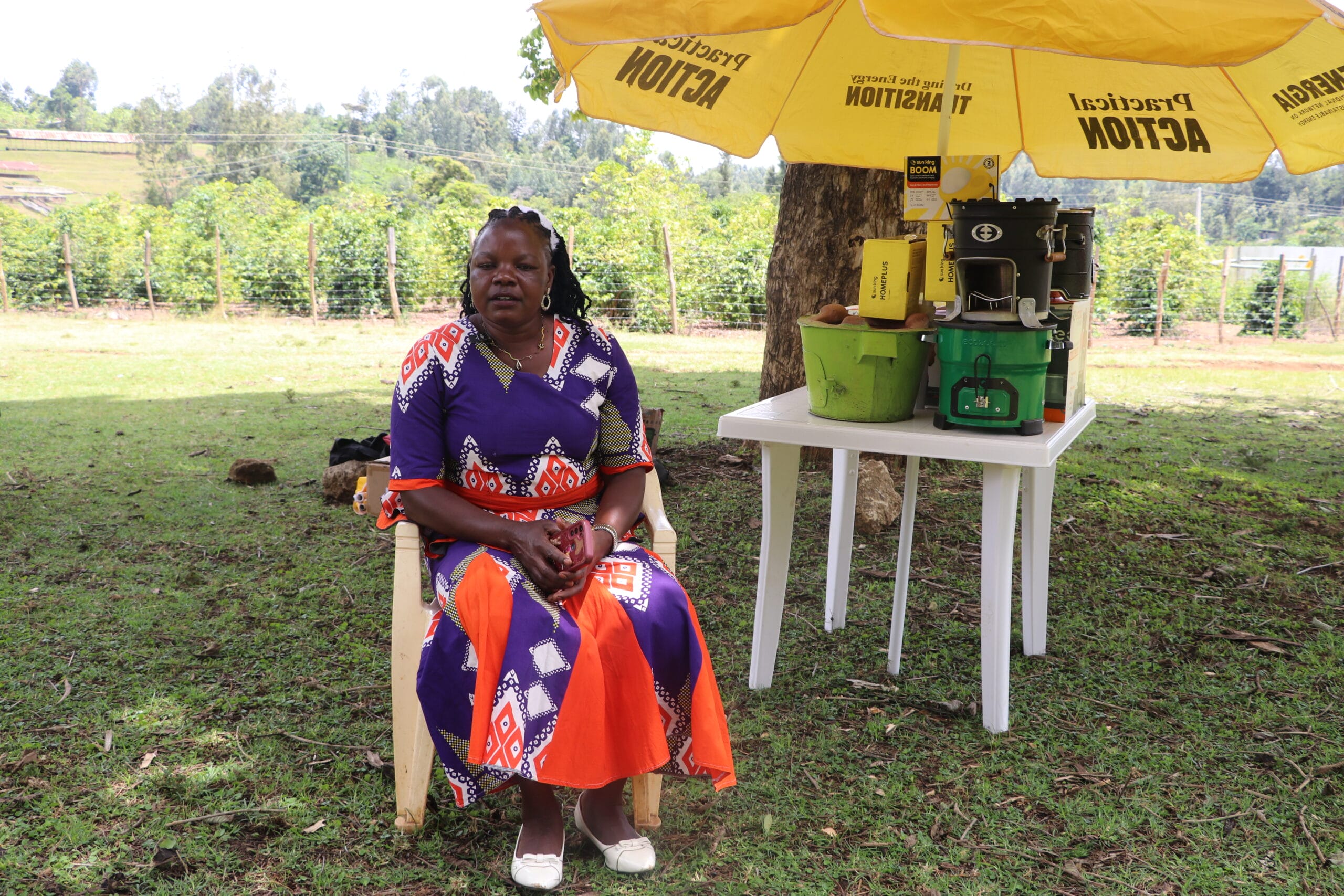
A woman in a colourful dress sits on a plastic chair outdoors under a yellow umbrella. Next to her is a white table with a green bucket, a juicer, and other items. Trees and greenery are visible in the background.

By the end of the project, we aim to:

Strengthen clean cooking supply

  • Support the scaling of local manufacturing of clean cooking appliances
  • Expand sustainable energy crop cultivation for cleaner fuels
  • Improve product quality, testing, labelling and business capacity

Connect markets more effectively

  • Strengthen links between producers, sellers and buyers across the value chain
  • Improve access to finance and market partnerships for clean cooking businesses
  • Increase sales, incomes and job opportunities across the sector

Increase inclusive participation

  • Engage 600 participants from marginalised groups across the value chain
  • Increase meaningful participation by women, youth and persons with disabilities

Strengthen evidence and decision-making

  • Produce 14 knowledge products to inform decision-making across the sector

With this, we aim to ensure that more households cook with cleaner, affordable energy, while supporting more inclusive economic opportunities across the value chain and reducing reliance on polluting fuels, with clear benefits for health, forests and the climate.

Looking ahead

ELMECC is already testing practical ways to strengthen clean cooking supply chains. The next step is to take what is working further and expand on it.

This includes increasing support to more manufacturers, fuel producers and businesses, and moving from pilot energy crop initiatives to larger, more reliable fuel supply systems. It also means helping businesses turn early access to finance and carbon market opportunities into sustained growth.

There is a clear opportunity to grow demand, including through schools, public institutions and county procurement, while supporting counties to adopt proven approaches to planning, coordination and implementation.

Extending this model to more of Kenya’s counties could help close persistent gaps in clean cooking supply and access, while building stronger, more inclusive markets across Kenya.

If you are interested in supporting this work or learning more, we would like to hear from you.

Work like this depends on your support

Help us work with communities to tackle some of the world’s toughest problems.

Donate securely