Read the full story
More and more Kenyans are looking to buy food that is nutritious, affordable and safe, as concerns about how food is grown increase. This could create new market opportunities for smallholder farmers, but unpredictable rainfall, pests, diseases and rising farm costs are making it harder to produce consistent and profitable food.
Agroecology offers a way of farming that works with nature, finding opportunities in the interactions of crops, local plants, animals and people. It provides a sustainable alternative to intensive agriculture, with the potential to transform the lives of millions of families. It can enable smallholder farmers to achieve a decent standard of living, whilst protecting the environment and building natural resources.
Agroecological practices such as composting, mulching, growing different crops and conserving water help farmers improve their soils, reduce reliance on costly inputs, and cope better with drought and other climate change impacts. Yet producing food agroecologically does not necessarily mean farmers can access better markets. Buyers don’t always know how food has been grown, and conventional certification can be too expensive for smallholder farmers.
The Kilimohai Agroecology for Schools project in Kenya’s Murang’a county is testing whether a more affordable, farmer-led way of verifying agroecological produce, combined with stronger links between farmers and buyers, can help change this. The project will help farmer groups work towards the Kilimohai Blue Mark certification while planning production around the needs of schools and other buyers.
Practical Action is working with farmers, buyers and partners to test arrangements that could give farmers more reliable markets and incomes while helping schools source more nutritious food. If successful, the aim is for this approach to continue beyond the project in Murang’a and be adapted in other counties.

August 2025 to February 2028

Kenya
Food systems
Murang’a is an important food-producing county in Central Kenya, where many families depend on small farms for food and income. Farmers grow vegetables, fruits, legumes and other crops for local markets and nearby towns. Some farmer groups are already using agroecological practices and working together to produce and sell their food.
The county has also taken an early lead on agroecology. Murang’a was the first county in Kenya to adopt a policy and law specifically focused on agroecology. The county is putting this into practice by including agroecology in its agricultural plans, supporting farmers to adopt agroecological practices and creating market spaces where agroecological produce can be sold.
Schools offer another potential market. School meal programmes create a demand for food, which provides an opportunity for local farmers to supply them. But accessing this market requires farmer groups to produce enough food consistently, meet quality and price requirements and deliver when schools need it.
Murang’a therefore provides a useful setting to test whether affordable verification, better organised farmer supply and clearer buying arrangements with schools and other buyers can help create more reliable markets for agroecological food.
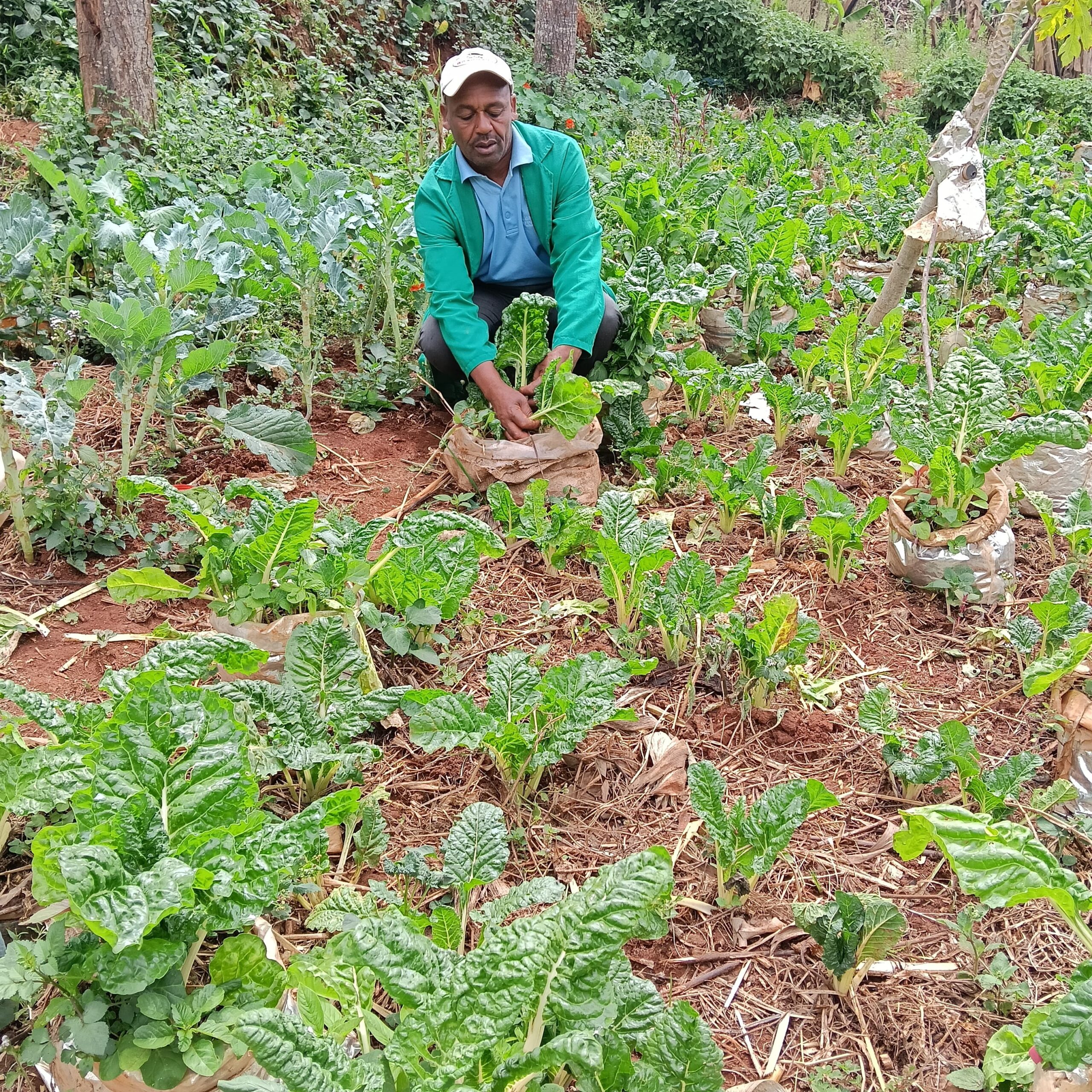
Title: Developing Sustainable Kilimohai Market Systems for Agroecological School Meals and Mass Markets, also known as Kilimohai Agroecology for Schools (KA4S)
Dates: August 2025 to February 2028
Location: Murang’a County, Kenya
Our role: Practical Action is part of a consortium with the Kenya Organic Agriculture Network (KOAN) and FiBL, working with the Murang’a County Government. We focus on improving how farmer groups and buyers work together, including practical issues such as volumes, quality and delivery. We also contribute to market research, assessment tools and project learning.
Participants: 800 smallholder farmers will participate directly. 10,000 school-going children will benefit from safe and nutritious, meals provided by the organised farmer groups.
Project Budget: 300,000 USD
Funded by: Rockefeller Foundation
Implementing partners: The Kenya Organic Agriculture Network (KOAN) and FiBL
Through the project, we will test whether affordable farmer-led verification, combined with better connections between farmers and buyers, can create more reliable markets for smallholder farmers in Murang’a.
Farmer groups will use Participatory Guarantee Systems, in which farmers check each other’s farms against agreed agroecological standards and work towards the Kilimohai Blue Mark, an East African certification and verification system for organic and agroecological agriculture. This provides a locally managed alternative to conventional certification, while giving schools and other buyers a clearer way to identify verified agroecological produce.
Farmers will strengthen practices that protect soil and water, increase crop diversity and reduce dependence on costly farm inputs, like synthetic fertilizers and pesticides. At the same time, farmer groups will work with schools and other buyers to understand their requirements for quantity, quality, price and delivery, and use this information to plan production and supply.
The project will also support women, young people and people with disabilities to participate in farmer groups, decision-making and market opportunities.
By testing these arrangements together, the project will assess whether they can improve farmers’ access to reliable buyers and incomes while helping schools source more nutritious food. It will also identify which approaches farmers, buyers and county institutions can continue after project support ends.
Farmers will combine their own farming knowledge with agroecological practices to assess and improve their farms. The project will also assess which certification, buying and supply arrangements work well for farmers, schools and other buyers so they continue using them and so the right approach can be adapted elsewhere.

A key priority is to build on what works in Murang’a and identify where further support, partnerships and investment could help sustain or expand it.
There are two areas where continued collaboration could make the greatest difference:
Future funding and partnerships could help strengthen what works in Murang’a and support its adaptation elsewhere, creating opportunities for more farmers to reach reliable markets and more schools to source verified agroecological food.
To explore partnership opportunities, contact us at:
Help us work with communities to tackle some of the world’s toughest problems.