Planning for

Kenya’s Clean Energy Future

The shift to clean energy is not only about technology; it is also about who gets included in the process.

Too often, women, people with disabilities and other groups have little influence over how energy decisions are made. Good, inclusive planning helps bring these perspectives into decision-making from the start.

Kenya requires its 47 counties to prepare ten-year County Energy Plans based on local data, community priorities and national policy. These plans help them understand local energy resources, identify where access is low and guide investment in the most important projects. They also bring in groups that are often left out and ensure local priorities shape the integrated national energy plan.

But in reality, many counties are working without the tools they need. Reliable data and technical capacity are limited, and funding is hard to secure. When planning is weak, energy investments become fragmented and inefficient, coordination breaks down and the people who need support most are often the ones left behind.

The Partnership for Advanced County Energy Planning in Kenya (PACE) project is responding to this gap by working directly with county governments to strengthen how energy planning is done. The focus is simple: help counties make informed decisions that expand access to clean, affordable energy, support cleaner cooking, create green jobs and direct investment where it is needed the most.

This builds on Practical Action’s experience of supporting 18 counties to develop energy plans and training 43 more in energy planning. By refining the process, we have reduced the time needed to develop a plan from two years to eight months, without compromising on quality, making it easier for counties to plan effectively and at lower cost.

An orange calendar icon with a black outline featuring a square marking a day.
Dates

July 2025 – March 2027

A globe with a circle.
Country

Kenya

A lightning bolt on a grey background, representing the practical action we take.
Themes

Energy access

Where clean energy is still out of reach

Energy access shapes daily life everywhere and Siaya, Homa Bay, Tharaka Nithi, Murang’a and Kajiado counties in Kenya are no exception. It shapes how families cook, how clinics store medicines, how schools function, how water reaches farms and how businesses grow. For many households in these counties, clean energy is still out of reach.

Around one in four Kenyans do not have access to electricity, and more than 69% of households still rely on traditional biomass for cooking. To meet national targets, 5.1 million more households need to be connected to electricity, and 65.6% of the population needs to transition away from biomass cooking by 2030.

But access is only part of the story. County energy teams often work with incomplete data, limited staff and weak coordination between institutions. At the same time, the needs of women, youth, people with disabilities and other marginalised groups are not always well understood or reflected in decisions. Without this insight, it becomes difficult to prioritise projects, estimate costs or make a convincing case for investment.

Strong, inclusive energy planning can change this. When plans are built on solid evidence and shaped by communities, they help counties focus on what matters most and develop practical projects that can attract investment.

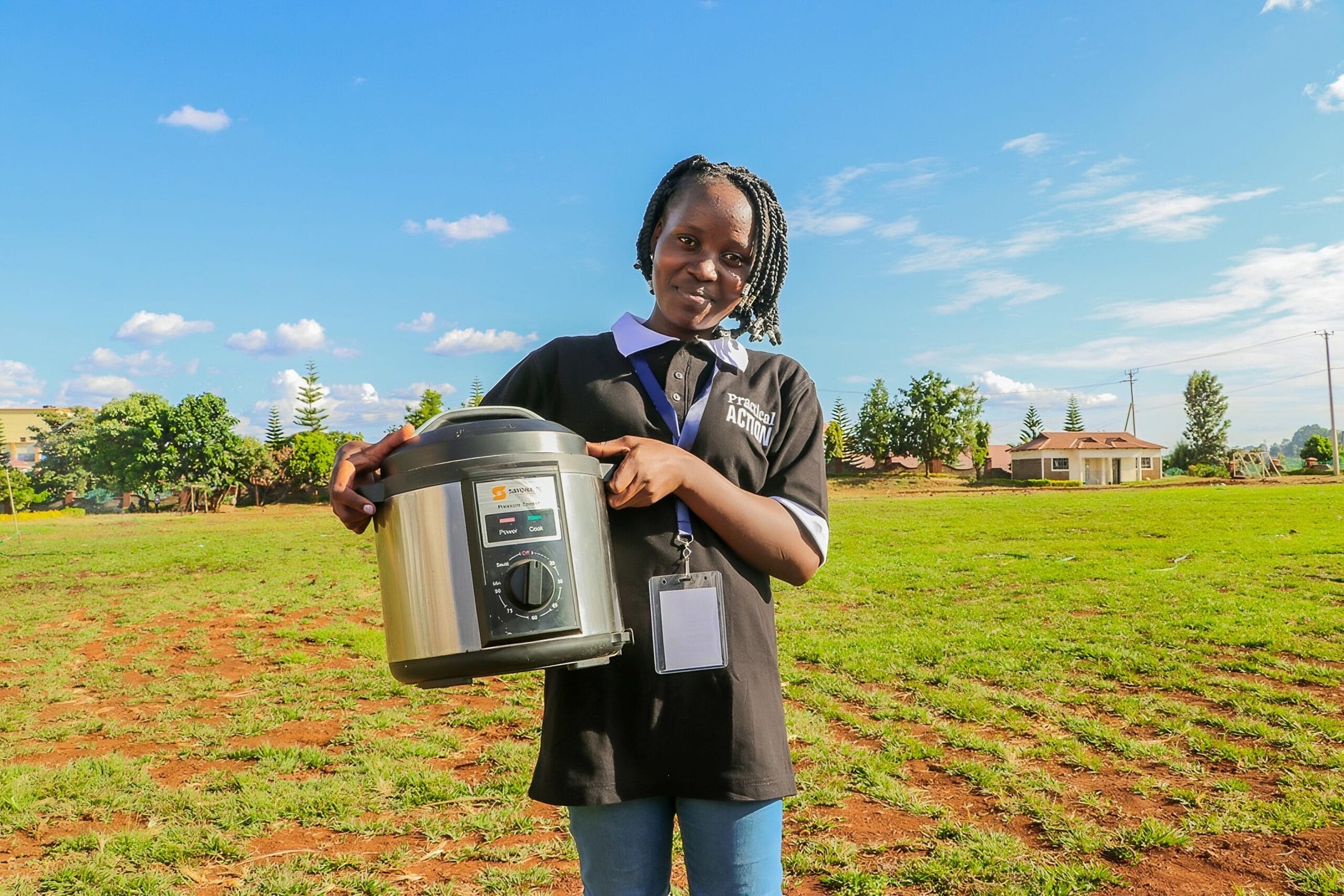
A young woman stands on a grassy field holding an electric pressure cooker, smiling at the camera. She wears a black shirt, a lanyard with a badge, and there are buildings and trees in the background under a blue sky.

Project overview

Full title: Partnership for Advanced County Energy Planning in Kenya (PACE)

Dates: July 2025 to March 2027

Location: Kenya (Siaya, Homa Bay, Tharaka Nithi, Murang’a and Kajiado counties)

Our role: Practical Action leads the consortium, working with Strathmore University and KTH Royal Institute of Technology under the coordination of the Ministry of Energy and Petroleum. We support county governments to lead their own energy planning by strengthening data use, widening participation and turning local priorities into plans that can attract funding.

Participants: County governments and their Technical Working Groups, alongside the Ministry of Energy and Petroleum, the Council of Governors and Members of County Assembly, as well as public institutions, private businesses and local communities across the participating counties, potentially benefiting over 5,260,000 people.

Project budget: £1m

Funded by: UK PACT (Partnering for Accelerated Climate Transitions)

Energy planning that works for everyone

PACE brings together data, planning, inclusion and investment into one process that counties can use and sustain.

The work starts with baseline assessments and conversations with local stakeholders. From there, the team uses household surveys, focus group discussions and geospatial modelling to build a clearer picture of the energy needs and gaps across each county. This evidence feeds directly into the development of County Energy Plans, energy policies and investment prospectuses. Finally, we focus on institutional approval and training, embedding our approach within county systems so it continues to deliver results long after the project ends.

During this process, inclusion is built into every step. Gender, disability and social inclusion analysis, alongside accessible participation processes, ensure that women, people with disabilities, youth and other marginalised groups are part of shaping decisions from the beginning.

The investment prospectuses help counties move from planning to action. They identify priority projects, outline funding strategies and support the development of investment cases for public, private and donor partners.

To make sure this work continues beyond the life of the project, training materials, templates, a shared data system and a faster planning approach will be made available to all counties through the Council of Governors’ Maarifa Center.

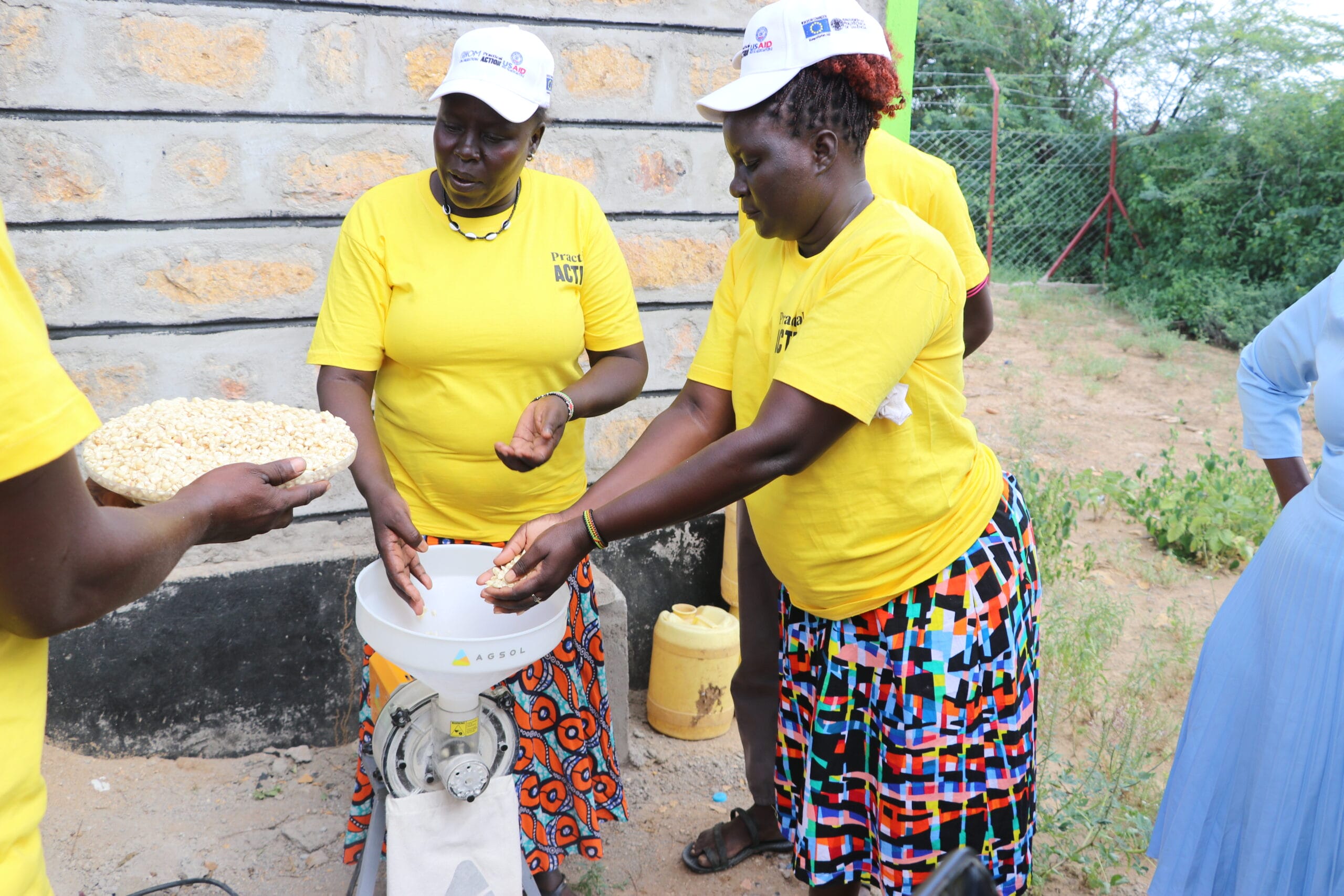
Two women in yellow shirts and hats use a white grain mill outdoors. One holds a plate of maize while the other pours some into the grinder. They stand beside a stone wall and a yellow container on the ground.

By the end of the project, we aim to:

Strengthen planning systems

  • Strengthen the capacity of five county governments to plan energy using evidence, local priorities and an inclusive lens
  • Deliver four County Energy Plans for Homa Bay, Siaya, Tharaka Nithi and Murang’a
  • Deliver three County Energy Policies for Homa Bay, Siaya and Kajiado

Turn plans into investment

  • Deliver four Investment Prospectuses for Homa Bay, Siaya, Tharaka Nithi and Murang’a
  • Support counties to identify priority projects, define funding strategies and prepare investment cases

Scale what works

  • Share training materials, templates and planning tools through the Council of Governors’ Maarifa Center, aiming to support learning and uptake across all 47 counties
  • Enable a shared data system and faster planning method to reduce costs and expand adoption

Looking ahead

Across Kenya, counties are increasingly seeking support to develop their first County Energy Plan or to move from planning into implementation. The five counties in PACE are a starting point, not the limit.

There are three areas where further support can make a clear difference:

  • Reaching more counties
    Many counties have yet to develop an energy plan. With the right support, they can build one using the tools and approaches already tested through PACE.
  • Turning plans into action
    Developing a plan is only the first step. Counties that have completed their plans need support to prioritise projects, secure financing and deliver results on the ground.
  • Strengthening inclusion
    Women, people with disabilities and other marginalised groups are still underrepresented in energy decision-making. Targeted support can help ensure their priorities are reflected and that clean energy solutions reach those who need them most.

Our experience has shown that counties can plan faster, more effectively and at lower cost. With additional support, this approach can be scaled across Kenya.

If you are interested in supporting this work or learning more, we would like to hear from you.

Work like this depends on your support

Help us work with communities to tackle some of the world’s toughest problems.

Donate securely