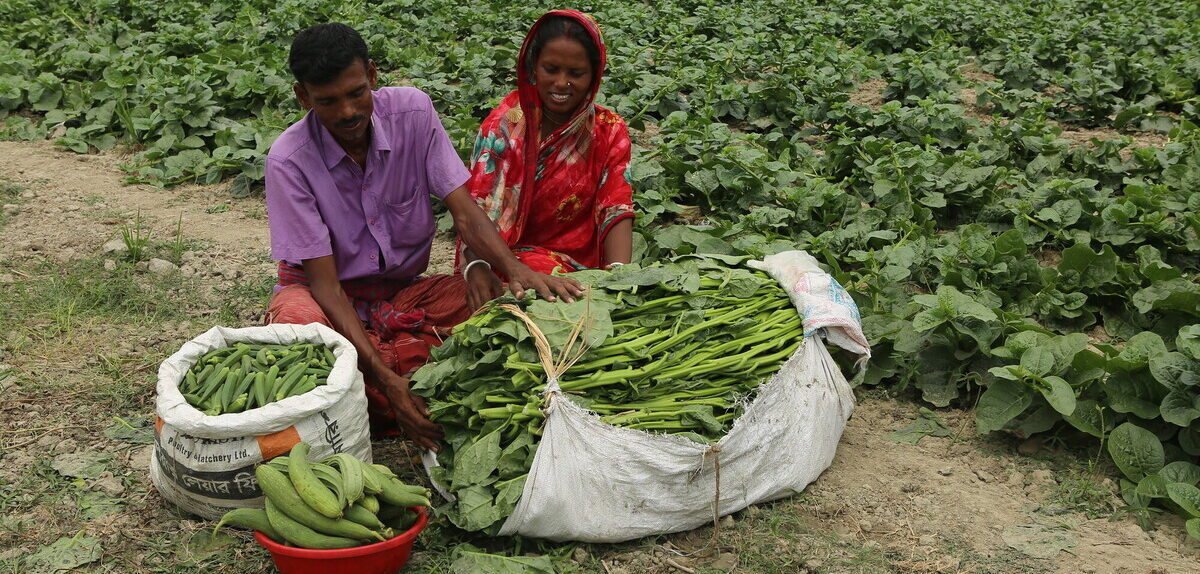
Today is World Food Day.
World Food Day highlights the challenge of feeding a growing world amidst the reality of climate change. In my experience one of the best responses to this is not producing more food but preventing the loss of food already grown. The question is not whether postharvest loss matters, but how best to address it.
Too often investment focuses on technology, especially cold storage. But our new Evidence report, based on research with Wageningen University in Odisha, shows that postharvest loss is a systems issue, not a technological one. Interventions are appropriate, cost-effective and scalable only when grounded in local agricultural and market realities—and the right solution may be unexpected.
I recently wrote about Africa’s food systems and the risks of assumption-based solutions delivered by organisations working in siloes. This piece builds on this by exploring what an evidence based and systems thinking approach looks like in relation to postharvest loss, an issue that affects millions of smallholder farmers and constrains markets, jobs and incomes across the food system.
Postharvest loss is a systems issue
Postharvest loss is seen in different forms across the food system: in production, harvesting, storage, transport and retail markets. Our research on tomatoes in Odisha revealed losses of 8 to 36 per cent. Losses occurred across multiple stages and involved multiple actors such as farmers, local traders, transporters, wholesalers and retailers. In fact, the loss incurred when produce was still with farmers, was equal to when it was in the rest of the value chain. Our research showed that on-farm pest and disease damage, poor harvesting practices, weak market coordination, inadequate packaging and transport conditions all contributed to these figures.
This pattern of loss post-harvest is similar for most crops. There is rarely a single cause, it is found across the supply chain. As a result, there is rarely a single “silver bullet” solution such as on-farm cold storage or other technologies.
We need to consider the entire system from farm to market to determine where postharvest loss investments are best placed.
It’s not just about technology, it’s about markets
In my experience the most focus, and therefore financing, on reducing postharvest losses goes on new technology or on better handling during transport. These technical fixes have their place, but they rarely succeed unless they are supported by the market relationships around them. Even in Odisha’s relatively well-developed tomato market, buyers and farmers often fail to coordinate well, meaning harvested produce often waits on the farm where it deteriorates. This sort of food loss is usually interpreted as “farm-level loss”, but it originates in how the market is organized. In this situation a solution could involve better coordination, such as shared truck scheduling. More aggregation by farmers, would make such an approach more cost-effective,
Solutions to postharvest loss can sometimes be about how the market is organised, rather than any change in practise or technology.
Quality at harvest is the foundation
In strawberry production in Odisha, on-farm losses ranged from just 8 per cent on better-managed farms to as much as 31 per cent on poorer-performing ones. Farmers who harvested at the right maturity, packed quickly and protected their strawberries from heat, consistently lost less. Tomato production showed similar patterns.
This is significant because produce weakened in the field is far more vulnerable to more damage later in the chain. Investments in technology, such as cold storage, cannot ameliorate damage already caused. Improving quality at source should therefore be the starting point for most postharvest strategies.
Put simply, what you get out of the system depends on what you put into it.
Solutions need to match the market
The right post harvest intervention depends on the physiology of the crop, the specific postharvest challenges and the state of market. Odisha’s strawberry sector is still in its infancy: low, dispersed production and weak urban links mean most fruit is sold in local tourist markets and production volumes do not yet justify dedicated transport, let alone cold chains. The tomato sector is more mature but fragmented, with poor market coordination driving many of its losses.
Neither sector is ready for refrigerated transport or cooled collection centres. Their benefits are limited when produce leaves the farm in poor condition and current markets cannot bear their cost. I am not arguing against cold chains. I am arguing for sequencing investment: starting with affordable measures that improve quality at source, then revisiting infrastructure investment as markets grow.
In both instances our research shows that low-cost solutions should be considered first. These include shade cloths, tomato stakes and standardized crates, agreed grading standards and harvesting procedures, digital truck-scheduling and stronger farmer producer organizations to aggregate supply.
Crucially, infrastructure should follow market development, not precede it.
Evidence must come before investment
Perhaps the most important lesson from Odisha is the value of evidence-based decision making. Too often postharvest ‘solutions’ are designed around assumptions about where losses occur and what solutions are needed.
The Postharvest Assessment Methodology developed by Wageningen University, combines value chain analysis, farm observations, stakeholder engagement, market assessments and simulations to identify the real causes. By systematically assessing potential solutions against the prevailing economic and political environment, it helps practitioners identify solutions that are technically and financially appropriate.
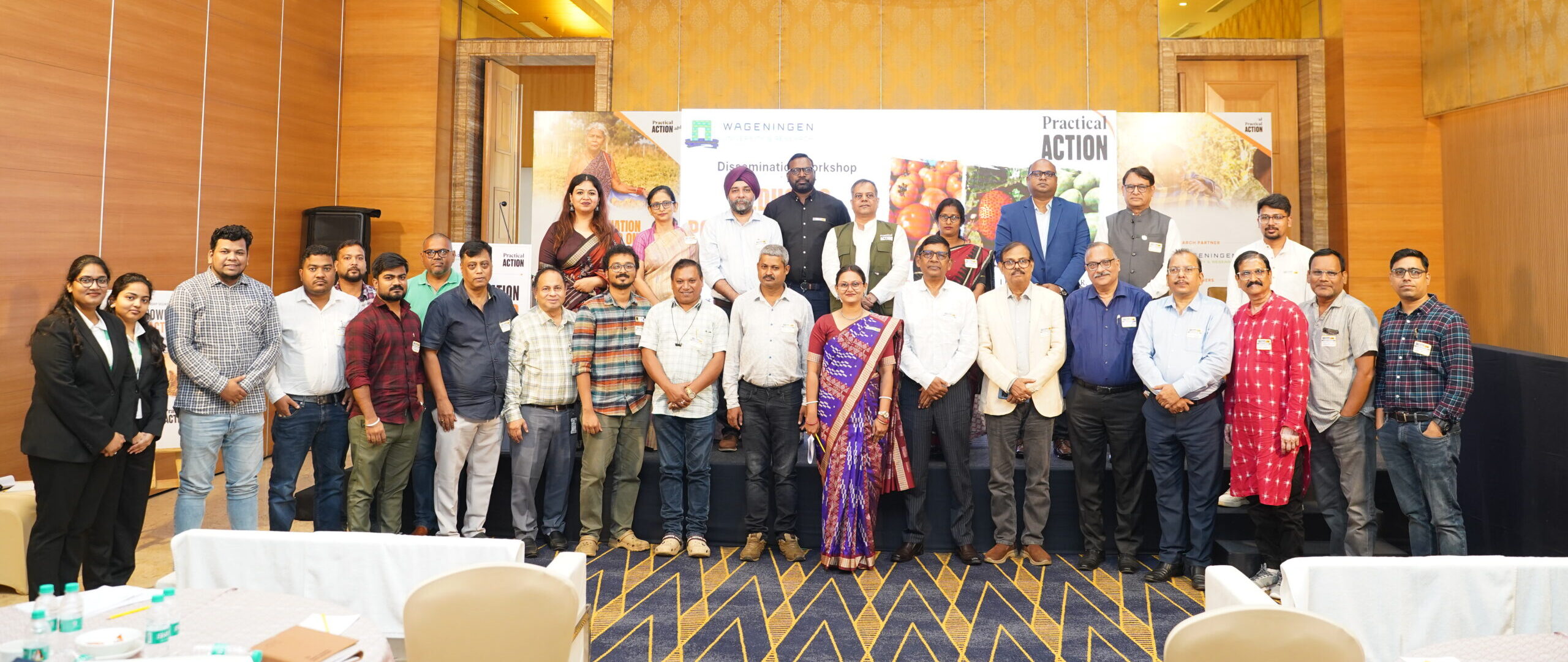
In August this year, Practical Action’s India team convened stakeholders in Odisha, including farmer groups, state and local government, financial institutions, traders, research bodies and civil society groups, to review the research. This led to commitments to collaborate further in the development of strategies that address postharvest loss.
A World Food Day call to action
This World Food Day, our message from Odisha is simple: diagnose before you invest. That means resisting the urge to start with technology. Instead, we must start with the realities farmers face and the agricultural, social and market systems in which they operate. We can then build food systems that work for people.
For practitioners this means grounding every intervention and decision in a deep understanding of how local agricultural and market systems function: where losses really occur, why they happen, and what farmers and traders can realistically afford and sustain.
For donors this means funding evidence before infrastructure. Funding should go towards diagnosing the problem and understanding the system, before committing significant resources to infrastructure. This will reduce the risks of stranded assets and ineffective investments.
When interventions to reduce postharvest loss are guided by systems-wide evidence, they raise farmer incomes, strengthen markets and create lasting change.
Read the research: