Where farming meets

Digital Empowerment

Across rural Nepal, women form the backbone of agriculture yet remain among the least served by financial systems. Despite growing mobile connectivity and expanded banking infrastructure, many smallholder women farmers still faced barriers to using financial services, particularly digital tools that could help them save, invest and strengthen their livelihoods. As finance systems become increasingly digital, these gaps risk deepening existing inequalities.

Therefore in 2022, Practical Action launched the SAMUNNATI digital finance project, focusing on the districts of Dang, Rolpa and Rukum East in Lumbini Province, where many women rely on small-scale agriculture but have limited access to credit, insurance and markets. Over three years, the initiative worked with women farmers living in poverty and others facing barriers to financial services to strengthen digital financial literacy and expand access to mobile banking, digital wallets, agricultural insurance, savings and credit. This supported greater participation in agricultural value chains such onions, bell peppers and cabbages, and the creation of small businesses.

By linking financial inclusion, digital skills and livelihood development, the project helped increase incomes and strengthen economic resilience among women farmers and their households, helping bridge the gap between financial systems and communities historically left out.

An orange calendar icon with a black outline featuring a square marking a day.
Dates

2022-2025

A globe with a circle.
Country

Nepal

An orange seedling icon
Themes

Food Systems

Women farmers and the financial inclusion gap in Nepal

In Nepal, agriculture is central to both livelihoods and local economies, employing more than half of the population. Women play a particularly significant role: around 70% of smallholder farmers are women. Farming supports household incomes, local food systems, and rural communities across the country. As women farmers increasingly move beyond subsistence production toward agribusiness and small enterprise growth, access to financial services becomes ever more important.

Digital financial services have the potential to expand this access. They offer a relatively low-cost way to reach farmers in dispersed rural areas and can connect producers with markets, payments, and financial institutions. However, adoption in Nepal remains limited. Although internet use reached 56% of the population in 2023, only about 18% of adults accessed their bank accounts digitally, and roughly 13% used digital payments. Differences in income, education, geography, and gender continue to shape who benefits from these systems.

Structural barriers also persist within the financial sector. Banks are required to allocate a portion of lending to agriculture, yet these resources tend to reach commercial farms and larger enterprises rather than smallholder farmers. While banking infrastructure has expanded significantly in recent years, women—particularly in rural areas—still have poorer access to accounts and services than men. Addressing these gaps is essential to ensure that rural communities, especially women farmers, can participate fully in economic opportunities and build more resilient livelihoods.

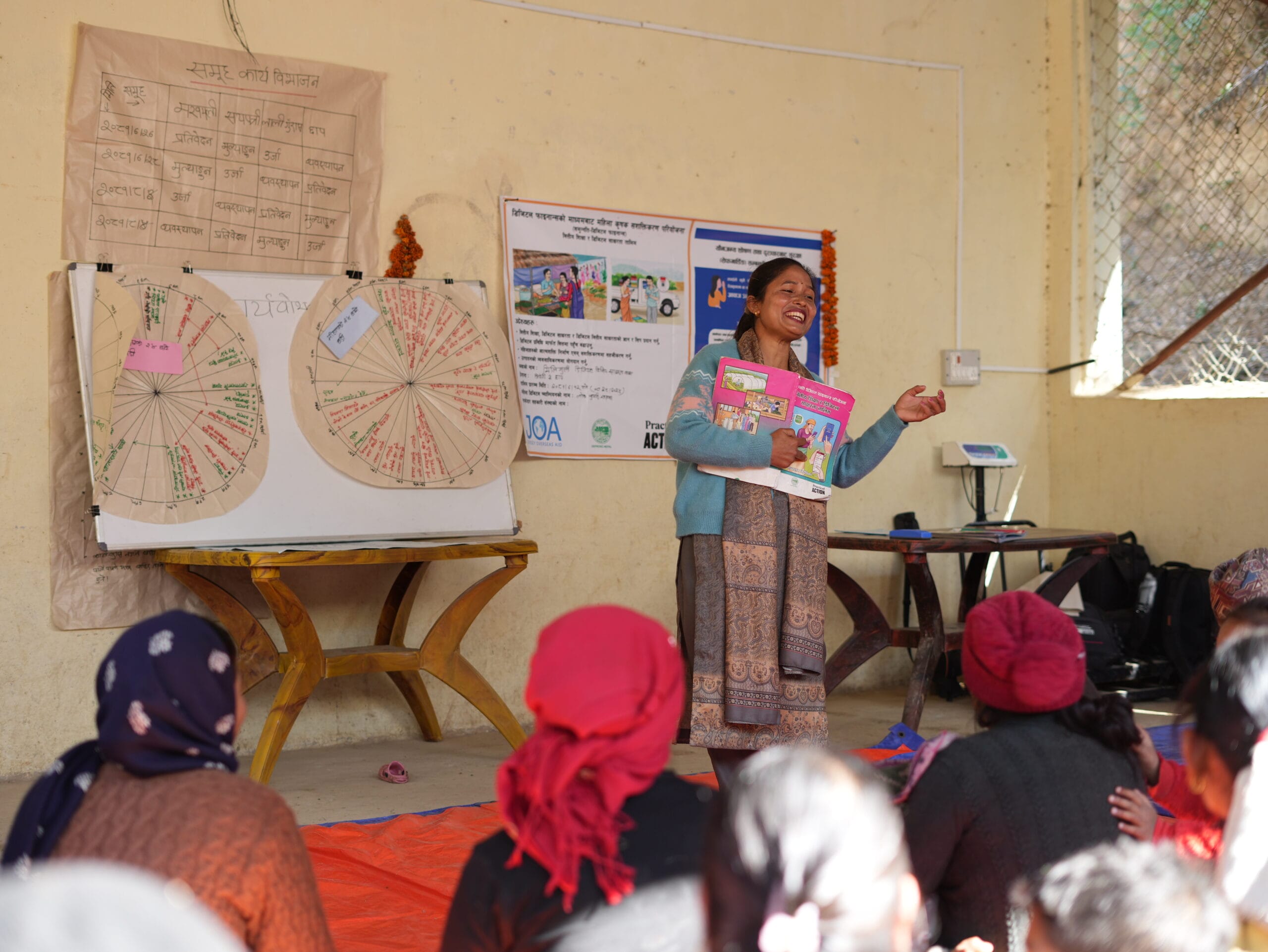
A woman stands and speaks in front of a small group, holding colourful booklets. Behind her are charts and posters with writing and diagrams in Hindi, displayed on the wall. The group sits on mats, listening attentively.

Project overview

Full title: Empowering Women Farmers with Digital Finance in Nepal (the SAMUNNATI Digital Finance) Project

Dates: 2022-2025

Location: Nepal (districts Rukum East, Rolpa, and Dang, in the Lumbini province)

Our role: Project lead organization

Participants: 7000+ smallholder farmers (80% women)

Project budget: 1.2m

Theme: Food systems

Funded by: Jersey Overseas Aid (JOA)

Connecting women farmers with digital finance and information

The SAMUNNATI Digital Finance project aimed to make digital financial services more accessible and useful for women farmers, particularly in relation to agriculture and small businesses. The project focused on strengthening digital financial skills and improving access to services such as savings, payments, remittances, agricultural insurance and credit.

Practical Action implemented the project with DEPROSC Nepal and worked with financial institutions, fintech companies, local cooperatives and agri-tech platforms, including GeoKrishi, Smart Krishi, Krishi Guru, Global IME Bank, IME Pay and Prabhu Management. These partnerships connected women farmers with financial services, digital tools and agricultural information that were previously difficult to access.

Over the course of the project, women farmers strengthened their ability to use financial services and digital tools, with some receiving additional training to support others in their communities. The project helped women access mobile phones, digital wallets and mobile banking, while also building the skills needed to use them confidently. It also worked with communities to challenge social norms that restrict women’s roles and can prevent them from obtaining identification documents required to access financial services.

Together, these efforts expanded access to finance, strengthened women’s role in financial decision-making and supported more resilient farming livelihoods.

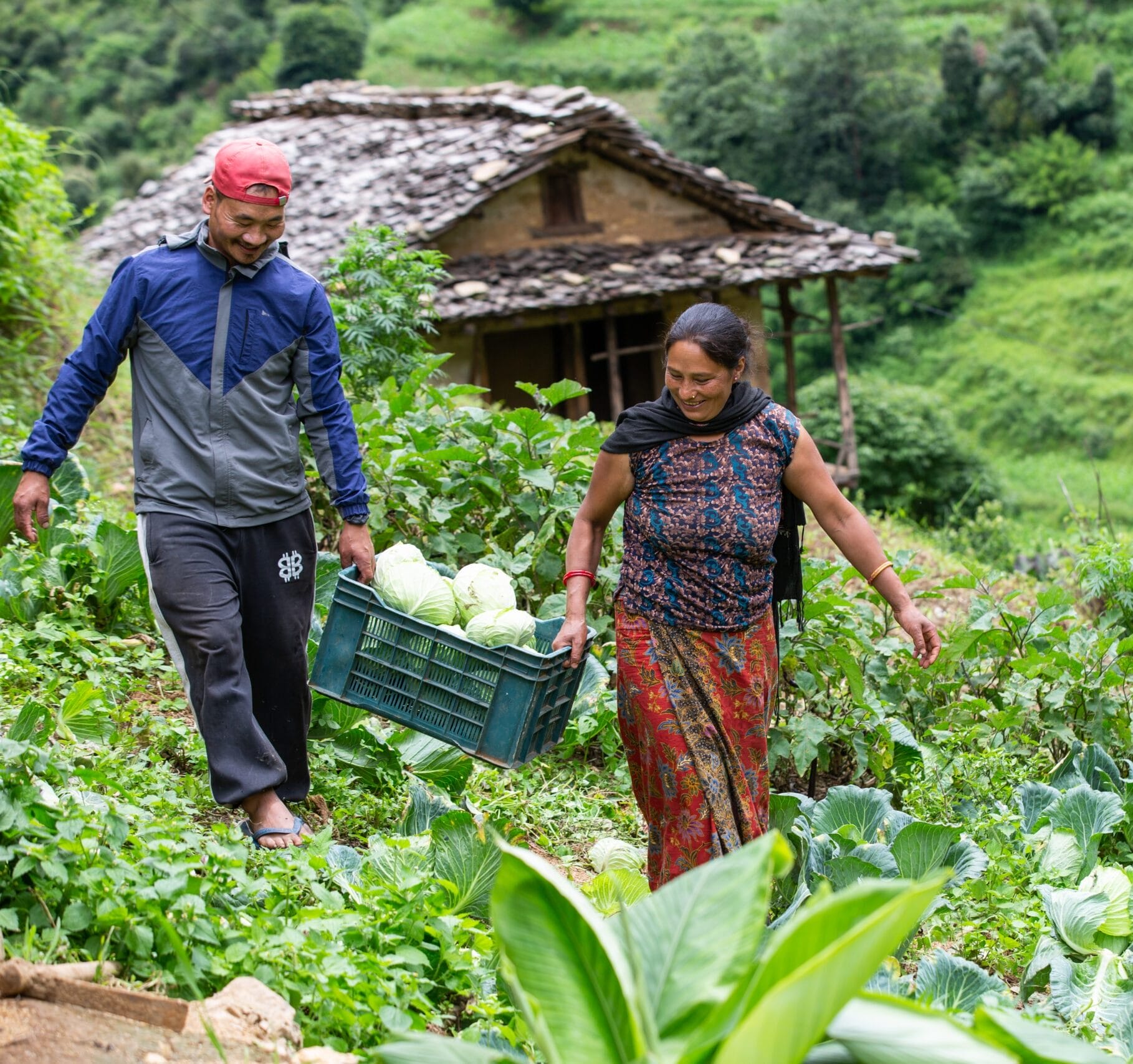
A man and a woman harvest cabbages in a lush, green garden on a hillside, with a rustic stone house in the background and terraced fields surrounding them. The man carries a crate of cabbages as they walk through the plants.

By the end of the project, we managed to:

Strengthen digital and financial inclusion for women farmers and their communities through training, access to technology, and partnerships with local institutions. Here are some of our key results.

Digital financial literacy and skills

  • 7,074 people gained knowledge and skills in digital financial literacy.
  • 5,654 participants joined Financial Education and Digital Literacy Classes implemented by the project, including 5,290 women and 169 persons with disabilities.
  • 399 students took part in school-to-home activities, including 207 girls.
  • 1,021 additional participants were reached when four rural municipalities replicated the training, including 881 women and 17 persons with disabilities.

Women’s empowerment and local leadership

  • 6,170 women smallholder farmers received training on agency-based empowerment.
  • 112 women became Women Digital Champions, including participants from the project and additional champions supported by rural municipalities.

Access to services and technology

  • 3,218 people adopted digital mobile wallets.
  • 3,952 individuals began using mobile agriculture applications.
  • 3,276 fibre internet connections were established in households and training spaces.

Strengthening local systems

  • 16 partner cooperatives received support, reaching 15,504 members, including 12,372 women.

Together, these results helped empower and expand access to financial tools, digital services and agricultural information amongst women farmers and their communities.


Work like this depends on your support

Help us work with communities to tackle some of the world’s toughest problems.

Donate securely