This study, led by Practical Action and partners, explores the role and potential of nature-based solutions (NbS) to address urban flooding and environmental challenges in Thiès, Senegal.
Nature-based solutions for more resilient cities in Senegal
Cities in Senegal are experiencing rapid urbanisation, while the impacts of climate change are increasing their vulnerability to flooding.
In the city of Thiès, more intense rainfall, the expansion of built-up areas and the degradation of natural ecosystems are reducing the capacity of urban environments to absorb rainwater. As a result, flooding is becoming a growing threat to communities, infrastructure and economic activities.
The PRECABE project is supporting Thiès City to strengthen its approach to flood risk management through ecosystem-based adaptation (EbA).
By restoring and strengthening urban ecosystems, the project is demonstrating how nature-based approaches can complement traditional infrastructure and allow for healthier, more resilient urban environments.
This project brings together local authorities, technical institutions, researchers, community organisations and community members to develop practical tools, generate knowledge and test approaches that can be integrated into urban planning and local policies. It aims to position Thiès as a pilot territory, whose experience can inform other cities in Senegal and West Africa facing similar challenges from a rapidly changing climate.

January 2025 – December 2026

Senegal
Climate resilience
A city facing growing flood risks
In Thiès, unplanned urban expansion has led to increased pressure on natural areas. Particularly affected is the Thiès plateau ecosystem, which plays an important role in regulating how rainwater moves through the city.
During heavy rainfall, water flows down from the plateau and across the city towards low-lying areas to the north and east, where it eventually drains away. This makes the city highly vulnerable to floods during the increasingly severe rainy seasons.
As vegetation and other natural barriers that can slow or absorb water are lost to urbanisation, more rainwater flows rapidly into the city. This can cause serious damage to homes, roads and unpaved tracks, sometimes making them impassable. Neighbourhoods with limited drainage capacity are particularly exposed to flood risks.
At the same time, flood management has largely relied on ‘grey infrastructure’. This can be costly to maintain and may not be enough on its own as climate risks intensify.
Too few people in West Africa know about the benefits of nature-based solutions, and the integration of these solutions into urban planning and climate risk management is not widespread. PRECABE is addressing this gap by demonstrating how ecosystem-based approaches (a type of nature-bases solutions) can help reduce flood risks while restoring ecological systems and contributing to the wellbeing of urban communities.
Project overview
Full title: Project for Strengthening Community Resilience to Climate through Ecosystem-based Adaptation Approaches in Thiès, Senegal (PRECABE)
Dates: 2025 – 2026
Location: City of Thiès, Senegal
Our role: Practical Action leads implementation, bringing expertise in climate change adaptation, nature-based solutions, integrated risk management and knowledge generation.
Participants: The project directly supports 6,000 people and indirectly reaches 25,000 people, 50% of whom are women. Key participants include communities in Thiès, women and youth, local authorities, community-based organisations, technical institutions and academic institutions.
Project budget: USD $250,000
Funded by: Global EbA Fund
Demonstrating how nature can help cities adapt
PRECABE places nature-based solutions at the heart of efforts to strengthen flood resilience in the city of Thiès.
The project will generate knowledge of the relationship between rapid urbanisation, deforestation on the Thiès Plateau and flooding. It will highlight the role and wider social benefits of nature-based solutions, particularly for women and vulnerable groups. And it will build the capacity of communities and local authorities to implement these approaches.
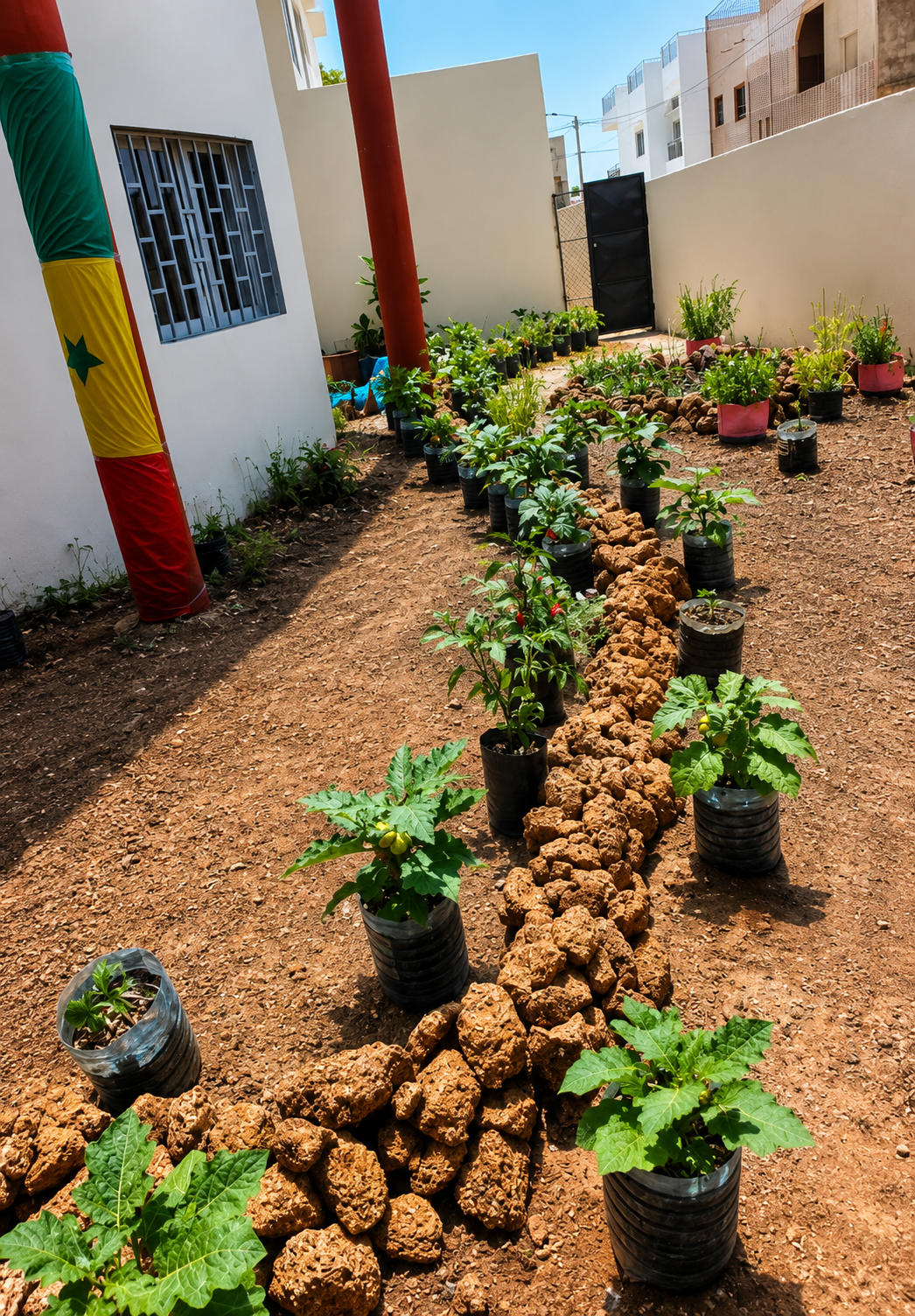
Practical interventions include restoring the Nguinth wetland, reforesting the Thiès Plateau, and using vegetated swales, micro-gardens and rain gardens to improve water management and reduce flood risks.
These activities will generate evidence on the feasibility, costs and benefits of nature-based solutions, while bringing together local knowledge and scientific evidence to develop approaches suited to the realities of Thiès.
The project works closely with local authorities, researchers, technical services and communities to develop approaches adapted to the realities of Thiès. Local knowledge is considered alongside scientific data to improve the understanding of urban ecosystems and the services they provide, and to support better decision-making about how these spaces can contribute to climate resilience.
We will share the project’s findings through knowledge products and tools tailored to different stakeholders, and advocate for the integration of ecosystem-based adaptation into national and local climate resilience strategies and plans. Lessons from Thiès will also be shared with decision-makers and other communities to support the wider adoption of nature-based solutions in urban planning and climate risk management across Senegal and West Africa.
By the end of the project, we aim to:
Demonstrate that nature-based solutions can provide effective, sustainable and inclusive responses to urban flood risks. To do this, we will
- Ensure 40% of local authorities, communities and other stakeholders in Thiès report increased knowledge of both flood risk vulnerability and the role of ecosystem-based adaptation.
- Strengthen technical and institutional capacities through targeted training, peer learning and technical support. We will also organise open days in neighbourhoods across Thiès to share, demonstrate and facilitate the replication of tested ecosystem-based adaptation strategies.
- Strengthen the resilience of vulnerable communities by supporting climate-resilient livelihoods and inclusive, community-led adaptation, reaching 6,000 people directly and 25,000 indirectly. At least 50% of those reached directly will be women.
- Disseminate project lessons, knowledge products and practical tools to support the replication of ecosystem-based adaptation approaches in other cities in Senegal and West Africa.
Work like this depends on your support
Help us work with communities to tackle some of the world’s toughest problems.