Even before the Covid-19 pandemic, progress towards the United Nations goal of universal energy access by 2030 was far too slow, especially amongst the poorest in remote rural areas.
Our last article highlighted how a lack of access to modern energy services compromises people’s health and limits economic and educational opportunities. When we come out of this crisis, energy access provides an opportunity to help communities towards recovery.
In this article, we explore how clean and affordable energy access is a win-win solution – with benefits including jobs, improved health and livelihoods, as well as carbon reductions.
Making it green and safe
Energy from natural and renewable sources – from the sun, wind, water and biological processes – is a climate-friendly way to supply electricity, especially where the grid does not reach.
Tapping into the renewable energy revolution
Globally, renewables now supply around 25% of electricity and growth has continued (albeit at a slower pace than before) during the pandemic.
The growth of solar power has been particularly impressive, with global solar capacity increasing from 40 GW to 580 GW between 2010 and 2019 according to the International Renewable Energy Agency.
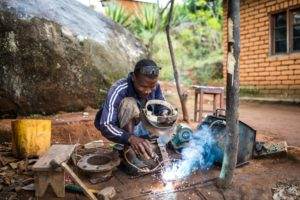
In Malawi, off-grid electricity is powering businesses like Emmanuel’s, which couldn’t operate without power.
At the same time, prices of solar modules have dropped by 90%.
The cost reductions of solar, together with similar price drops in batteries and LED lights, have revolutionised electricity access in off-grid communities.
A key benefit of solar power is that it can be deployed at a variety of scales, from basic solar lights to powering whole communities and businesses through solar-powered mini-grids. The off-grid solar market had seen record growth before Covid-19 hit and GOGLA estimates that over 100 million people are currently benefiting from improved energy access because of off-grid solar.
We’ve known about the transformative power of renewables for a long time. Our founder, Fritz Schumacher was a big advocate of renewable energy and we helped develop community micro-hydro plants in Nepal as far back as the 1980s. In 2018, we were presented with an award by the Nepali Minister for Energy in recognition of this work.