The road to COP31 doesn’t start in the negotiating rooms of Antalya. It starts in African territories — where climate shocks are felt daily, where community-based solutions are tested, and where the effectiveness of global financial decisions is truly tested.
As the world prepares for COP31 in November, the real question is no longer what commitments governments will make, but a question of how these commitments will translate on the ground, where floods and droughts are already redefining livelihoods.
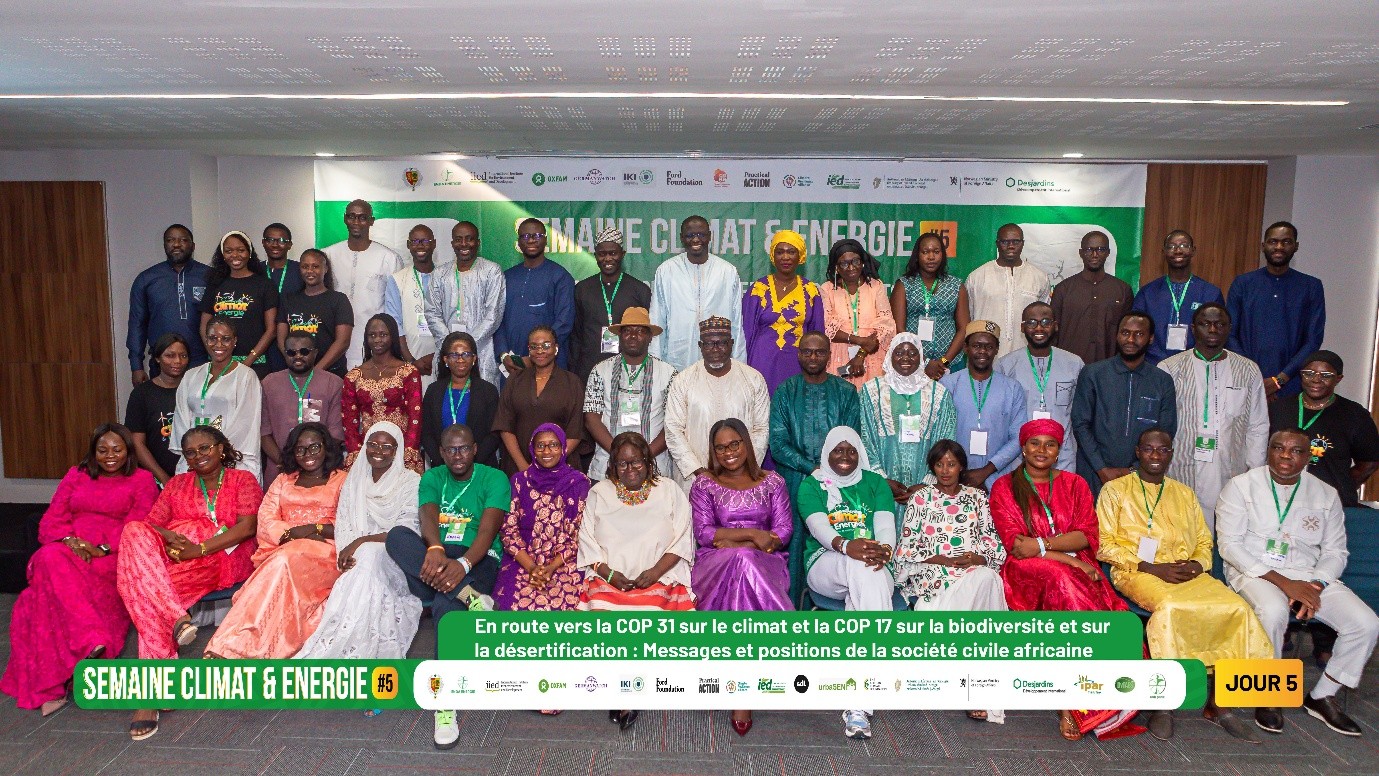
This urgency was at the heart of the 5th Climate & Energy Week organized by Enda Énergie in Dakar in July, which centred around the theme: “Sustainably transforming our territories: knowledge, power, climate action”. As members of the Zurich Climate Resilience Alliance, we brought a clear message: local communities must no longer only suffer from climate policies, they must shape them.
Across the five-day programme, the Week brought together public institutions, territorial authorities, researchers, civil society, communities and private-sector actors around a common question: how can climate action better respond to realities on the ground? Discussions highlighted the importance of locally led adaptation, accessible climate finance, local and endogenous knowledge, and stronger links between climate, biodiversity and land. Practical Action contributed its experience in community-based resilience, including inclusive early warning systems and ecosystem-based approaches. These exchanges helped turn local experiences into practical messages and recommendations for African climate policy and the road to COP31.
Filling the “implementation gap” on the ground
Africa has no shortage of climate strategies and ideas. The real bottleneck lies in implementation.
In Dakar, territorial actors recalled the structural obstacles that hinder action: centralization of decisions, limited access to climate funds for municipalities, and low consideration of local knowledge. For a household exposed to flooding or for a farmer in the Groundnut Basin, these blockages are not abstract theory. They determine whether an early warning system is working on time or whether a community has the means to adapt its crops.
To bridge this gap, participants highlighted the potential for neighbouring municipalities and departments to jointly plan and implement climate initiatives, pool local resources and develop pilot projects. These efforts could help build the evidence and co-financing needed to unlock larger climate funds. Adaptation therefore requires predictable, flexible and long-term financing that enables locally led solutions to grow beyond short-term projects.
Adaptation requires predictable, flexible and long-term support that allows locally led solutions to take root and grow beyond short-term projects. Practical Action’s work in Senegal illustrates the range of approaches this requires, from inclusive early warning systems through the ResAlert project to ecosystem-based solutions through the PRECABE project and stronger community preparedness. Sustaining and scaling such initiatives requires financing that responds to local priorities and timelines.
Bringing climate finance to where the risk lies
Financing was the common thread of the Climate and Energy Week. But talking about global volumes is no longer enough: we need to question the access and quality of climate finance.
Today, the international financial architecture often favours large, complex infrastructure projects, leaving aside locally led resilience initiatives. However, many small communities and community-based organisations still face significant barriers to accessing climate finance directly, limiting the opportunities to sustain and scale up locally developed solutions.
On the road to COP31, Africa must defend climate finance that is:
- Accessible directly to local authorities and organizations.
- Adapted to the priorities and realities on the ground (via local or interterritorial funds).
- Patient and predictable, to support locally led adaptation over time.
Validating local and endogenous knowledge as levers for effectiveness
Vulnerable communities have a detailed knowledge of their ecosystems, accumulated over generations. Integrating this traditional and practical knowledge into National Adaptation Plans and Nationally Determined Contributions is crucial for effectiveness.
The COP31 agenda includes a strong focus on traditional knowledge, women’s empowerment and equity. Practical Action’s work in Thiès through PRECABE provides a concrete entry point for this approach, promoting ecosystem-based solutions to strengthen community resilience. By connecting local priorities with adaptation planning, such initiatives can help ensure that climate policies build on the knowledge and experience of the people most affected. So the opportunity for African actors is to ensure that these themes are a driving force behind the design of public policies.
Linking Climate, Biodiversity and Land: the integrated approach of territories
In the same African landscape, agricultural production, biodiversity conservation, water management and food security intersect. Dealing with climate change, desertification and biodiversity loss separately is a strategic mistake.
By bringing together the , the work in Dakar underlined the need for Nature-based Solutions (NBS) and systemic impact interventions. This search for synergies is perfectly aligned with the priorities of COP31. Climate change, biodiversity loss and land degradation are closely interconnected and require integrated responses. Discussions in Dakar highlighted the importance of aligning action across the three Rio Conventions and using Nature-based Solutions to strengthen territorial resilience. In addition to PRECABE, the RESILAO project supports coastal ecosystem restoration and community resilience. These experiences show how ecosystem protection and climate adaptation can reinforce one another.
From Dakar to Antalya: proposals from Africa
Africa is not coming to COP31 with demands for support alone. It brings:
- Concrete experience of risk and flood management in the field.
- Locally tested solutions that provide resilience for the most vulnerable.
- Operational lessons on what unblocks or slows down public action.
For COP31 to truly be the “COP of implementation”, global decision-makers must listen to the voices of territories. Because global climate ambition will only be credible if it translates into real and sustainable transformation where communities live.