As climate shifts, farmers are leading their future
From how we farm and process food to how we transport and consume it, the global system is in trouble.
Food and agriculture are responsible for roughly a third of global greenhouse gas emissions and are the leading drivers of biodiversity loss. Yet, hundreds of millions of people are going hungry, and many of the farmers who feed us live in poverty.
Despite this, people already experiencing the hard impacts of the climate crisis are not waiting for it to collapse.
From coastal Bangladesh to the Bolivian Amazon, smallholder farmers, Indigenous communities and young people are fighting against it, fixing what is broken. They are growing food in ways that protects forests, rebuilds soil fertility, and turns climate-stressed land into a source of dignity and income.
Their work pushes back against a system that is heating the planet and failing to feed everyone.
This is not inevitable: The choices governments, businesses and funders make now will decide whether food and farming continue to drive the crisis or become a powerful part of the solution.
Because there is a solution.
Across Asia, Africa and Latin America, Practical Action works alongside farmers, entrepreneurs, local organisations and institutions that are already showing what that solution looks like.
They are restoring soils, protecting forests, building fairer markets, and backing women and young people to lead. A resilient and inclusive food system means families can eat well, farmers can earn a decent living, and forests and ecosystems can recover.
The stories that follow, from Bangladesh and Nepal, Kenya, Bolivia and the Andes Amazon region between Peru and Ecuador, are not pilot schemes on the sidelines – they are a powerful vision of the direction food and climate action must take if we are serious about change.
Farmers are turning climate pressure into practical change in Asia
In coastal Bangladesh, climate impacts are no longer forecasts – they are here now.
Rising salinity, unpredictable rains and frequent pest outbreaks have already pushed many smallholder farming families to the edge. Yet in the southwest, farmers involved are showing how nature-aligned, locally led adaptation can restore both land and confidence.
Farmers that Practical Action has been working with now grow salt-tolerant vegetables, compost at home, harvest rainwater to keep crops alive, and use local climate information to plan their planting.
These practical shifts together mean food on the table, money coming in from selling surplus and less stress on vulnerable ecosystems.
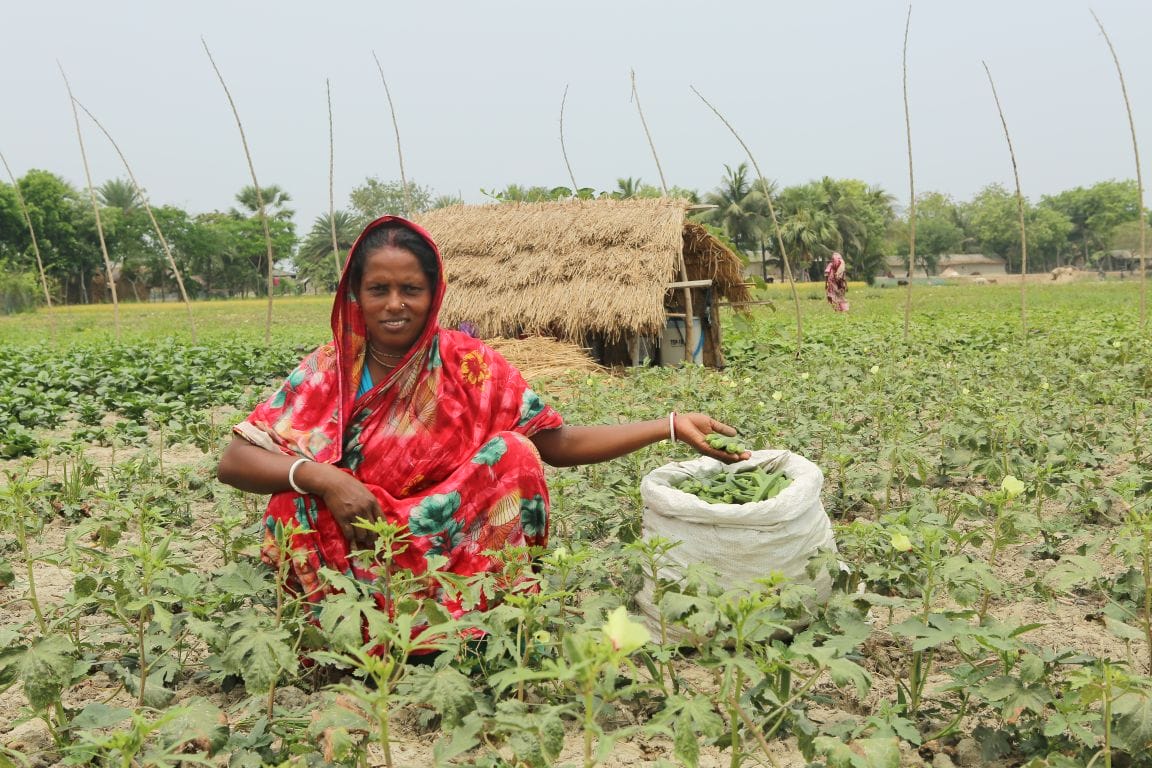
For Maya Rani Sarker, a farmer in Khulna, Bangladesh, the change has been life-defining. She went from struggling to feed her children to producing enough for the family and selling the surplus.
“My land is my strength,” says Maya. “The NABAPALLAB (project) gave me dignity and respect.”
Her success has inspired neighbouring women, such as Nasrin and Aloka, to start their own vegetable plots, improving their families’ nutrition and financial stability. This also gives them back control of their futures in a region where climate impacts have long controlled people’s choices.
In Nepal, the climate crisis has strained farming, putting more pressure on women, who often manage the land while men migrate for work. With our Samunnati project, women and marginalised farmers have made their farming techniques more resilient, gaining better access to seeds, equipment and advice, as well as stronger links to markets. As a group, the 6,000 farmers we’ve worked with have doubled their earnings.
Now we are running training sessions with the same women, supporting them in harnessing the power of digital finance to expand their business opportunities.
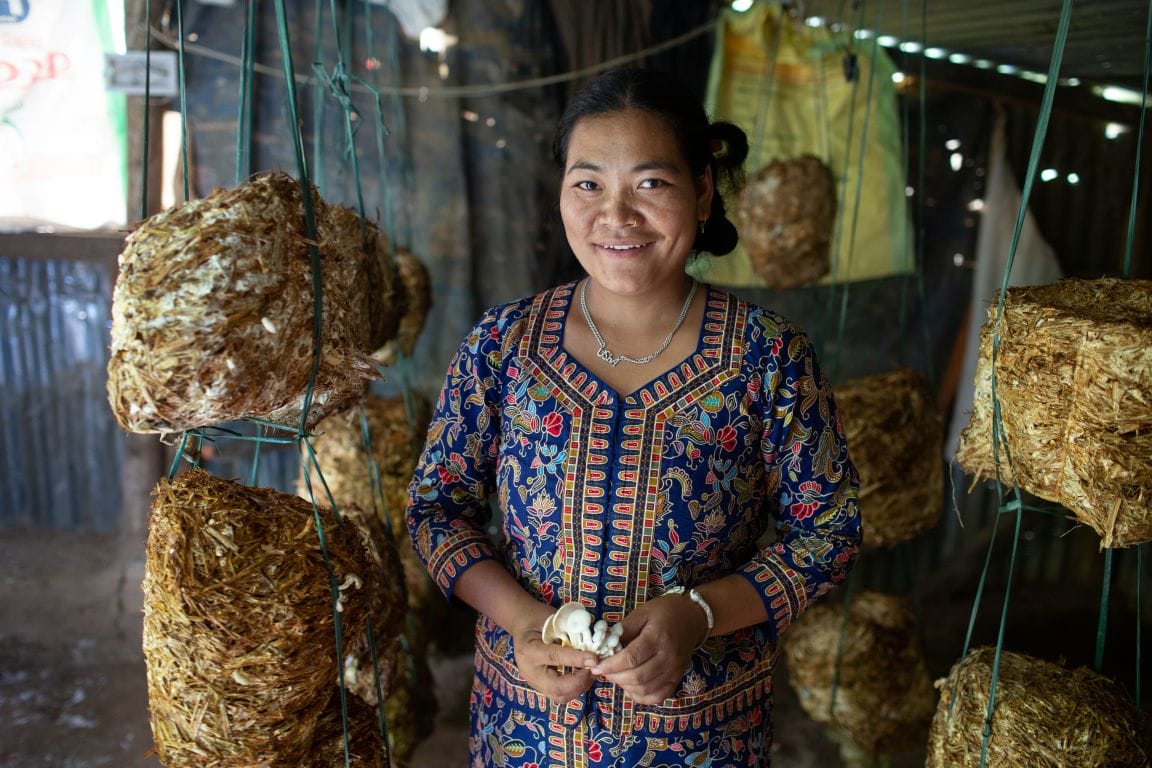
For Usha Budha, a 27-year-old from a small village in rural Nepal, a simple pleasure led to a business insight. Inspired by a financial and digital literacy session and by her love of mushrooms, she researched mushroom cultivation on her phone and successfully grew her first batches. She also improved how she grows potatoes and garlic using advice sourced online.
Usha says: “Since I started following what I learnt, my income has gone up. I save more money each month now.” Now, with mushrooms, potatoes and garlic to sell, she can enjoy a steadier income – and has all the ingredients at hand for the tasty recipe that sparked her interest.
Young people are leading the future of farming in Africa
Across Africa, soaring youth unemployment and the climate crisis pose twin challenges – as well as opportunities. Nowhere is this more evident than in Kenya, where a large youth population is seeking meaningful work amid more frequent droughts and floods.
With our support, they are stepping up to lead the way with new, climate-resilient farming solutions.
Working with nearly 73,000 young people so far, we are providing the training, mentoring, and resources they need to get ahead. By 2027, we’ll reach 100,000 youth (70% of whom are women), helping them access land, affordable loans, good seed and equipment, and markets to build thriving farm enterprises.
Empowering young people with sustainable agriculture not only tackles unemployment but also accelerates the shift to regenerative practices needed to address the climate crisis. Early results are inspiring.
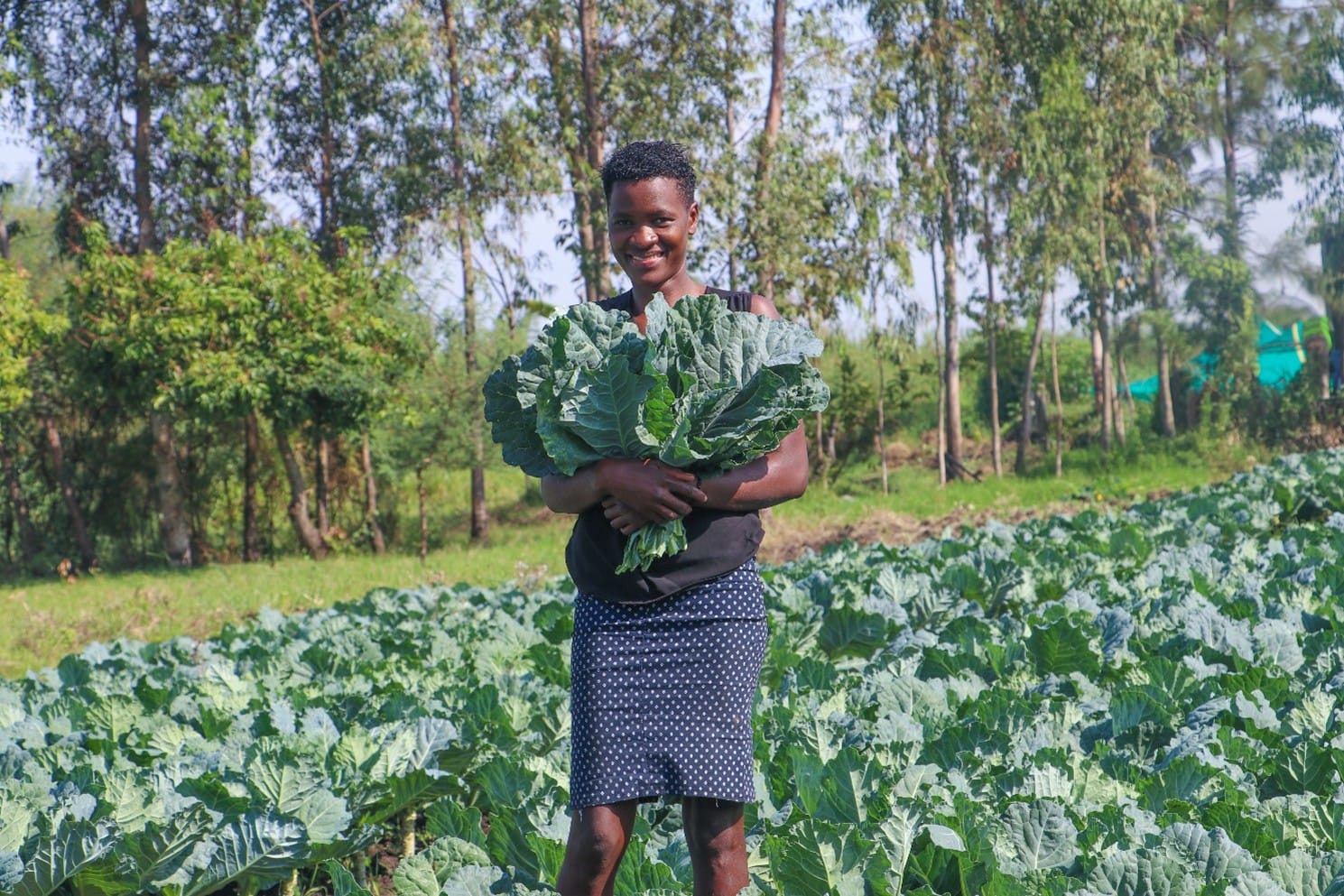
In Homa Bay County, Mercy Achieng was selling fish and struggling to make ends meet for her and her three children. Her turning point came when she joined our youth agriculture programme. Following training and mentorship, Mercy now cultivates vegetables year-round on leased land, earning a steady income that feeds her three children. She even employs three other young people on her farm – an enterprise she plans to expand now she’s joined a local savings and loans group. On top of running her thriving enterprise, Mercy is now a mentor herself, guiding 30 fellow young farmers (most of them women) to improve their farming and business skills.
Kenya’s youth unemployment has been estimated at over 30% in recent years. But examples like Mercy’s shine as proof that, with access to clean energy, finance and training, young Africans can create their own jobs while healing the land, making farming a part of the climate solution, not a problem.
Forests and livelihoods thrive together in Latin America
Across Latin America, the link between forests and food is tangible. Many Indigenous and smallholder communities have always managed their territories in ways that balance livelihoods and nature. Now, with climate change hitting harder and pressures, such as illegal mining and logging, growing, they are finding new ways to defend both.
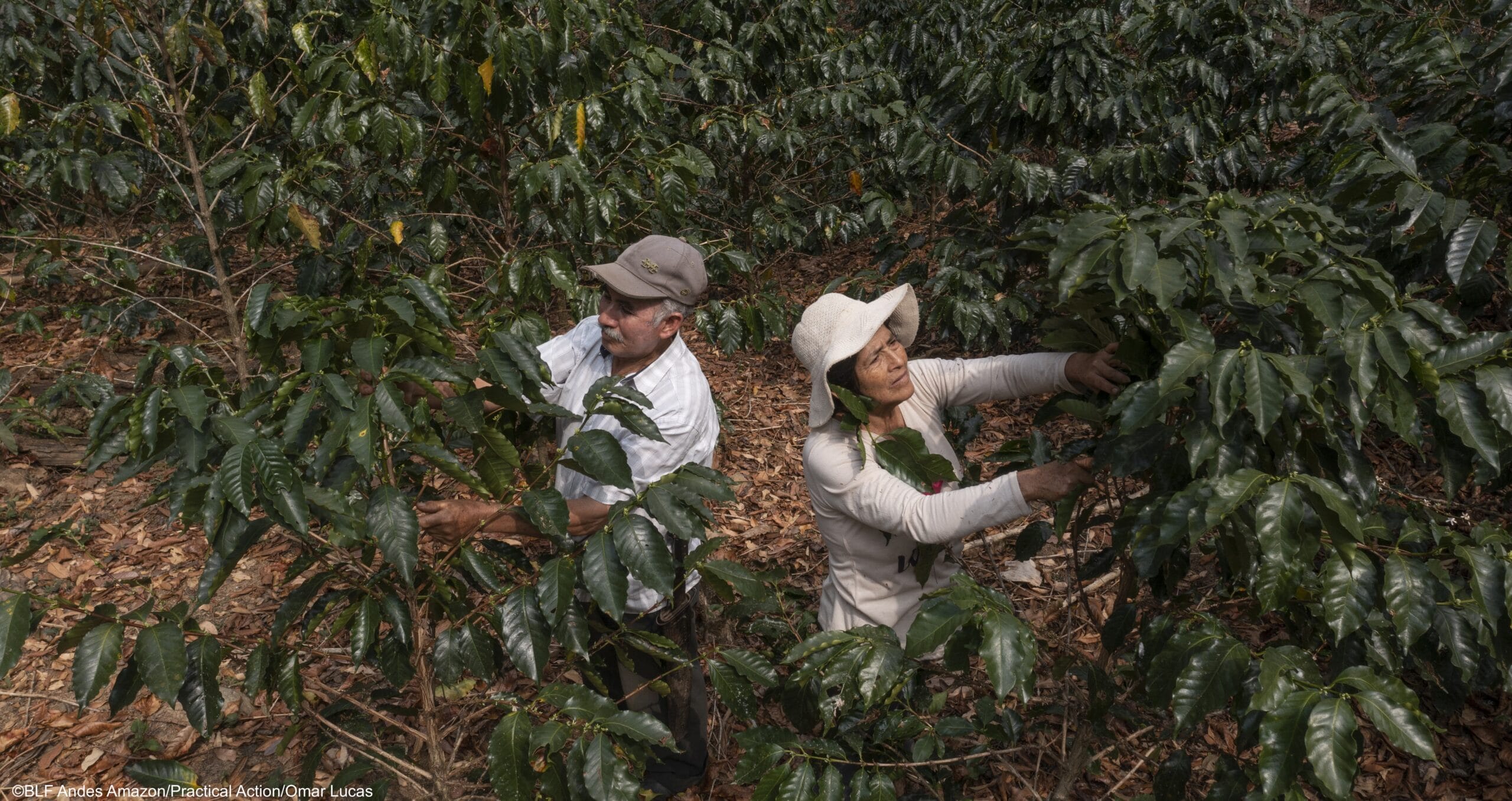
In the Peruvian Amazon, coffee farmers are under pressure to prove that their beans are not linked to deforestation. Coffee is a lifeline for thousands of families, but as production shifts into new areas, the risk of forest loss rises and new European rules on deforestation free imports add extra scrutiny. Rather than wait, the cooperative La Prosperidad de Chirinos, which brings together more than 800 farming families, has created its own system to stay ahead. With support from Practical Action and Terra Nuova, it has mapped every member’s farm and built an internal way to check that plots are outside forests, protected areas and Indigenous territories and have not expanded into forest after 2020. Satellite tools and drones help verify what is on the ground, and buyers can scan a code to see which producers are behind a shipment and how their farms have been checked. This keeps control in the hands of the cooperative and prepares its members to meet new EU rules with confidence, while protecting the forest that underpins their future.

Further north, in Morona Santiago, Ecuador, the Tsapau Association is showing that it is possible to earn a living without harming the Amazon. Formed by Shuar families, it combines the care of native stingless bees with the cultivation of traditional forest products such as vanilla, guayusa and cinnamon. The bees depend on healthy forests to survive, so looking after them also means looking after the forest.
A decisive push came from the women of the community, who created and now lead a shared savings fund to support small investments and strengthen production. With clear rules and collective organisation, they have helped more producers manage their finances and plan their work with confidence. The association has also developed a participatory business plan that allows members to coordinate efforts, work transparently and reach markets in a more organised way, ensuring that the time and energy they invest can translate into stable sales. With support from COSPE through the BLF Andes Amazon project, Tsapau’s work has become an inspiring alternative to production methods that often exhaust the land and place pressure on the territory.
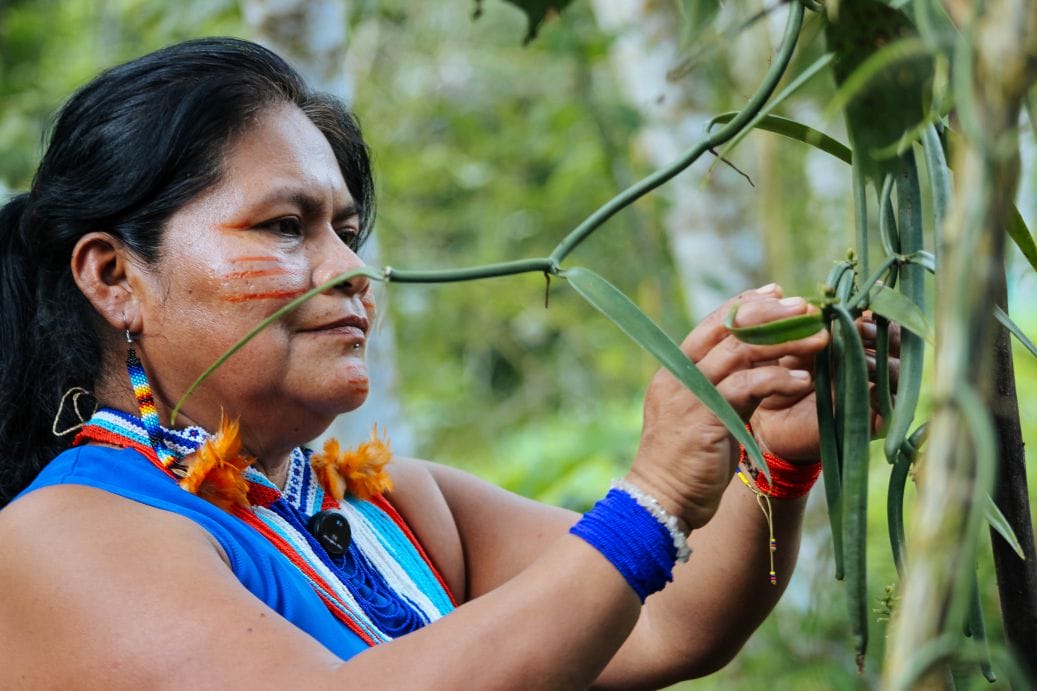
In Bolivia’s Amazon, the Tacana people are building climate resilient enterprises rooted in their culture. Through the Epuna Ecuana Eme network, whose name means “women’s hands” in Tacana, more than 100 Indigenous women have developed products such as banana flour, medicinal soap, natural oils, chocolate paste and handicrafts made from forest seeds. Every item is produced in ways that keep forests intact and pass Tacana knowledge to the next generation, while creating income that stays in the territory.
Whether it’s Tacana or Shuar women leading new businesses in harmony with the forests or farmers in Peru keeping deforestation out of their plots, the common thread is that local people are in the driver’s seat.
As Practical Action’s CEO, Sarah Roberts, stressed at COP30: “It is vital we prioritise the growth of strong, well-run local organisations, so they don’t just deliver work, but lead change.”

Big change starts with local climate leaders
From the coasts of Bangladesh to the highlands of Nepal, from Kenya’s lakeside farms to Bolivia’s rainforests, one lesson is clear: Solutions to the climate and food crisis are growing from the ground up.
These stories show what inclusive, grounded and nature-aligned climate action looks like in practice. They are inclusive because they put people who are usually excluded—women, young people, and Indigenous groups—in the lead. They are grounded in local knowledge and real needs, not top-down agendas. And they support nature by design, working with ecosystems instead of against them.
A fair and thriving future is still within reach if we choose to back it: by investing in local climate leaders and the organisations that support them. Now is the moment to move resources, trust and decision making closer to the people already growing the resilient future we all depend on.