Languages are an essential part of culture and the shaping of groups, peoples and nations. They allow us to name the world, to get to know it and recognize it from our understanding, memory and collective experience. Language cuts across history, culture, socio-political and environmental context and their transformations over time.
Within the framework of the Indigenous inclusion for informed disaster risk reduction decision-making project, CLEAR Global and Practical Action conducted a socio-linguistic analysis with women and men from the Aymara and Tacana indigenous nations in Bolivia to identify how they understand and express different concepts related to risk management based on their own experience and representations.
Indigenous communities in Latin America and the Caribbean are among the most vulnerable when facing climate-related disasters, but they remain largely excluded from formal decision-making processes. About 40% of the region’s rural population is indigenous, but their participation often has no place in data collection processes. Their traditional knowledge, built up over generations of direct experience with their environments, is frequently overlooked and not used to inform subsequent policies and plans. This exclusion not only further marginalizes these groups, but also weakens disaster preparedness strategies by ignoring valuable territory-based knowledge.
An additional issue is the lack of accessible information and the absence of training. Early warning systems and disaster-related guidance are often overly technical or not available in local languages, leaving many people unprepared in times of crisis. Without adequate training on how to interpret and respond to warnings, and without integrating local knowledge into official systems, indigenous populations continue to face disproportionate risks in the face of extreme weather events and climate change.
“We want to better understand the needs and use of indigenous languages in risk management contexts, such as the broadcast of alerts, risk bulletins, and other information in the area,” explains Leon Lizon disaster risk management expert at Practical Action Bolivia.
Clarifying the meaning of concepts
While preparing the workshops, CLEAR Global and Practical Action identified some concepts related to disaster risk management that are commonly used in technical spaces at the international, national and local levels.
Nimepishihue in Tacana, asxartawi in Aymara, or vulnerabilidad in Spanish, was one of the concepts translated by experts for validation by representatives of both indigenous nations.
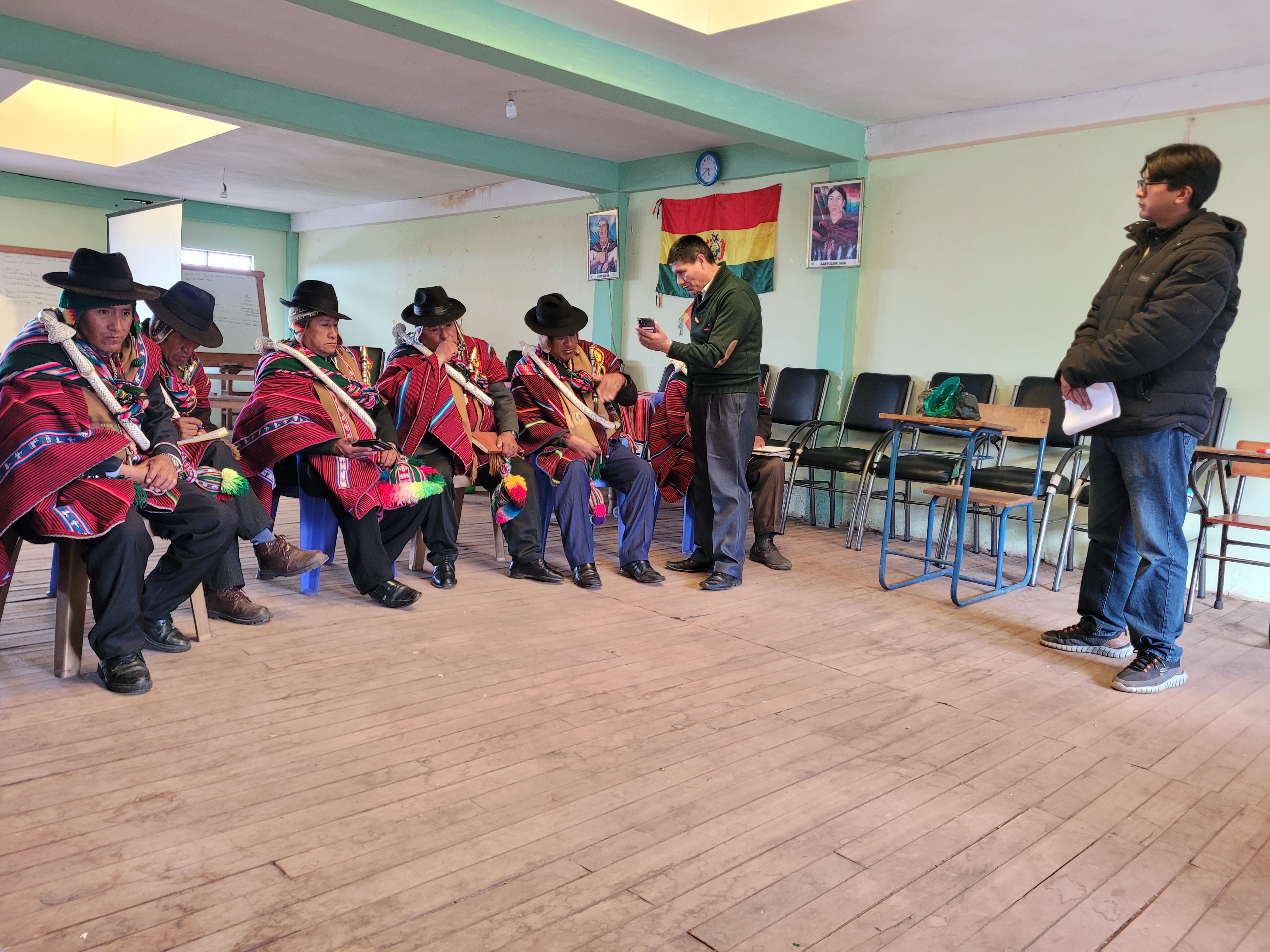
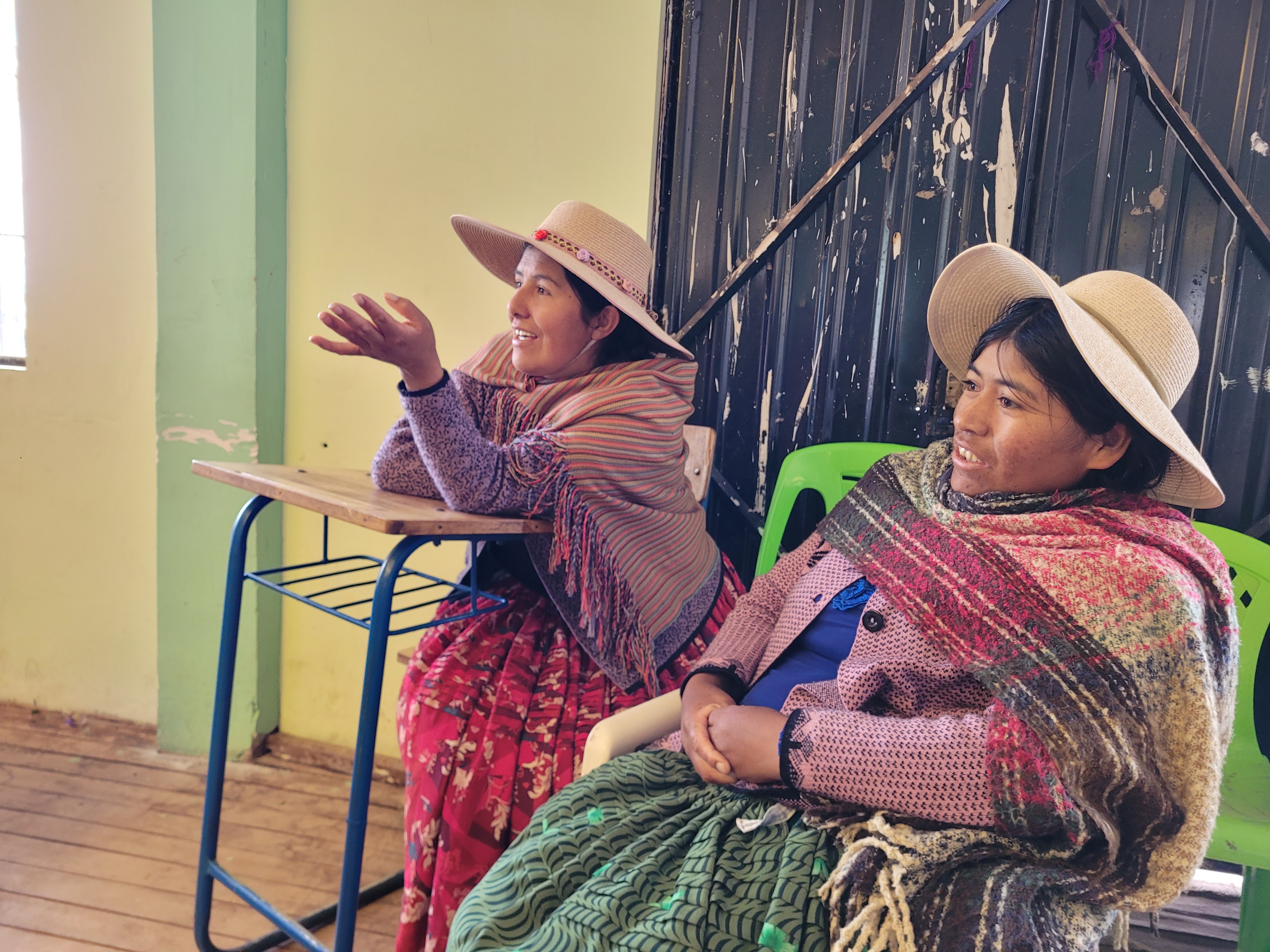
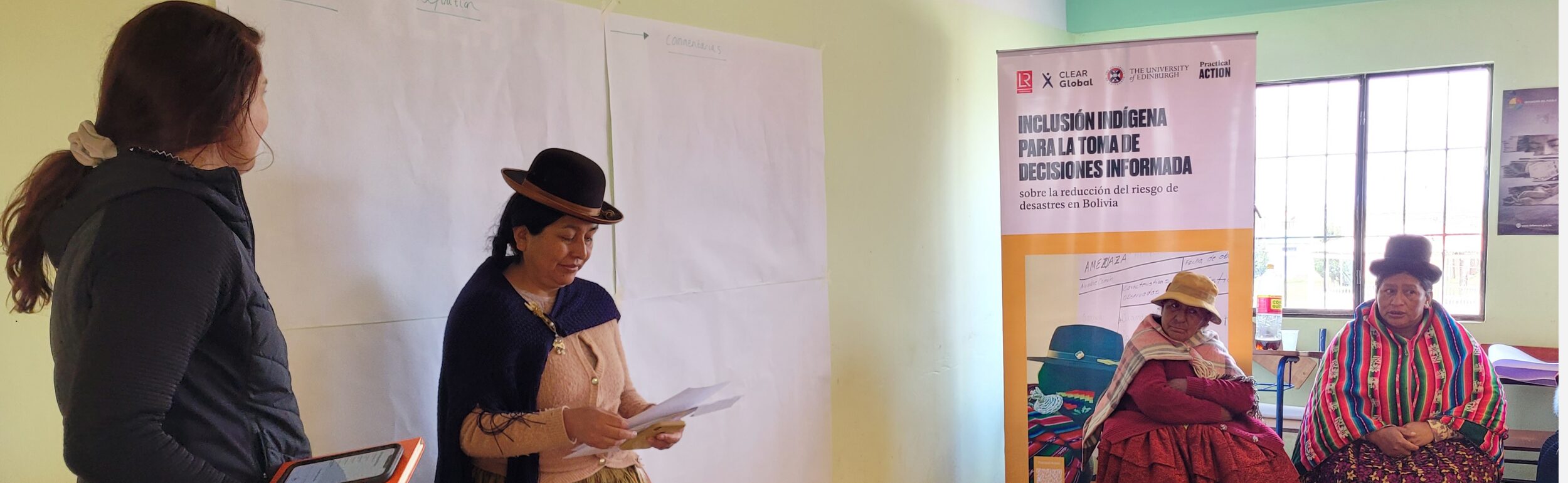
Aymara and Tacana representatives in the communities of Corpa (Jesús de Machaca) and Tumupasa (San Buenaventura) took part in the consultation of about 50 terms related to risk management. They used participatory methodologies with the support of Aymara and Tacana interpreters to facilitate a fluid dialogue and to be able to understand and analyze the use and usefulness of these words in their language, or finally to adapt them for a better understanding and closeness to their reality.
“We have organized these workshops in order to better understand the role that language and communication play in early warning systems and practices in communities affected by disasters, which are often triggered by climate change.” Explained Ingrid Gercama, consultant at CLEAR Global.
As part of the project, various activities were developed, such as interviews with different stakeholders and discussion groups differentiated by age and gender. One of the aims of the project was to create a glossary of disaster-related terms. To ensure that the translations were clear and understandable, community members tested and discussed the terms, and local language experts provided input.
The glossary includes about 50 key disaster terms and uses Bolivian law, an international risk survey and other reference materials as sources. These terms were translated from Spanish and English into Aymara and Tacana, along with their definitions.