View the Project
In Kirehe District, Rwanda, farming is central to how many families access food and earn a living. But increasingly unpredictable rainfall, prolonged dry spells, poor soil health and limited access to markets are making agriculture harder, especially for communities already facing economic and environmental pressures.
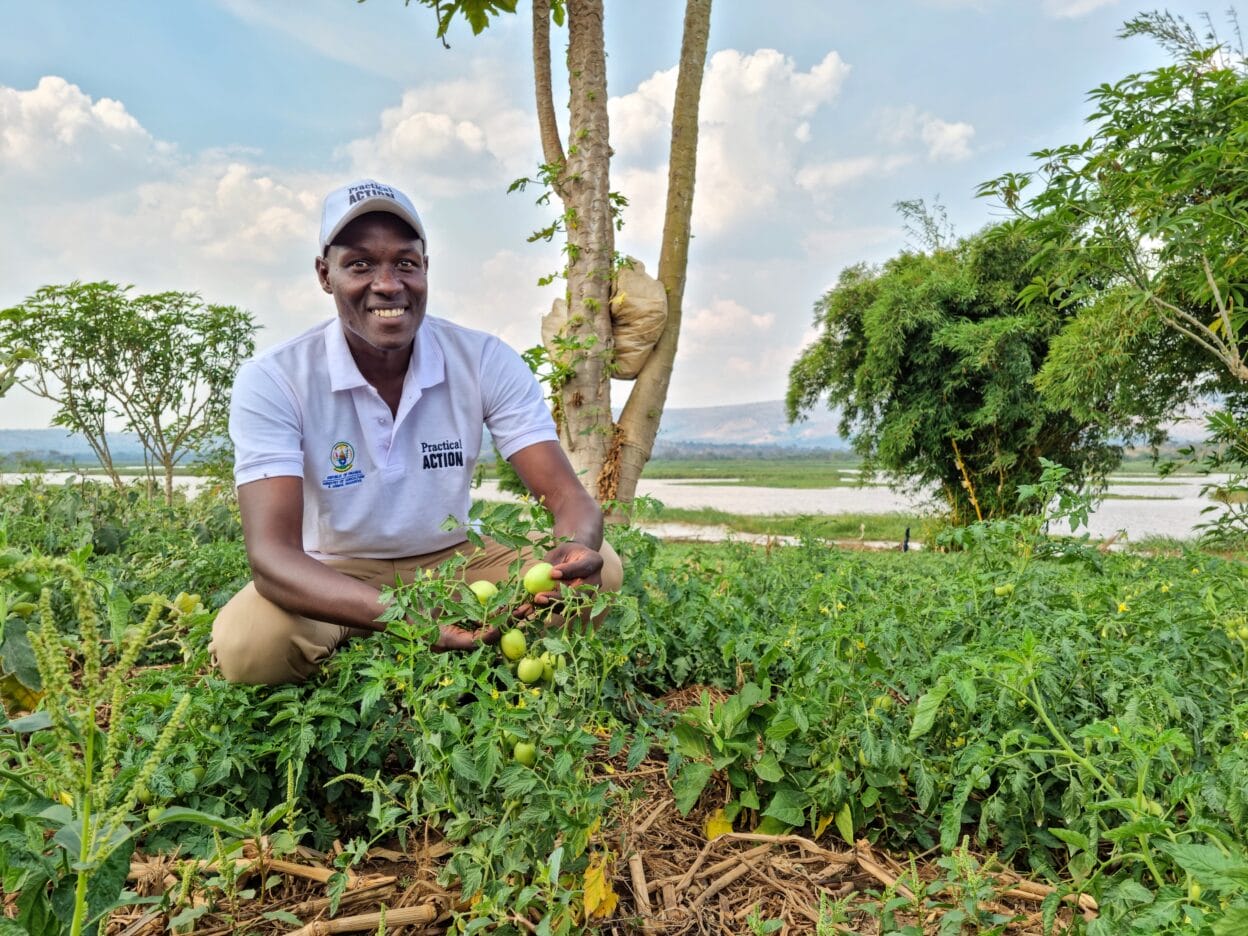
The Climate Resilient Farming (CRF) initiative worked with refugee and host community farmers to respond to these shared challenges. Through regenerative agriculture, solar-powered irrigation, stronger farmer organisations and improved market access, the project helped farmers build more resilient livelihoods and more sustainable food systems. Today, some of its most visible achievements include Rwanda’s first refugee farming cooperative and one of the country’s first solar-powered irrigation schemes in a refugee camp.

April 2022 – March 2024

Rwanda

Food Systems
Kirehe District is one of the hardest places to farm in Rwanda. Although agriculture there is one of the most vulnerable to climate change, many households rely on it for both food and their livelihoods. Declining soil fertility and economic pressures compound, affecting agricultural productivity and families’ ability to secure reliable incomes.
Farmers face prolonged dry spells, unreliable rainfall and limited access to irrigation systems, all of which contribute to lower yields and food insecurity. Soil tests came back highly acidic and with severe nutrient deficiencies, limiting productivity and contributing to land degradation.
Many smallholder farmers also lack access to quality agricultural inputs, technical knowledge and reliable markets. Weak farmer organisations and limited bargaining power often leave producers dependent on intermediaries and vulnerable to fluctuating prices. For refugee farmers, these challenges are compounded by limited livelihood opportunities and restricted access to land and infrastructure.
In response to these challenges, we combined regenerative agriculture, renewable energy and market systems development to create a climate-resilience and sustainable farming system. This approach strengthened local capacity and livelihoods, while increasing productivity and restoring the soil.
Full title: Climate Resilient Farming (CRF)
Dates: April 2022 – March 2024
Location: Kirehe District, Eastern Province, Rwanda
Our role: Practical Action designed and led implementation of the initiative, working with government institutions, humanitarian organisations, local authorities and farming communities.
Participants: 177 refugee and host community farmers organised into two cooperatives
Project budget: £360,000
Funded by: This work was generously supported by Postcode Lottery players. The Funds were awarded by the Postcode International Trust.
In Kirehe, farmers show how futures can drastically change when solutions are led by the community and developed to address all added challenges. Given a chance to work on healthier soil, water and a fair route to market, they are running productive farms and sell into working markets.

Help us work with communities to tackle some of the world’s toughest problems.