“Wisdom demands a new orientation of science and technology toward the organic, the gentle, the elegant and beautiful.”
E.F. Schumacher, Practical Action’s founder, in 1973
E.F. Schumacher, Practical Action’s founder, in 1973
We’re helping farmers in Zimbabwe’s Gwanda region make a living from farming and feed their families year-round. The farmers now buy and swap the seeds to diversify their crops at seed fairs and save their seeds at community seed banks we helped them set up.
The BBC recently reported on our work in Gwanda, which we’re replicating in other parts of Zimbabwe to make more farmers resilient to climate change.
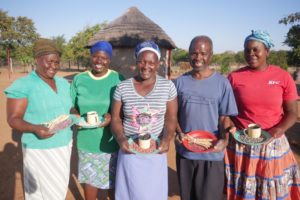
Smallholder farmers in Zimbabwe are adapting to climate change with traditional seed varieties and planet-friendly farming techniques.
The Compressed Stabilised Earth Bricks we promoted for use after the 2015 Nepal earthquake won this year’s Ashden Environment and UN STI Awards for our partner Build Up Nepal.
As reported in the Nepali Times, The interlocking bricks, made of sand, clay and cement, are not only climate friendly and earthquake resistant, but also cost 25% less than using commercially produced fired bricks.
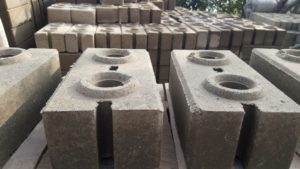
It might not look like it, but these award-winning bricks are anything but normal. They’re giving people an affordable, planet-friendly way to rebuild their homes.
Our integrated water management in North Darfur is not only helping thousands of farmers grow vegetables and cash crops, it has also brought peace between farmers and pastoralists, as reported in The Guardian.
With easy access to water for household use and irrigation, women no longer spend most of their day carrying water to their homes. This means they are earning more and more girls are going to school.
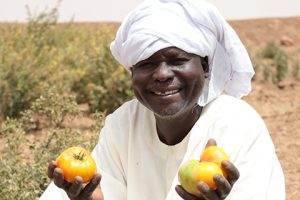
Tomatoes are one of the nutritious, easy-to-grow veggies being grown in North Darfur now that farmers have access to water to irrigate their land.
Our work with farmers in Bangladesh has also caught the eye of The Guardian. Hit by increased levels of salt in the water, uneven rainfall and flooding, the nation’s farmers are adapting to the situation with a little ingenuity.
We have helped introduce effective natural fertilisers to increase crop growth. And we’re helping people farm fish in cages and grow vegetables in sacks or beside rivers on ‘floating gardens’.
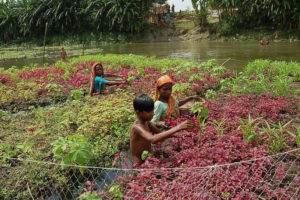
These floating gardens aren’t just beautiful – they mean plentiful food and a decent livelihood for families in flood-prone areas of Bangladesh.
Local, community-owned solutions. Natural, small-scale technologies that benefit people and the planet. Sustainable approaches that create long-term change. We’ve been working in this way for 50 years, and we know it works.
Together, we can help the world make the right choices. We can step into a post-crisis world that works better for all of us.
Sanjib Chaudhary works in our Nepal office reporting on examples of our ground-breaking work around the world.