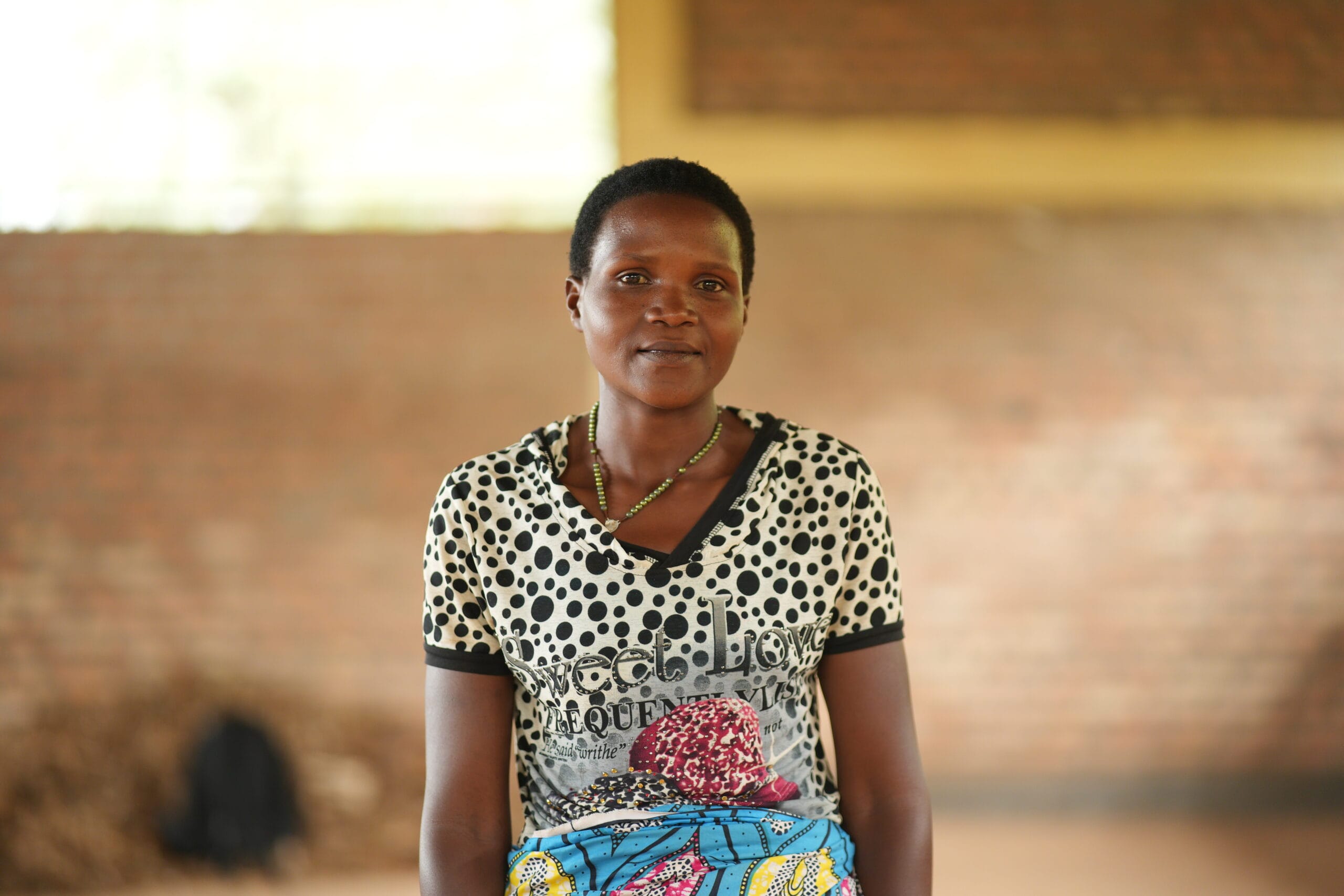
When Maria talks about poultry farming, she doesn’t start with the chickens. She starts with the soil.
Maria is 31, a mother of three boys, and a farmer in Gisagara district in southern Rwanda. Farming is what she grew up doing. As she puts it, she has been farming for as long as she has been alive. But her maize and bean fields were never producing what they could, because she didn’t have enough fertiliser.
So when the Farm to Market for Refugee Youth (F2MARY) project began offering training in poultry farming, she spotted a connection straight away. “I felt that if I joined this programme, it would benefit me greatly,” she says, “especially since it included poultry farming, and chickens produce manure.”
Chickens meant manure. Manure meant better harvests.
From 50 kilos to 90
The difference is now visible in her fields. On land where she used to harvest around 50 kilograms of maize, she now gets about 90. She applies the manure directly into the planting holes for maize and beans alike. “The yield has increased significantly,” she says.
Those gains matter because farming in Gisagara is getting harder. Climate change is nothing abstract to Maria. Last season, after farmers planted as usual, weeks of intense sun caused crops to wither, flowers to fall and yields to drop. She estimates the impact on local farming at around 50 per cent.
Her flock helps her spread that risk. Selling eggs gives her income she can rely on when crops are uncertain, and manure matters at a time when chemical fertilisers are expensive and less and less appealing.
What she values most is that the knowledge is hers to keep. “Even if I don’t get a donor to give me chickens, I have the knowledge now so I can save up and buy them myself, knowing how to care for them.”
Two crops, one project
Maria farms in the district surrounding Mugombwa Refugee Camp, and her story says something about how people on both sides of its boundary are getting by together. “We cooperate closely because life in the camp is difficult,” she says. “They come to us, we cooperate, and we find a way to survive together.”
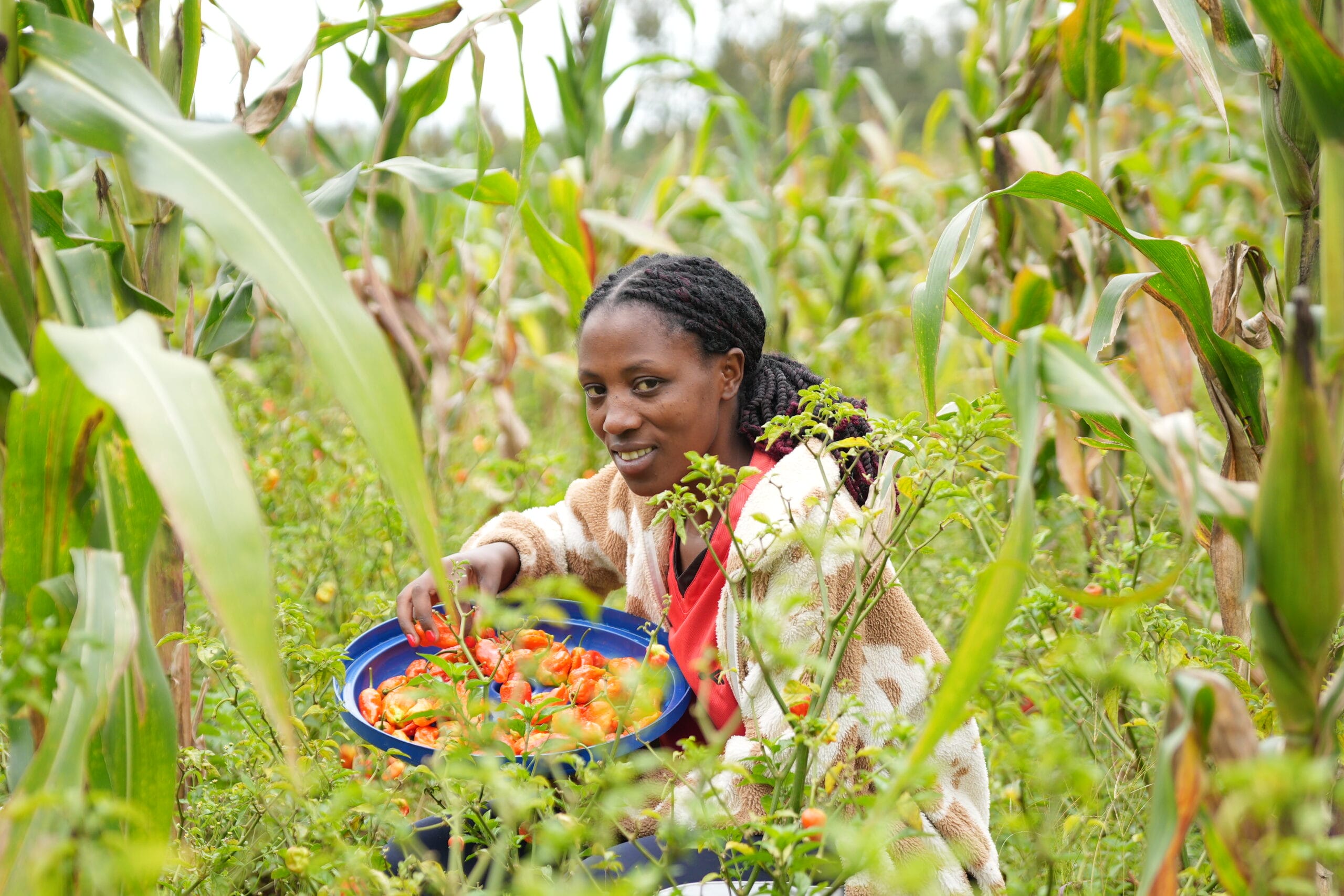
Inside the camp, the project’s other crop is doing similar work. Alice, a young mother who has lived in Mugombwa for thirteen years, had no steady income before she took up chilli farming. She was sceptical at first, and so were her neighbours. Then the harvests started. Alice has sold 162 kilos so far, at 500 Rwandan francs per kilo, and the income covers her household needs while she saves towards a small business. “Now I am able to support my child,” she says, “and they are doing well because I can provide what they need.”
Livelihoods that last
Maria and Alice are two of the young farmers involved in F2MARY. The project focuses on chilli and poultry farming because both are in high demand, so what farmers produce has somewhere to go. We help deliver technical and business training, instals solar-powered irrigation, and connect farmers with buyers and financial services. Over three years the project will improve 30 hectares of farmland and help 2,000 young people, with a strong emphasis on women, into better work.
Maria is already thinking about what comes next. “The best way forward is for us to continue living together but find a way to get sufficient manure. That way we would farm and harvest more.”