Read the full story
Ever wondered what people mean when they talk about “regenerative agriculture”? You may have heard the term alongside others like organic, permaculture and sustainable farming, and it’s not always clear how they differ or why they matter to farmers.
This guide breaks down what sets each approach apart. You’ll also read how this works in practice for the farmers Practical Action works with around the world.
The main differences between regenerative agriculture and sustainable agriculture are:
Regenerative agriculture specifically aims to enhance and maintain soil health, improve on-farm biodiversity and preserve water resources. It often has a social element as well, aiming to support local economies and provide nutritious and affordable food. When this definition is used, it can be seen as a form of agriculture that aims to regenerate environment, society and the economy.
Sustainable agriculture is an older term, that is less specific than regenerative agriculture. It simply means, agriculture that does not harm the natural environment and that maintains the resources on which it depends (e.g. soil, water etc). There is considerable overlap between the two concepts.
The main differences between regenerative agriculture and organic agriculture are:
Regenerative agriculture uses a flexible set of practices, that improve the soil, protect wildlife, keep water clean and store carbon in the soil. It does not look the same everywhere and no single standard exists. This flexibility helps to provide opportunities to reach larger numbers of farmers.
The type of regenerative practises used will depend on local climatic and soil conditions and the type of farming systems that dominate. Regenerative agriculture is not about achieving a specific standard, it is about improving practises and gradually becoming more regenerative. There is not an obvious end point – it is the process of continual improvement that matters.
Regenerative agriculture can allow some chemical use, as long as it does not compromise soil health, farm biodiversity or water resources. For instance, Integrated Soil Fertility Management is an approach that mixes organic and chemical fertiliser without harming the soil or water.
In contrast, organic agriculture is a ‘one size fits all’ end-point – it is simply farming without chemicals (e.g. fertilsers, pesticides) or genetically modified organisms (GMOs).
Organic agriculture is governed by a set of tight rules. Organic farms have to be certified, using standards that are common around the world. Organic agriculture is suitable for some areas and for some farmers, but it is not suitable everywhere.
The regenerative farming principles of maintaining soil health and enhancing local biodiversity are not explicit in organic agriculture. Although a lot of organic farming may result in these outcomes, it is also feasible for organic agriculture to include practises such as mono-cropping, which can have negative environmental impacts and would not be considered suitable under regenerative agriculture.
The main differences between regenerative agriculture and permaculture are:
They also differ in scale; regenerative agriculture typically operates at the farm or field level, whereas permaculture can cover entire ecological regions.
However, there is a lot of overlap between permaculture and regenerative agriculture because they both emphasise long-term strategy and ecological health in farming. The type of agriculture seen in permaculture systems will almost certainly be regenerative.
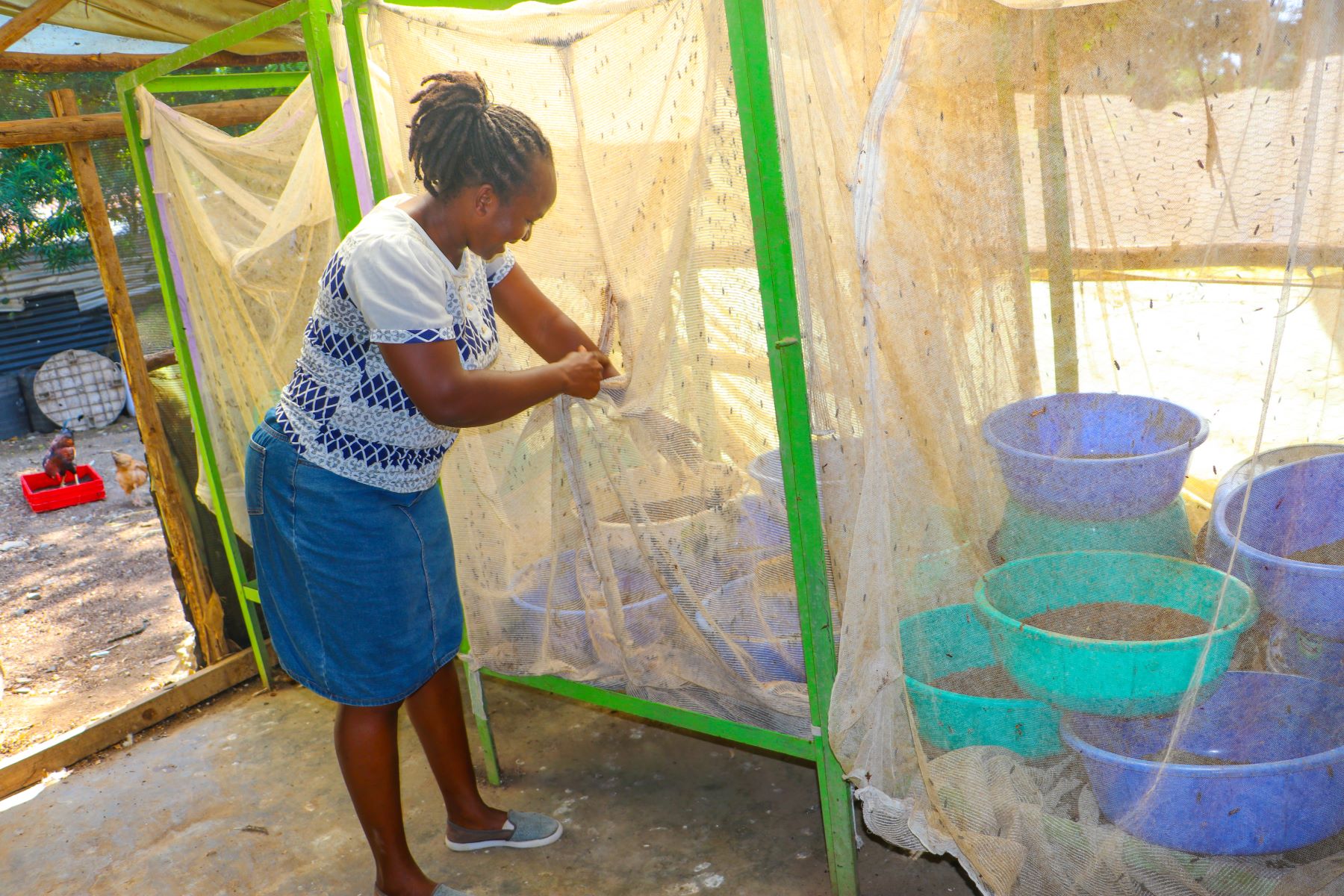
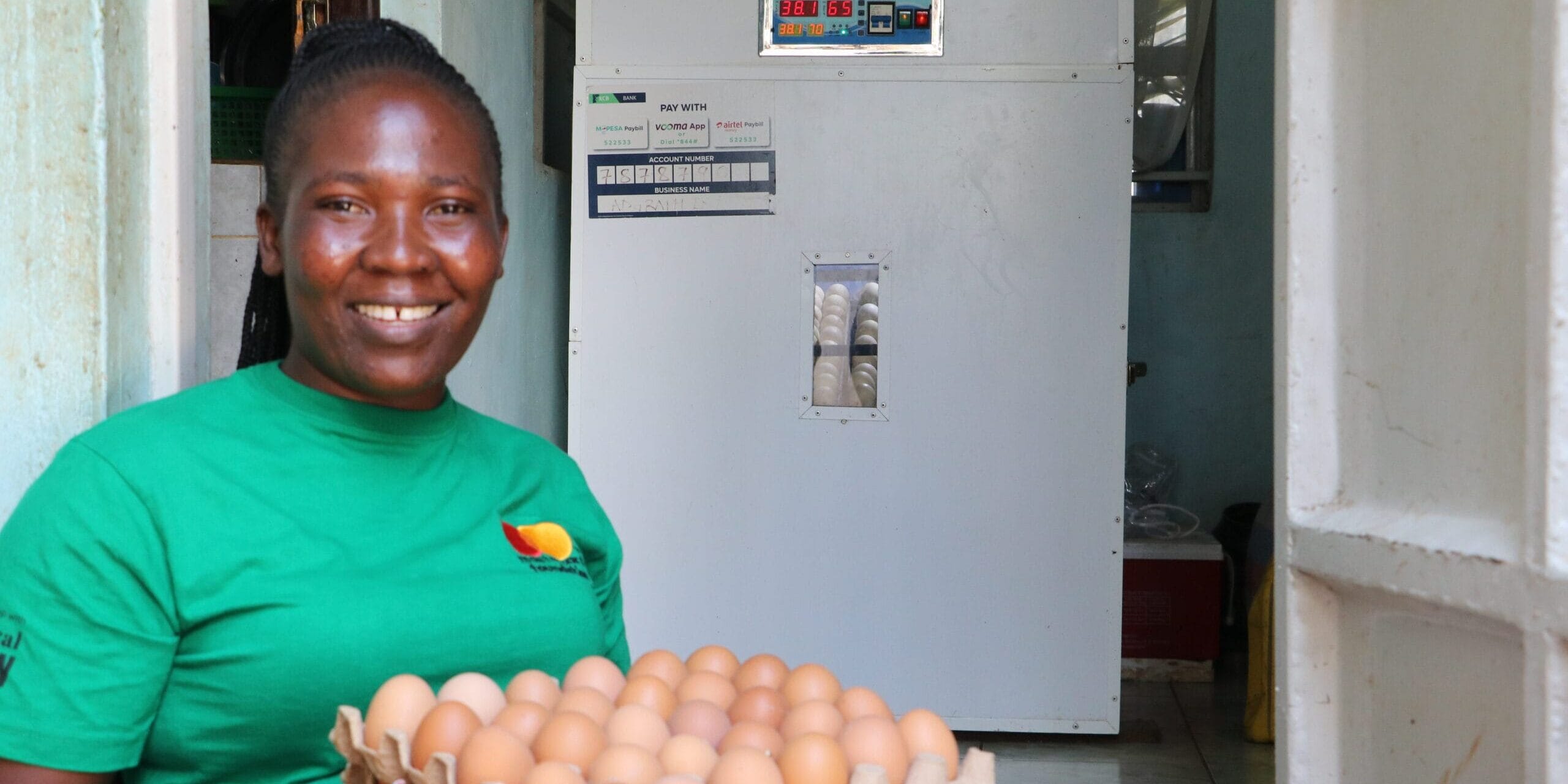
Nephile (pictured above) left her underpaid job at a large hotel in the city of Kisumu in western Kenya to start an agribusiness selling chicken and eggs.
Despite hard work and a driving desire to build a better future for her young family, she still faced financial uncertainty because of costly commercial chicken feeds. Then she discovered Black Soldier Fly larvae.
With Practical Action’s support, Nephile learned how to farm the flies as an affordable source of chicken feed. She now farms enough larva to feed her chickens, and still have surplus larvae to transform organic/kitchen waste into a protein-rich and cost-effective organic manure which can be sold to boost her business.
The results have been astonishing, and Nephile’s poultry and manure businesses thrived. Her story is a great example of how both circular farming, and regenerative farming practices can power success.
But we need your support to help build a fairer and more prosperous future for more people around the world. Will you join us?
Donate Now