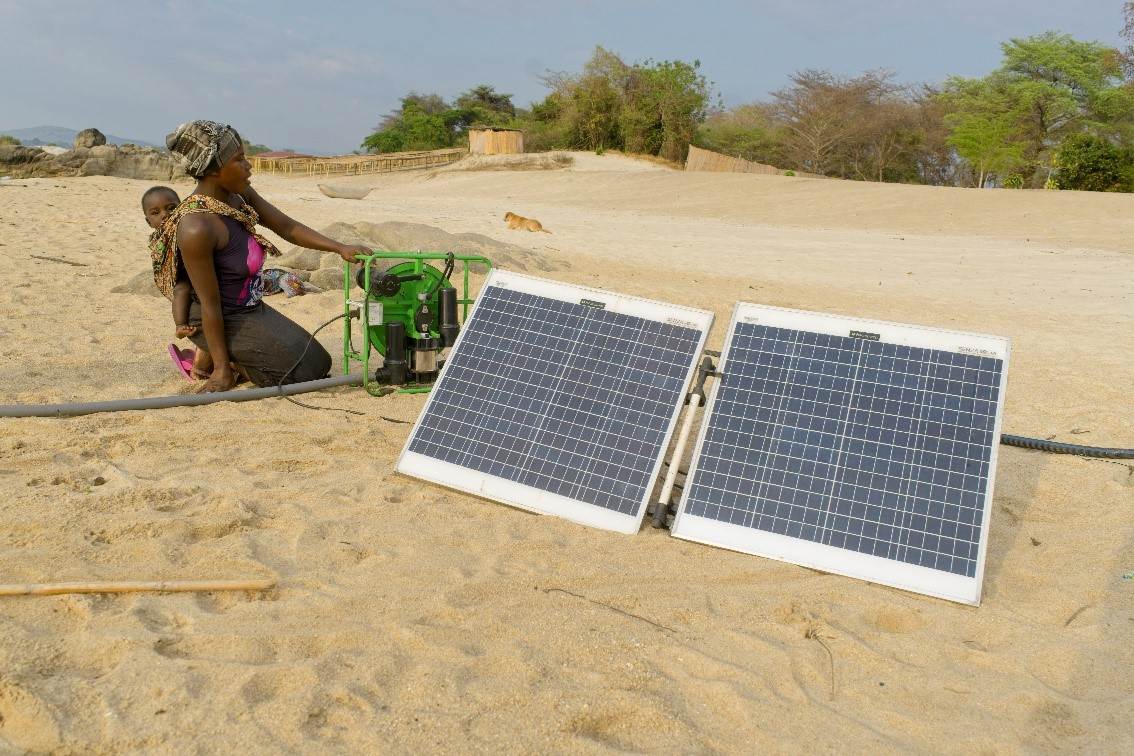
Figure 1: Solar power is used to pump water from Lake Malawi to nearby greenhouses
The twin challenges of sustainable development and climate change have increased interest in the role that energy access can play in enabling adaptation to climate change.
One challenge in advancing a joint agenda is articulating and assessing the contribution of different energy uses (household, productive and institutional) to resilience and adaptation (GOGLA, 2021). Currently, energy access stakeholders including NGOs and off-grid companies face challenges in identifying and assessing energy access contributions and convincing policy makers and funding organisations of their importance (ibid).
A range of frameworks exist for assessing the concept of resilience, each with different components (Bahadur and Pichon, 2016). One that is useful for evaluating energy access interventions is the 3 ‘A’ Resilience Framework, originally developed to assess projects funded through DFID’s ‘Building Resilience and Adaptation to Climate Extremes and Disasters’ (BRACED) programme (Bahadur et al, 2015).
The 3 ‘A’ framework conceptualises ‘resilience’ as ‘the ability to anticipate, avoid, plan for, cope with, recover from and adapt to (climate related) shocks and stresses’ (ibid,11). It splits the concept into three capacities -absorptive, anticipatory and adaptive- that are a function of different capitals (both tangible, such as physical assets, and intangible such as social relations). The framework has been used to diagnose the extent to which resilience capacities are present in social systems, such as rural villages, and to evaluate the success of resilience building interventions, from agricultural programmes to social protection (Bahadur et al, 2015; Ulrichs and Slater, 2016).
Conceptualising resilience in terms of capacities is useful because it allows interventions to be assessed before the occurrence of climatic shocks or stresses (which may not occur within the lifespan of the intervention). Therefore, it can be used to assess the extent to which energy services build resilience ex-ante based on prior evidence and experience of what capitals are needed to deal with similar climate hazards.
Below, I include a brief description of each capacity and, using a series of tables (one for each capacity), indicate the potential contribution different energy services can make to key elements, as well as example indicators. This article is not intended as an exhaustive list of all possible contributions, but to illustrate one way of framing the role of energy access in adaptation. I have drawn on the original 3 ‘A’ report (Bahadur et al, 2015) as well as other adaptation and disaster risk reduction resources (Practical Action, 2020; Pasteur, 2013).
Sections: