We know that creating and improving jobs can offset people’s need for aid and that empowering women is a powerful driver of social change. Our work with women waste workers in Bangladesh does both these things and is on the cusp of creating city-wide change in Faridpur.
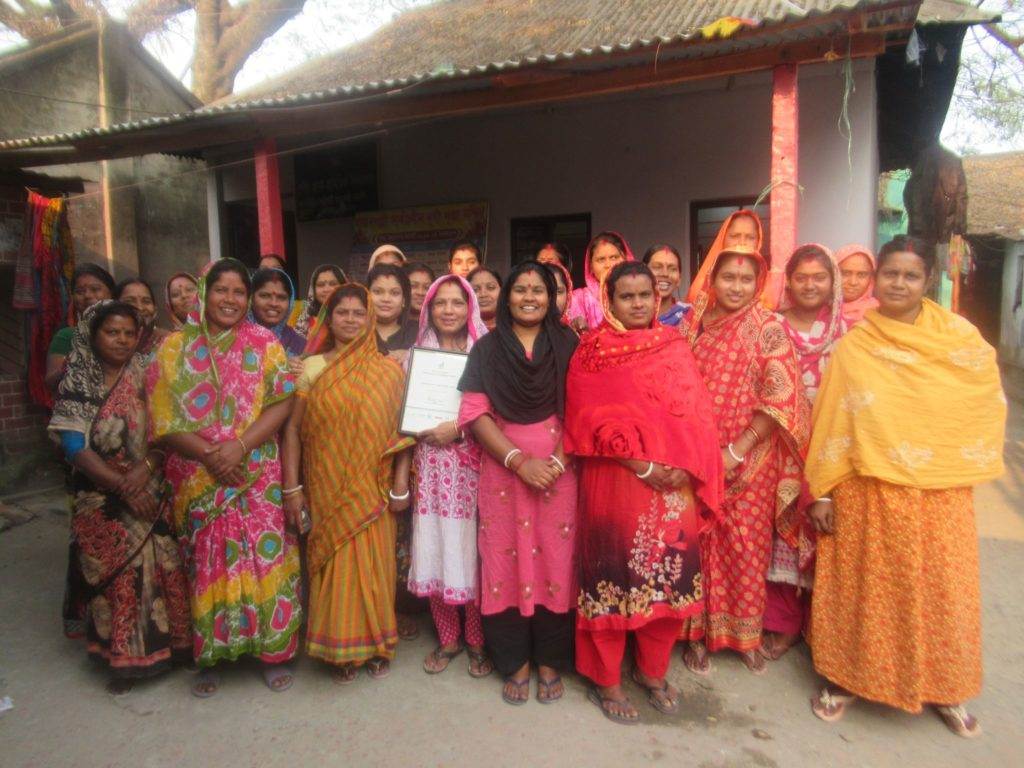
Alo (centre, with certificate) on the day her cooperative won a national award for its sustainable and innovative project ideas.
The challenge
The population of urban slums and settlements continues to grow, with the needs of the poorest and most vulnerable often overlooked. Lives are at risk from a lack of clean water services and inadequate and unsafe sewage and refuse management. In Bangladesh, a growing urban population is putting greater strain on city infrastructures. In this environment, the needs of people in the slums are often overlooked. Informal waste workers, many of them women, work in a dangerous environment, while also facing exclusion and discrimination.
Our goal
Our aim is to work with our partners to make cities in developing countries cleaner, healthier, fairer places for people to live and work. By 2025 our goal is to reach one million people living in slums in 21 towns and cities around the world. We’ll do this by identifying whoever is already providing a waste service, however informally, so we can build on existing solutions. Then we’ll adapt our work so that we can replicate our success in other towns and cities. It’s a tried and tested approach that’s already working in Faridpur, Bangladesh.
What we achieved in 2020/21
We’ve teamed up with women working as informal waste workers in the slums of Faridpur to boost their incomes, improve their working conditions and gain greater recognition of their vital role in the city. It starts with protective clothing such as gloves to protect workers hand from cuts that could result in infection, and masks to protect against viruses like Covid-19. We then help form cooperatives, which gives them more credibility and influence with decision makers. Together, we convince authorities that when informal waste workers have more of a voice, everyone in society benefits.
We have been able to influence national policy so that informal waste and sanitation work is included under the category of ‘hazardous work’, giving those workers access to an important national Labour Welfare fund from which they were previously excluded. Informal workers now have more rights and opportunities, as well as the confidence to further improve their circumstances.
The number of working days lost to illness or injury dropped by 73% among the informal sanitation workers we supported in Bangladesh.