We refuse to accept that the only future for food production is an agricultural system that damages the planet, while farmers often struggle to earn a decent living. Our work with young farmers in Kenya is helping buck the trend of urban migration and demonstrating that a regenerative approach to agriculture can be profitable.
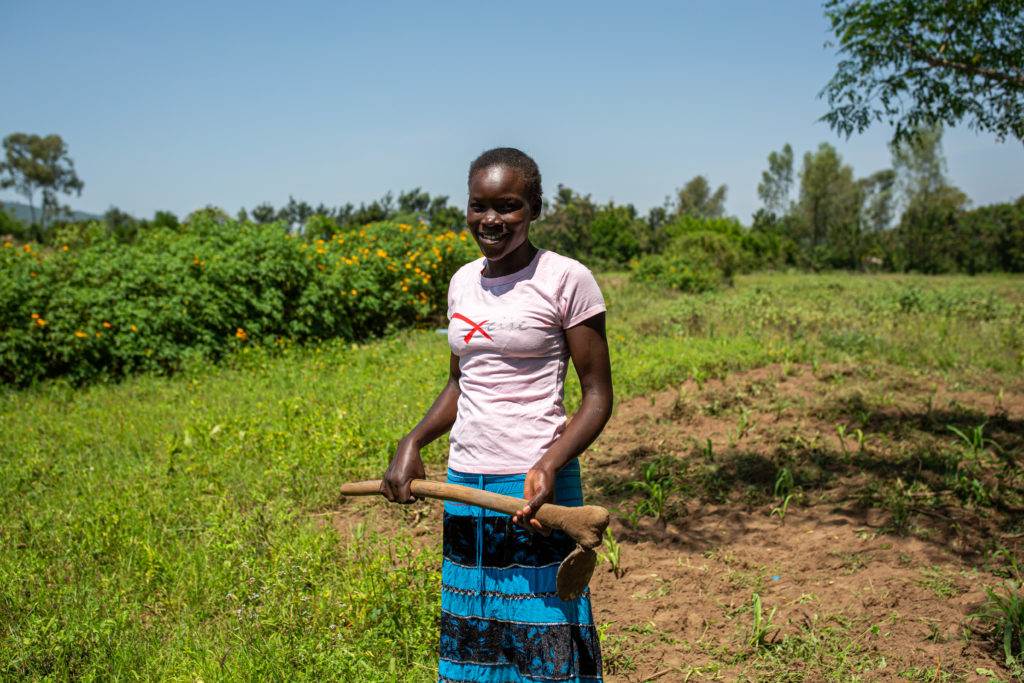
Planet-friendly techniques are making farming work for young people in Kenya.
The challenge
Farming in poorer, isolated parts of the world has always been difficult. Climate change has caused disruption to weather patterns that have made it even tougher. Many young people growing up in rural areas don’t see farming as a profitable career option. There is an exodus of young people leaving rural areas of Kenya to find work in the cities. This damaging trend is causing rural economies to stagnate and food production to slump. Communities, NGOs and the government of Kenya have struggled to implement solutions that make farming an attractive livelihood for young people.
Our goal
We’re aiming to breathe new life into rural economies by demonstrating that regenerative agriculture can create viable business opportunities for young people and thriving local economies. We know that farmers can succeed, while also preserving natural resources. Our goal is to address the inefficiencies and inequalities present in the existing system to make success possible.
What we achieved in 2020/21
Our work with young people in rural areas, in partnership with the IKEA Foundation, is building a business case to demonstrate that regenerative agriculture can be commercially successful. We’re working with an initial cohort of 6,000 young women and men, enhancing their business skills based on a planet-friendly approach to farming.
The regenerative farming techniques we’re championing includes reusing waste products from one part of the farm elsewhere. For example, chicken poo makes an excellent fertiliser for vegetables and can help improve soil health. Using techniques like this, young farmers can achieve independence and a good standard of living, while protecting the environment and giving them skills for the future.