COP31 in Antalya, Turkey has closed without an agreement, leaving poorer nations still fighting for the finance they need to adapt. Some are calling it the worst COP ever. Some are sharing their disappointment and frustration. But the fight for the most vulnerable communities that we bring to every COP must go on. So what happened? We take you through the highs and lows with our five key takeaways.
1. The outcome fell short on ambition
Countries failed to agree a cover text. The non-binding cover decision made no mention of fossil fuels and was rejected by the EU and other nations. Depressingly, decisions on key negotiating tracks, including the Global Goal on Adaptation and Climate Finance, were blocked. The so-called ‘Implementation COP’ became a battleground over existing commitments.
Previous agreements are not erased however, and the technical and legal frameworks that govern multilateral climate action still stand.
But, for the people Practical Action works with, this is likely to mean that they are once again left waiting for the crucial funding they need to safeguard their lives and livelihoods.
Demet Intepe, Senior Climate Resilience Adviser, has written extensively about what this means here, saying: “Frontline communities living through accelerating climate devastation cannot survive on legal technicalities, delayed plans, and diluted gender and human rights commitments.”
2. Adaptation finance is the defining failure
Pledges to the Adaptation Fund fell far short of need. Luxembourg, Norway, Switzerland and Canada brought nothing new, and Norway’s contributions will not start until 2029. Germany pledged €11.1m and Spain €27.8m. In total, just $50.2m was pledged, while adaptation needs are set to reach $305 billion a year by 2035.
This is an outright failure of wealthy countries to meet their finance obligations and it demonstrates a worrying trend as countries withdraw from their historical contributions to C02 emissions and current capability to fund the very necessary turn around.
Our NABAPALLAB adaptation programme in Bangladesh, one of the world’s most climate vulnerable regions, is just once example where funding cuts have devastated people’s lives, leaving the community without promised solutions to safe drinking water, ways to produce food and earn a living. And ending the programme without the long-term change that people expected.
Catherine Smith, Philanthropy and Partnership Lead, said: “There is enough money, it’s a choice of priorities. When funding does flow in the right direction it must be effective – I’ve heard so many organisations and people calling for more accessible, flexible and long-term reliable funding.”
3. Communities hold the solutions
Locally led adaptation was at the heart of our sessions. Our delegates spoke across pavilions and side events on climate-resilient workforces, inclusive multi-hazard early warning systems and locally led adaptation. With partners including the Rockefeller Foundation and the World Resources Institute, we discussed ways to increase farmer incomes. Venkat Raman, Head of Programme and Operation in India, insisted that farmers must be kept at the centre and stressed the need for credible field-level evidence.
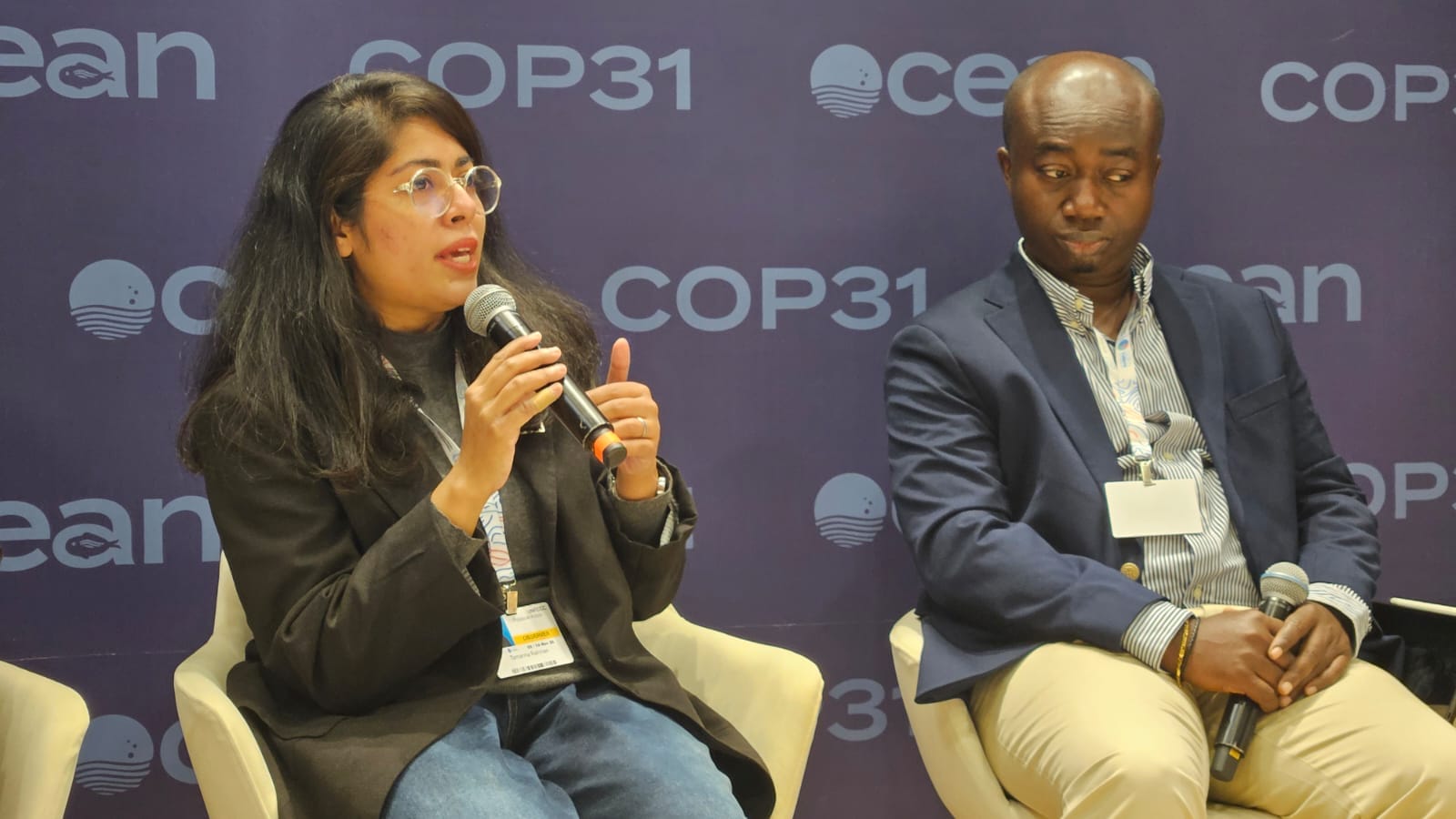
Demet Intepe, together with Tamanna Rahman, Climate and Resilience Lead in Bangladesh, shared our experience of financing locally led adaptation, and what the recent Nepal disaster tells us about climate risks, inclusive warning systems and climate responsibility.
We were there to call for adaptation to be led by communities, backed by early warnings and early action, and properly financed. Showing funders how with their backing, we can create impact well beyond the lifetime and setting of a project.
4. Early warnings must translate into early action
Leaders backed a long-term future for early warnings. The UN’s agency for disaster risk reduction and the World Meteorological Organization launched the Global Status of Multi-Hazard Early Warning Systems 2026.
As the landslides in Nepal in August this year demonstrated, the need for support so that people can better prepare for climate disasters is becoming increasingly urgent. We therefore welcomed calls by world leaders to protect millions of people from climate-induced disasters beyond 2027, while stressing that greater investment is needed to turn early warnings into protective action. Read more: COP31: Early warnings must translate into early action
5. There were signs of progress
Our influence is showing. Some of the arguments we put to the UK in a pre-COP bilateral were used in the negotiations. Climate Action Network gave its Solidarity Award to the people of Nepal following the Bhotekoshi valley disaster. And Bangladesh was one of six countries selected to receive US$30 million from the Climate Investment Fund.
Tamanna Rahman, Thematic Lead for Climate and Resilience in Bangladesh, said: “The $30 million investment for Bangladesh from the Climate Investment Funds is a positive step towards building resilience for climate-vulnerable countries like Bangladesh. However, this is very much less than what is required. The adaptation finance gap is increasing, and we need predictable, accessible, grant-based finance to build the resilience of the most vulnerable and the most marginalised.”
Looking ahead
COP31 reinforced what we see in our work every day: early warnings only save lives when they lead to early action, and adaptation only works when the people most affected help lead it and get the finance they need. Across many of our sessions, we highlighted locally led adaptation as the way to align finance, policy and action at scale.
Although this year’s negotiations have ended, we will keep pressing for adaptation finance that is predictable and accessible to local communities, and for the voices of those on the frontline to be heard in the rooms where decisions are made.