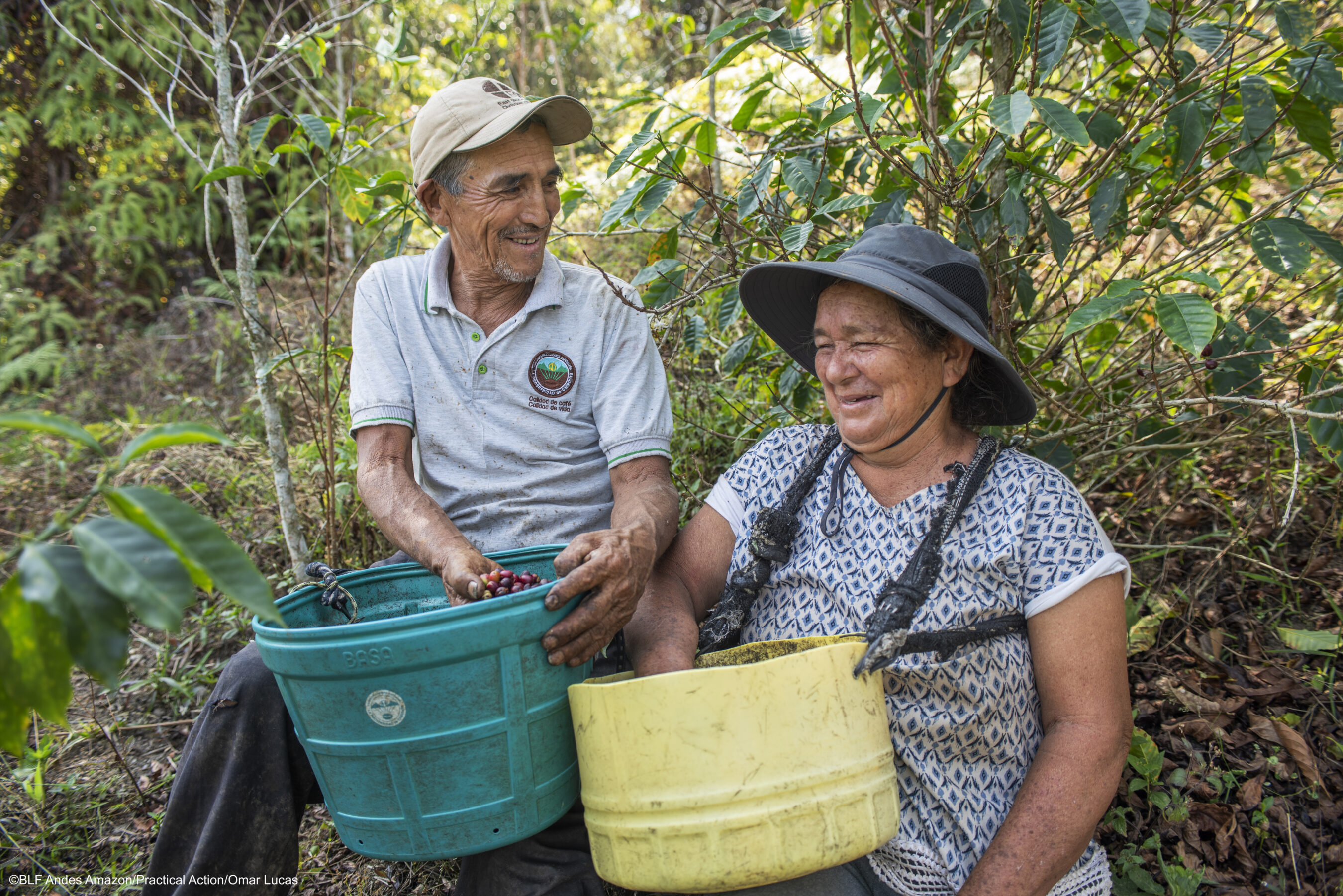
In a global context of growing demand for sustainable value chains and deforestation-free products, in June 2025, in Lima, Peru, the results of the experience promoting climate incentives for agroforestry systems with coffee were presented. This initiative was implemented by Solidaridad and Practical Action, within the framework of the BLF Andes Amazon Project, funded by UK International Development through the Biodiverse Landscapes Fund.
During this meeting, representatives of producer organizations, the Peruvian Ministry of Agricultural Development and Irrigation (MIDAGRI), and the Ministry of the Environment (MINAM), as well as cooperation agencies, researchers, technicians, and professionals from the sector, learned about the lessons and challenges of an intervention aimed at promoting agroforestry systems with coffee in the provinces of Jaén and San Ignacio, Cajamarca between 2024 and 2025.
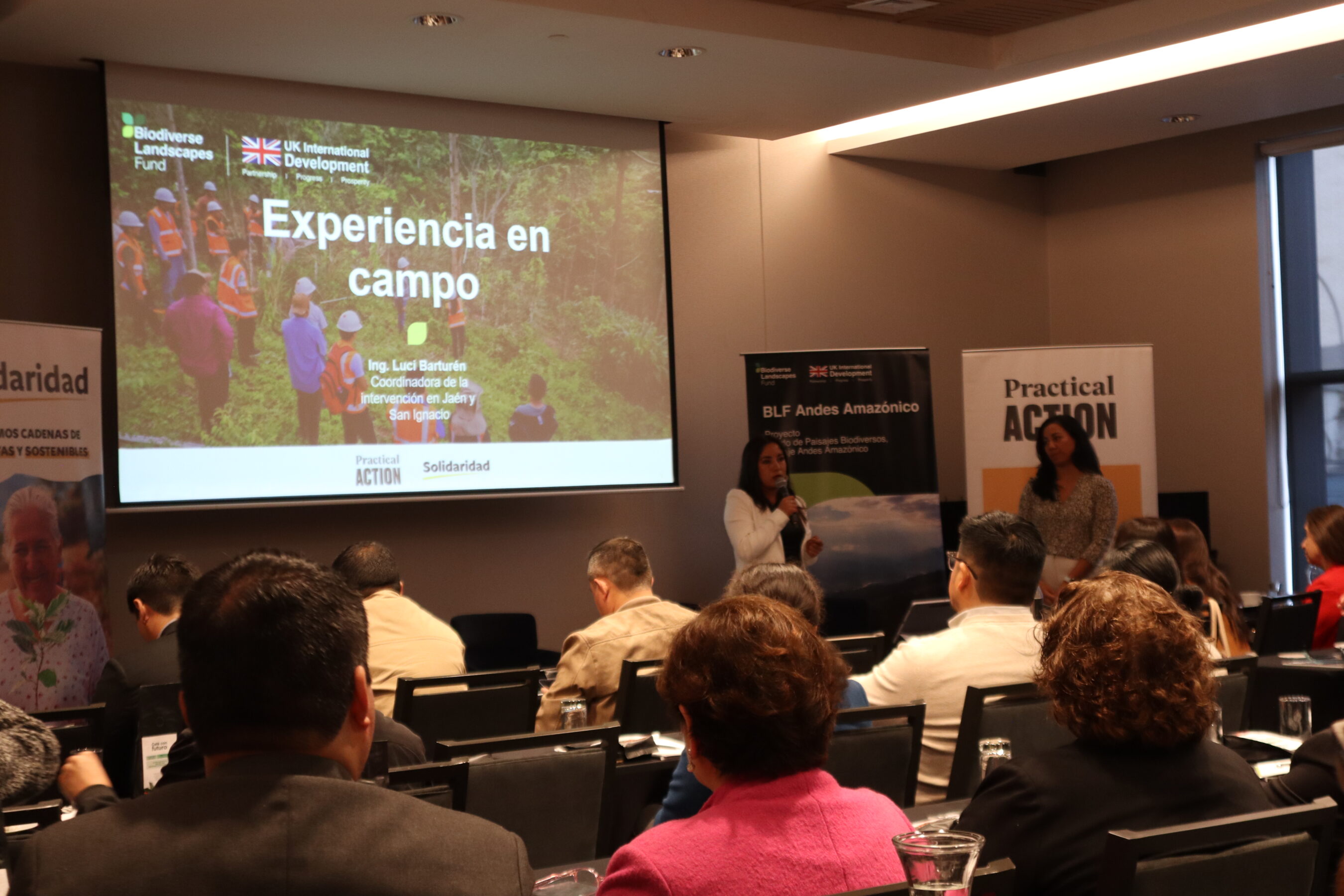
The event included a panel of experts composed of Berioska Quispe, director of the General Directorate of Climate Change and Desertification (DGCCD) of MINAM; Jorge Luis Saenz, representative of MIDAGRI; Delky Gutiérrez, president of the National Coffee Board; José Altamirano, manager of the CASIL cooperative; and David Alegría, coordinator of the Biodiverse Landscapes Fund at the British Embassy in Peru. The panelists’ contributions highlighted the main challenges facing the sector and emphasized the strategic role of scaling up climate incentives in the transition to a more sustainable, inclusive, and deforestation-free production chain.
Milestones of the intervention
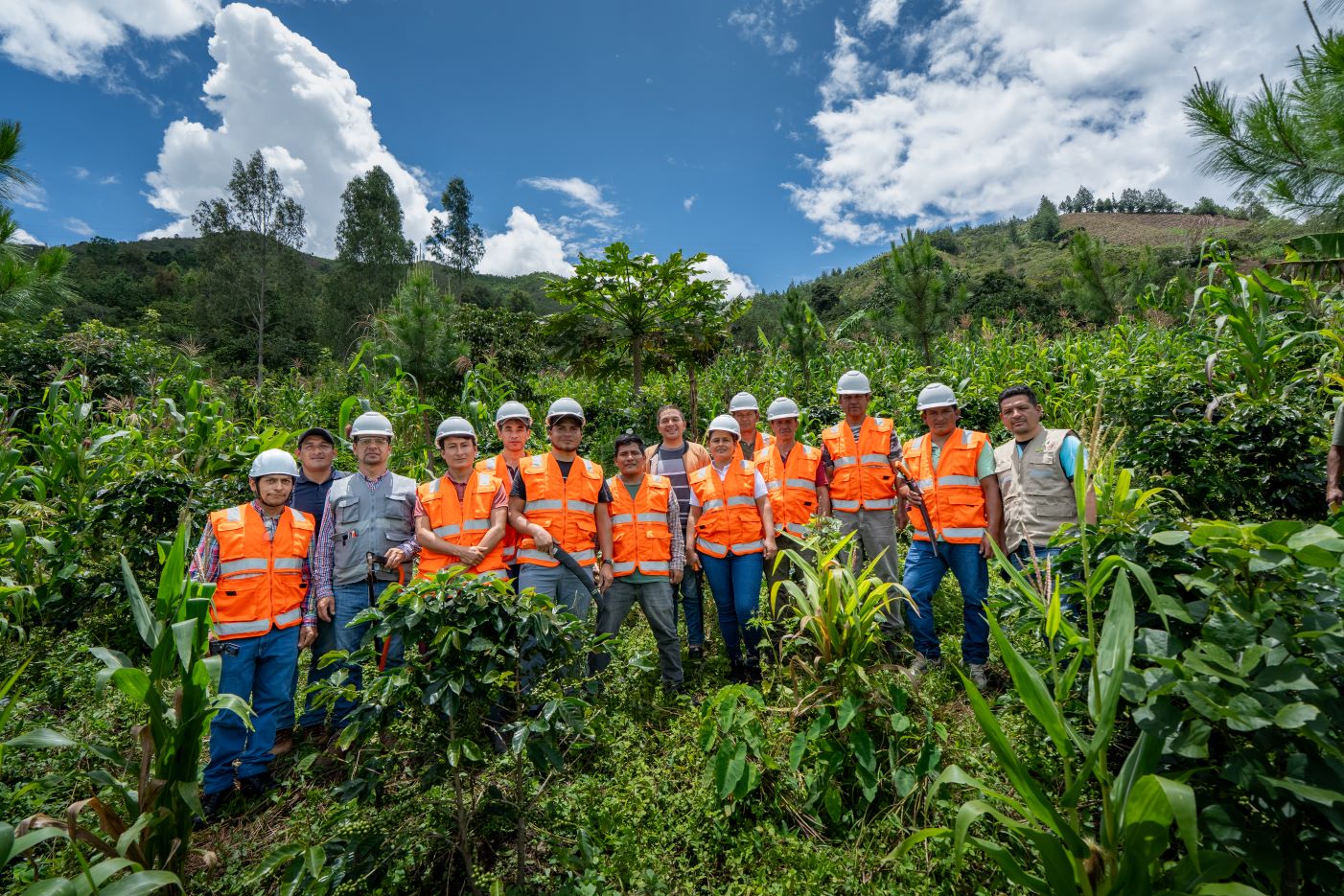
The initiative has mobilized more than 1,600 farming families interested in improving their production systems by adopting agroforestry models on almost 3,000 hectares of coffee plantations. In addition to strengthening the sustainability of their crops, this intervention allows them to access the voluntary carbon market through Rabobank’s international ACORN platform, promoted through Solidaridad’s Asómbrate program.
“The intervention used methodologies already tested by Solidaridad through its Asómbrate Program in San Martín, but adapted to the reality of the provinces of Jaén and San Ignacio (Cajamarca region) through a participatory approach, with strong involvement of local actors and considering the cultural, technical, and market characteristics of this area, which produces 20% of Peru’s coffee,” said Ezio Varese, Coffee Program Manager at Solidaridad.
Thanks to this alliance, a climate incentive has already been activated in the area, with the potential to scale up to more than 9,000 coffee-growing families who actively require it. To support this process, more than 120 technicians (24% of them women) have been trained, 22 of whom have already been accredited, forming a strategic human capital for the scaling up and sustainability of this model. Practical Action and Solidaridad have reaffirmed their commitment to continue supporting the efforts of cooperatives, in coordination with the private sector, the government, and other international cooperation initiatives to continue promoting incentives that ensure better production systems in Cajamarca.
“The experience presented today shows that incentives can play a driving role in the transition to more sustainable, resilient, and deforestation-free production systems, which are much needed in the face of the challenges posed by climate change. This experience also provides recommendations to contribute to the design and implementation of incentives tailored to small producers and aligned with Peru’s policies and NDC. For these types of incentives to scale up and become established, they need to be integrated and promoted through national policies, and the participation of the private sector and the support of international cooperation will also be key,” said Roxana Ramos, Director of the BLF Andes Amazon Project at Practical Action.
Transitioning to more sustainable production systems in Peru
Peru remains among the top ten green coffee exporting countries worldwide and ranks first in organic coffee production. In the Peruvian Amazon, more than 420,000 hectares are devoted to coffee cultivation, a product that represents a key source of income for approximately 30% of the population in this region. In 2024 alone, the country exported more than USD 1.1 billion in coffee, exceeding 200,000 tons.
For the country to remain a relevant player in international markets and strengthen its leadership in sustainability, it is essential to promote the adoption of more sustainable, resilient, and deforestation-free production systems. Climate incentives, such as those linked to carbon capture, represent a concrete opportunity to generate direct benefits for farming families, while strengthening the competitiveness of Peruvian coffee in the global context.
The BLF Andes Amazon project is funded by UK International Development under the Biodiverse Landscapes Fund. Practical Action, leader of the consortium implementing this project, and Solidaridad, promoter of the Asómbrate Program, have established an inter-institutional alliance to promote financing mechanisms that encourage production in sustainable, resilient, and deforestation-free agroforestry systems within the BLF in Peru and Ecuador.
For more information on his experience, visit:
Development of incentives for coffee production in agroforestry systems in the provinces of Jaén and San Ignacio: Systematization of experience (2024-2025) (Spanish version)