I believe the most important contribution of the MOP Network is providing first-hand, accurate information in real time
Raquel
Raquel, the woman saving lives with twice-daily updates
Raquel Izarra lives in Santa Inés, Chaclacayo, a community on the outskirts of Lima that is highly vulnerable to landslides and flooding. For seven years, she has reported rainfall data every morning and evening to a community network. The information gathered by her group, the MOP Network, has helped prevent tragedies.
It is 6am in Santa Inés and Raquel is already awake. She looks out of the window towards the sky, checks her rain gauge to see how much rain has fallen since last night, then picks up her phone and shares the measurement in a WhatsApp group where she and other volunteers collect data that can save lives. As part of the Participatory Rainfall Monitoring Network of the Rimac Basin (MOP Network), she will report again tonight, and again tomorrow. She has done so every day of the rainy season, from December to April, for seven years.
This season, 15 regions of Peru are on red alert and 18 districts in the provinces of Lima and the neighboring Huarochiri are in a declared state of emergency and in imminent danger. The work of volunteers like Raquel therefore makes the difference between being prepared and being caught off guard by a devastating mudslide.
I believe the most important contribution of the MOP Network is providing first-hand, accurate information in real time
Raquel
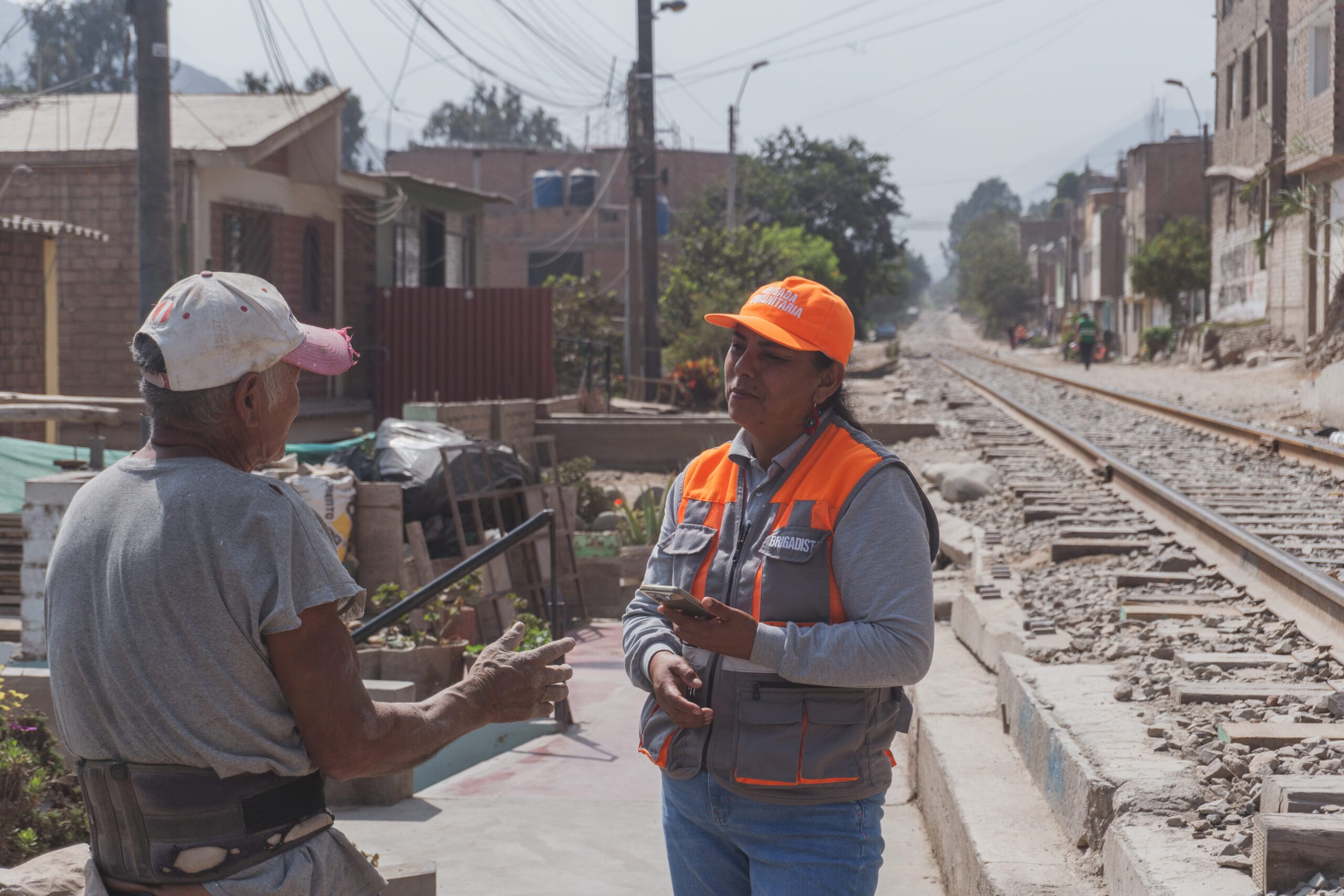
Chaclacayo has 16 creeks. From December to April, rainfall can cause them to expand and overflow, triggering landslides and mudslides. Heavy rain also increases the flow of the Rimac River, risking erosion and flooding that threatens nearby buildings, homes, and the lives of local families.
This is why the Network of Resilient Leaders of the Rimac basin, a collective of local residents, decided to form a volunteer network to collect rainfall data. In 2018, with the support of Practical Action through the Zurich Climate Resilience Programme, they established the MOP Network. Today, more than 60 volunteers across 10 districts in the Rimac basin actively participate in the network, reporting rainfall levels in real time, and generating crucial data for disaster prevention.
A clear example of the need to monitor water levels came on 25 February 2019, when the MOP Network recorded an unexpected event in Chaclacayo: a creek filled with water during the morning despite no rainfall in the previous days — an atypical occurrence. Three volunteers located in the nearby Los Condores creek measured a high amount of accumulated rainfall, between 19.5 and 20.5 mm, before midday. This data was shared via the MOP Network’s group chat, enabling timely emergency response measures.
“I believe the most important contribution of the MOP Network is providing first-hand, accurate information in real time,” says Raquel. For instance, knowing that it is raining heavily in the upper Rimac basin allows communities in the lower basin to act before disaster strikes.
“We rush to close the main access points and protect homes,” she explains. Preparations begin in November: they fill sandbags, clear evacuation routes, and carry out maintenance on signage, all in line with protocols and recommendations developed in collaboration with the local government and state technical agencies.
When asked about participation in the MOP Network, Raquel is clear: “There are more women than men.” This is no coincidence. In many vulnerable communities, women have stronger ties to their immediate surroundings because they take on caring responsibilities: they know their neighbours, identify local problems, and sustain community life on a daily basis. In the MOP Network, 85.5% of volunteers have lived in their communities for 20 years or more, which underpins their core motivations: a sense of belonging and a desire for the collective wellbeing of their community.
This voluntary, unpaid role, shouldered predominantly by women, is not an isolated phenomenon: according to the International Labour Organization, women carry out 76.2% of all unpaid care work worldwide. Community volunteering risks reproducing the same pattern of invisible overburden unless it is accompanied by a genuine process of empowerment.
Practical Action’s approach is aimed precisely at that: transforming leadership into a platform through which women can influence spaces of greater power. Moving from the MOP Network to engaging with the local government. Moving from organising brigades to shaping policy. Today, this is already a reality.
Help us work with communities to tackle some of the world’s toughest problems.
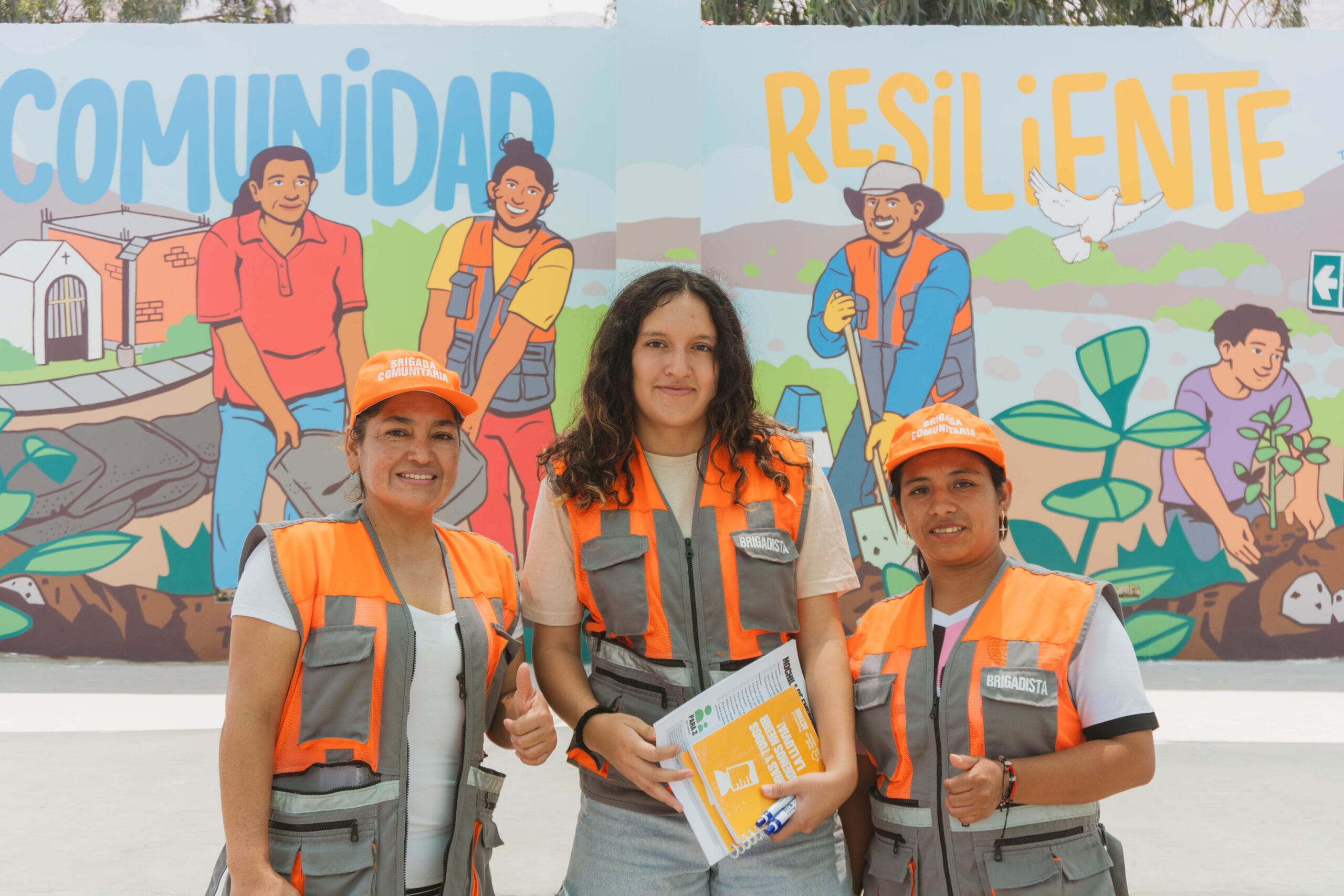
The MOP Network was created to bring people closer to their risks: to create awareness of them and to develop their own capacity for observation. Over time, it has achieved something more: it has built leadership that is now connected to official government actors.
In 2022, this approach was instrumental in reaching a landmark agreement. One that was made between the local government, the National Water Authority, and community leaders themselves, now with the insight provided by their participation in initiatives like the MOP Network. For people who’d lived along the Rimac River for over 50 years, these concrete commitments highlighted which areas were safe for them to live and build new houses on. “We have certainly learnt to live alongside our risks now and how to reduce them, something we did not know how to do before. We were very much guided by trial and error,” reflects Raquel. The MOP Network provided the tools, but it was the commitment of volunteers at heart, as she herself puts it, that turned those tools into a shield for the entire community. When the rain falls in Chaclacayo, the MOP Network keeps watch.