Previously, my agriculture work was not serious. I reared 50 chickens and sold two per month.
Martha Anyango
Martha’s building a better future
Martha Anyango’s farming journey started on a very small scale. “Previously, my agriculture work was not serious. I reared 50 chickens and sold two per month.”
She grew vegetables too, but relied heavily on chemical fertilisers and pesticides. Soon, customers began to complain about the taste of her produce – a sign that her farm needed a new direction.
Previously, my agriculture work was not serious. I reared 50 chickens and sold two per month.
Martha Anyango
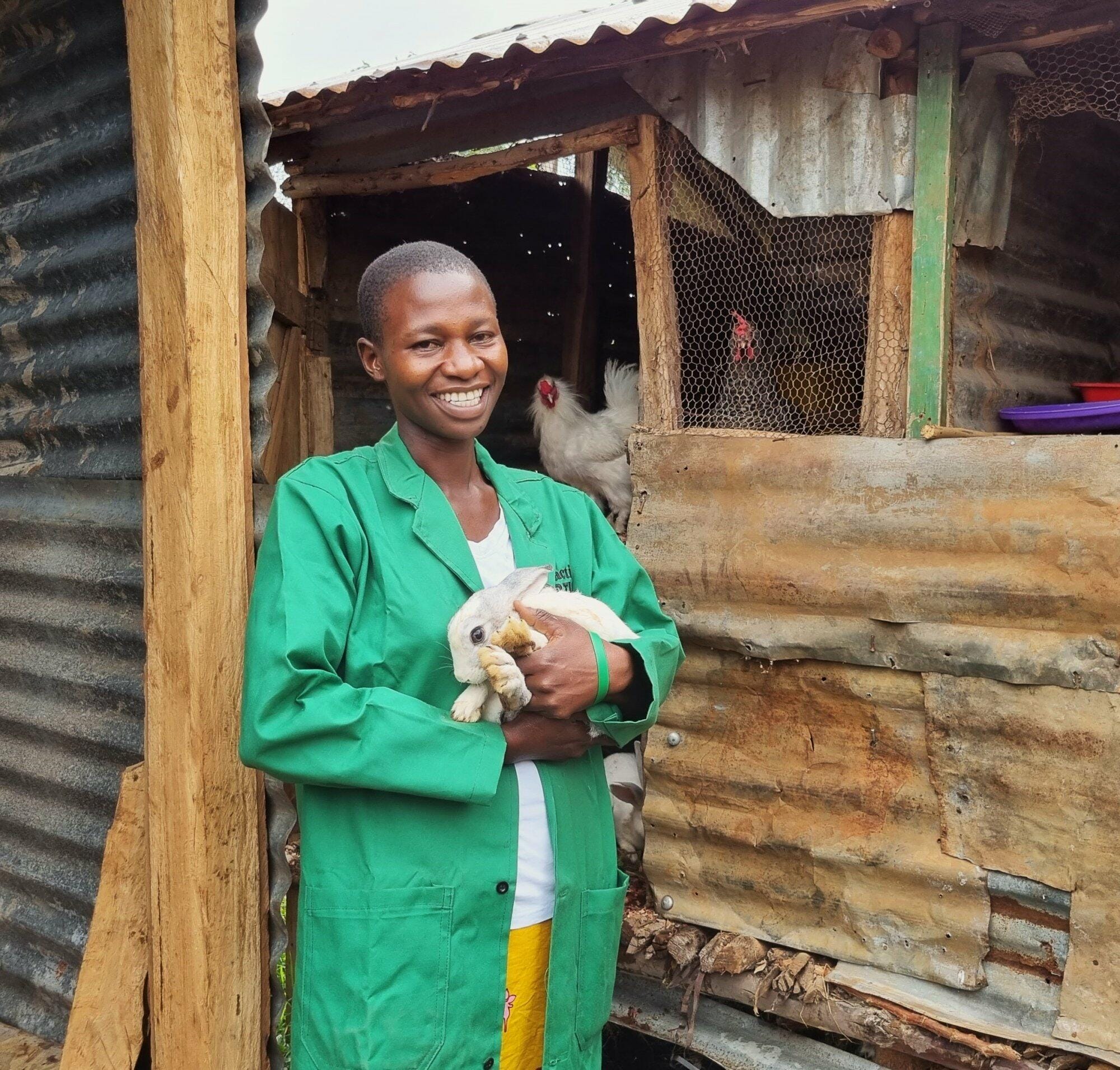
A turning point came when Martha had the chance to work with Practical Action and learn about regenerative agriculture.
The training introduced her to a wide range of sustainable techniques, opening her eyes to new, more resilient ways of farming.
One of the first improvements she embraced was a hydroponic system to grow fodder for her chickens. The results were immediate. Hydroponics uses less soil, less compost, and less irrigation – saving her time, money, and effort while producing reliable feed.
“The training motivated me to try new methods. And now I can really see the benefits.”
With a little help from some wriggly worms, Martha has also adopted vermiculture – using worms to break down organic waste and create rich, natural fertiliser.
This simple innovation has transformed the health of her soil while reducing waste on her smallholding.
She also uses urine from her rabbits to produce a natural pesticide for her leafy vegetables. It’s cost-free, effective, and keeps her crops healthy without chemicals.
Together, these techniques are turning her farm into a model of circular farming – where every element supports another, and nothing goes to waste.
Help us work with communities to tackle some of the world’s toughest problems.
The transformation has had a powerful impact on Martha’s livelihood. She now earns more, spends less, and feels confident about the stability of her farm.
“Now I rear 500 chickens and I can sell 300 a month,” Martha says with pride.
“I no longer spend money on chemicals, and I am also making more money from my crops.”
Her journey shows how practical, regenerative solutions can help farmers build a future that is not only productive – but sustainable, resilient, and full of possibility.