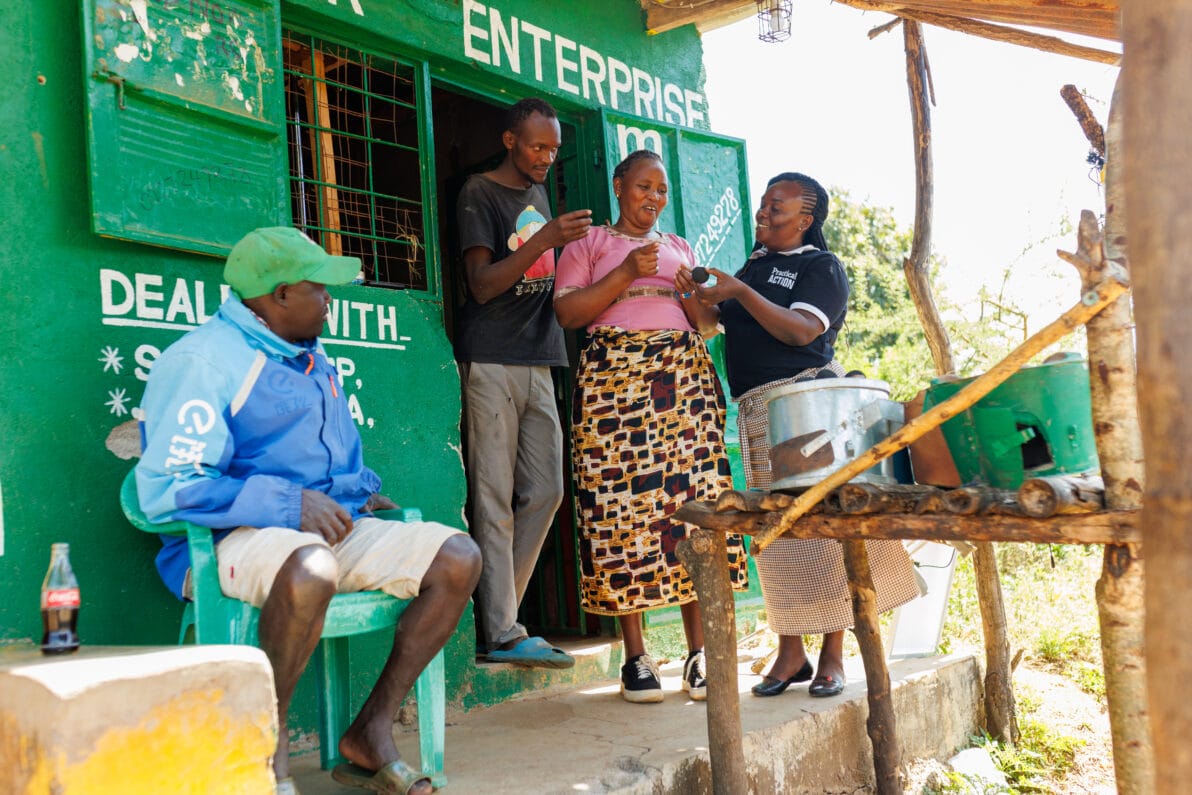
Electricity demand is rising fast and big new technology like AI needs power and investment.
Yet in many places, there is barely any debate about who should get reliable energy first. For communities living far from the grid, displaced families, and Indigenous groups, clean energy is not about convenience. It is about life’s basics; water, safety, health and access to medical care, income, and whether children study after dark.
At Practical Action we believe energy has to reach the places markets miss. It must power the essential things people rely on to live well. If we fail to do this, we need to ask a tough question: whose future are we powering, if millions still live without electricity and billions still cook with polluting fuels?
The facts remain stark. While global figures on energy access leap forward, the reality for the most marginalised remains stagnant. According to the latest International Energy Agency data, over 660 million people still lived without electricity in 2023, and over 2.1 billion relied on polluting fuels to cook. Early indicators suggest access has stalled for the hardest-to-reach, who are largely ignored by standard energy access programmes. If current trends continue, hundreds of millions of the world’s poorest and most remote communities, will remain in the dark in 2030, the very year the world promised them power.
So, what needs to change? From the plains of Burkina Faso and the refugee camps of Rwanda to the riverbanks of the Amazon rainforest, the answers are emerging from off-grid communities themselves:
1. It must be affordable, not just available
The primary barrier isn’t technology, but cost. A reality that keeps clean cooking out of reach for over 600 million people in South Asia. High prices and a lack of investment lock out the poorest. Change requires tearing down this financial wall with innovation and both public and private investment.
This means frequently shaping the sustainability and success of businesses by developing inclusive markets and recognising that supply and demand are interdependent.
In Bangladesh for example, we’re supporting over 100 clean cooking entrepreneurs to access credit and develop innovative products that increase affordable clean cooking options.
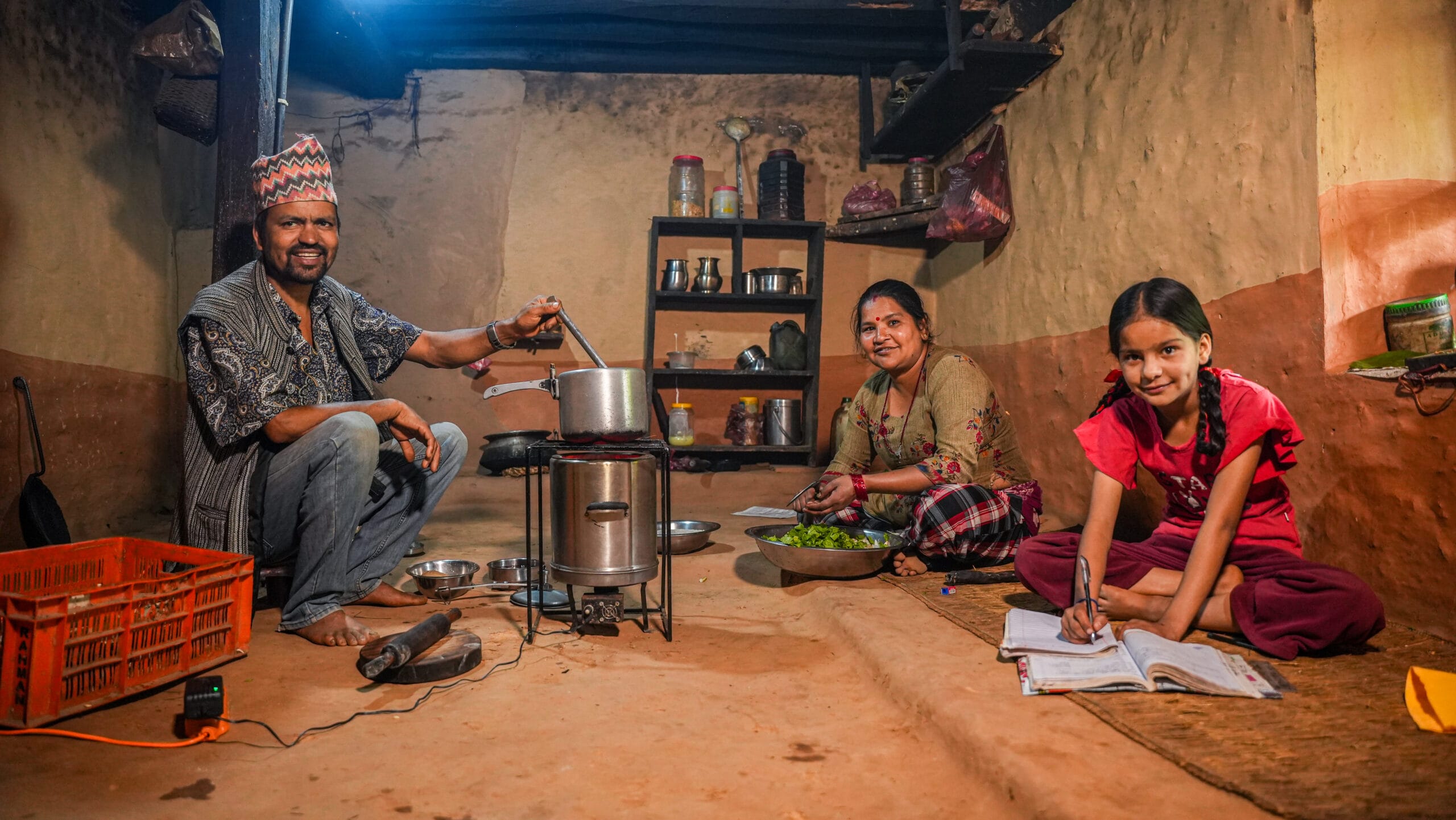
Meanwhile, in Nepal, we are leveraging financial innovations such as Results-Based Finance where payments are linked to agreed outcomes, promoting efficiency and accountability.
This is then combined with carbon credits to ensure that people in hard-to-reach areas can adopt improved cooking solutions where electricity is not yet available.
2. Build systems that last where they’re needed most
Energy access fails when the supply chain breaks down. Supporting last-mile energy distributors creates a lifeline for the whole system, and for solutions to last they must be able to run viable businesses.

This means investing in local networks that build consumer awareness and trust in often unfamiliar products, and then deliver, install, maintain and repair the technology itself. It’s a model championed by the Global Distributors Collective (GDC), an international network of over 300 last mile distributors operating in more than 60 countries around the world.
In Zimbabwe, GDC member and women-led social enterprise, Powerlive, does much more than sell solar products to off-grid communities. They first gain community buy-in, then collaborate with local leaders to train women and young people as sales agents and technicians. They establish district-level hubs to streamline distribution and guarantee after-sales service, building a self-sustaining local economy around energy.
Meanwhile, in Kenya, the focus is on shaping national legislation. Practical Action’s research and advocacy inputted into the national Gender Policy in Energy, making the sector more representative and effective. This work demonstrates that durable systems aren’t just about hardware and supply chains, but also recognise how approaches which ignore gender can unintentionally deepen the very inequalities they aim to reduce.

3. Powering real opportunities, not just a lightbulb
The true power of clean energy is its ability to transform lives. In Burkina Faso, Awa Convolbo and her shea butter cooperative faced a choice: to rely on scarce firewood or to stop working. Thanks to the extensive training we provided, the community reduced their reliance on charcoal and firewood. Now, a solar-powered water pump and improved cookstoves mean reliable water and safe meals—turning energy directly into resilience and income.
In the Amazon, Ivo Salazar, Energy Lead in Latin America, describes a similar transformation: “We are working with Awajun and Wampis communities where small solar systems power cacao processing. Producers can sell higher-value products, reach buyers more reliably, and keep more income locally.”
Ultimately energy access must be linked to productive use, food security, and essential services to build resilient livelihoods.

4. Design for all: energy as a right
Women and girls almost always suffer the most. The smoke from traditional stoves is a health risk and collecting firewood outside a village or refugee camp can be dangerous. Both activities are carried out almost exclusively by women, both young and old.
For people living in refugee camps and Indigenous communities, energy is also a matter of safety and survival. Now, it is also more affordable to access.
Denyse Umubyeyi, Rwanda Country Director, has seen this firsthand in camps hosting 120,000 refugees.
“No solution is complete if it leaves refugees in the dark,” she said.
“I’ve witnessed the impact of solar power and clean cooking in camps in Rwanda, with life-changing results. Powering fridges, running electric clippers in hair salons. Kiosks offer cold drinks. Families feel safer at night. And children finally have the light they need to learn.”
In the remote Andes, the same principle applies. “Together with the Wampis and Awajun Peoples in the Amazon, and with Aymara Peoples in the Andes, we’ve co-designed a model of healthy schools powered by solar energy,” Ivo added.
“These systems power tablet computers and provide clean water, supporting bio-gardens that have transformed diets, especially in the Andes, where growing vegetables is very difficult.”
The path forward
The solutions exist. The models work. Yet a glaring divide persists. It highlights a failure of prioritisation, not technological. Energy access is a systemic problem: there are persistent gaps in market designs, investments, and a lack of political will to focus on people outside the commercial mainstream.
As the world marks the UN’s International Day of Clean Energy, the celebration rings hollow for the over 660 million still without electricity and the 2.1 billion breathing toxic fumes to cook.
Organisations like Practical Action demonstrate that progress is possible when interventions are socially grounded and financially innovative, aiming to reach 3.4 million people by 2030. But this work underscores a larger, more uncomfortable truth: the energy transition is currently a segmented project. One track races toward high-tech, high-demand futures; the other struggles to deliver fundamental power to those for whom it is a matter of survival.
The ultimate goal of universal access is clear, yet the path remains divided. The energy transition will only be coherent—and truly just—if it can illuminate the darkest corners first. The question is no longer whether it can be done, but whether the global community will reckon with a harder truth: a transition that leaves the hardest to reach behind is not a transition at all. It is merely an upgrade for the connected.