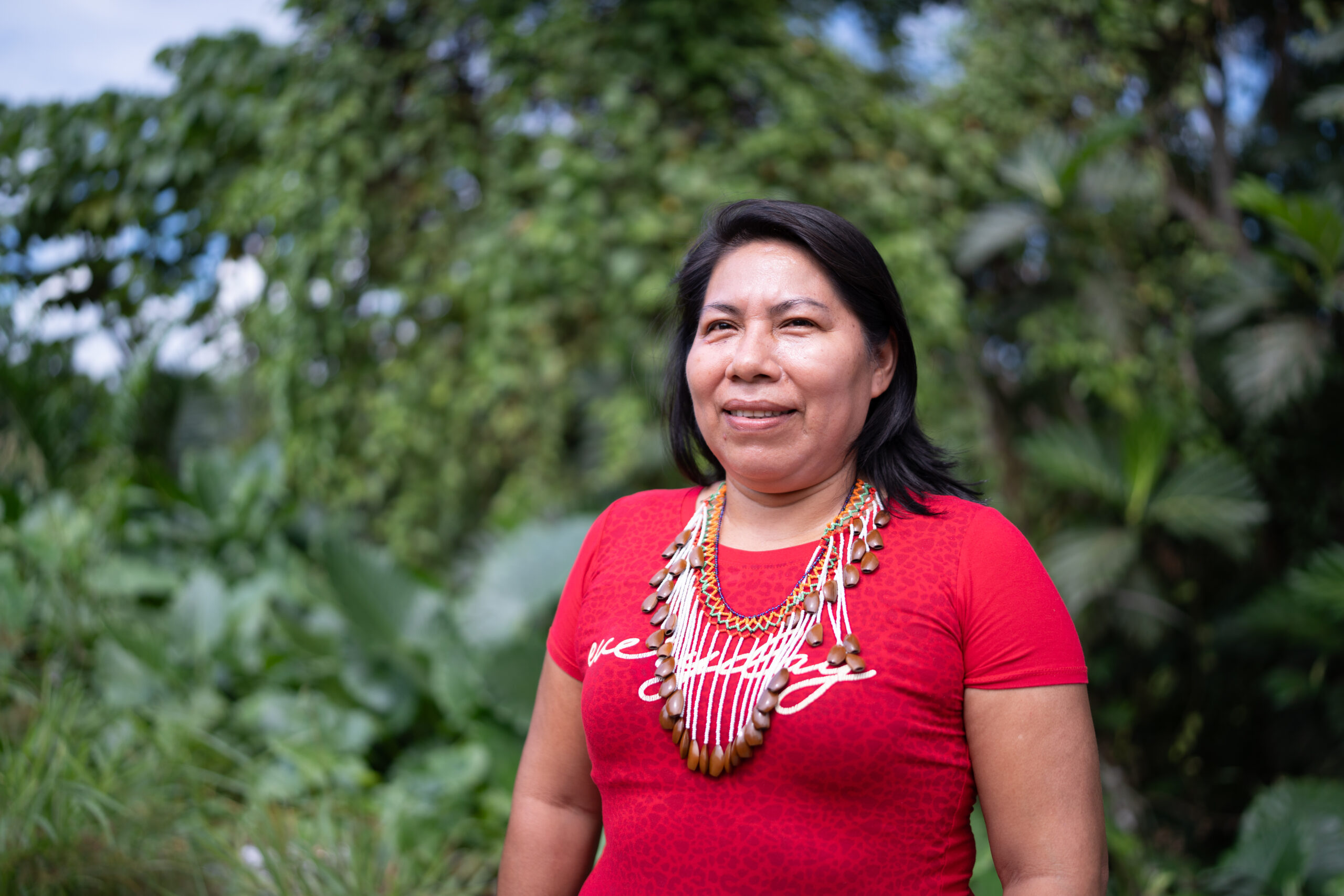
A teacher, leader, and the first woman to serve as waisam (vice-president in Awajun) of the Awajun Autonomous Territorial Government (GTAA), Matut Impi is championing the role of women in indigenous governance and decision-making. This Women’s Day, we celebrate her story to honour the transformative work women like her are doing globally—breaking barriers, creating change, and shaping the future.
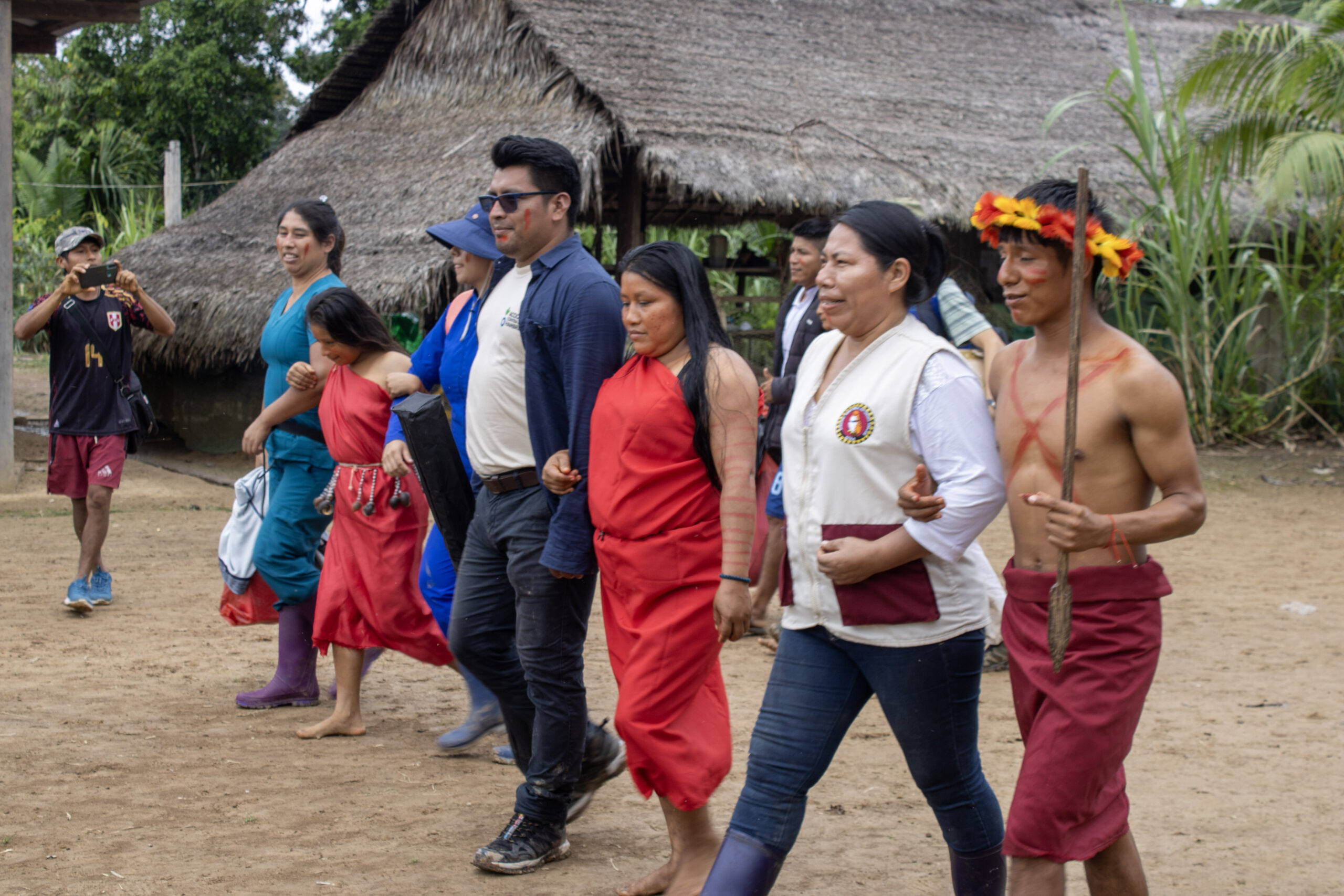
Hailing from the Belén indigenous community in Amazonas, Peru, Matut has dedicated her life to defending the rights of the Awajun people from a young age. Today, she holds the historic role of the first female waisam (vice-president in Awajun) of the Awajun Autonomous Territorial Government (GTAA), a key body in Peruvian indigenous governance. The GTAA protects nearly 3 million hectares of land and represents around 70,000 people across the Amazonas, Loreto, San Martín, and Cajamarca regions.
As an indigenous leader, she proudly represents women and is committed to preserving the Awajun language, worldview, and ancestral knowledge. She also works tirelessly to improve access to education and health while strengthening the family economy through sustainable practices.
The woman behind the role of waisam
Matut’s journey into leadership was inspired by her father, a teacher in Amazonas. “I admired the way he taught, and I often mimicked him when I played with my little neighbour. We had a blackboard at home, and I would pretend to be the teacher, while she was my student,” Matut fondly recalls.
Although she initially studied computer science, Matut’s passion for teaching led her back to education, and she graduated as a teacher in 2002. She instilled pride in her students for their culture while sensitively addressing pressing community issues. “For my father, teaching wasn’t just about academics; it was about sharing our knowledge. As a teacher, I was able to raise awareness among children and young people about environmental protection, food sovereignty, and indigenous struggles,” she reflects.
In 2015, Matut moved to Lima to pursue further education. Despite being over 1,300 kilometres from her home, she remained deeply connected to her roots. In 2016, alongside other Awajun living in the capital, she co-founded the Awajun People’s Association in Lima (Ajutap), where she was elected vice-president. Later, she joined the Centre for Interpretation and Translation of Indigenous Languages of the Peruvian Ministry of Culture, where she continued to advocate for the preservation of indigenous languages. During the COVID-19 pandemic, Matut moved back to Amazonas, working as a remote Awajun interpreter from Santa María de Nieva, the closest city to her natal community. During this time, she made sure to visit her family in the Belen community, where she also remained active in the Federation of Awajun Communities of Santiago River (FECAS), an organisation she’d been supporting in various capacities since 2010.
By 2021, the GTAA was still forming, finalising its consultations with the communities of Amazonas, Loreto, San Martín, and Cajamarca regarding its statute. In December of that year, Matut was invited to the official assembly for the establishment of the GTAA, thanks to her experience as a teacher and her active involvement in various public and private initiatives as a leader, vice president of the Ajutap Association, and a member of FECAS. During the assembly, she was elected waisam (vice-president) with overwhelming support from women in the organisation.