It’s been nearly three years since the conflict began in Sudan, and we have continued working despite immense challenges. In this photo blog, we take you on a journey through what we accomplished in Eastern Sudan over the past year, building resilience for households facing hunger and improving access to safe water in Kassala and Gedarif states.
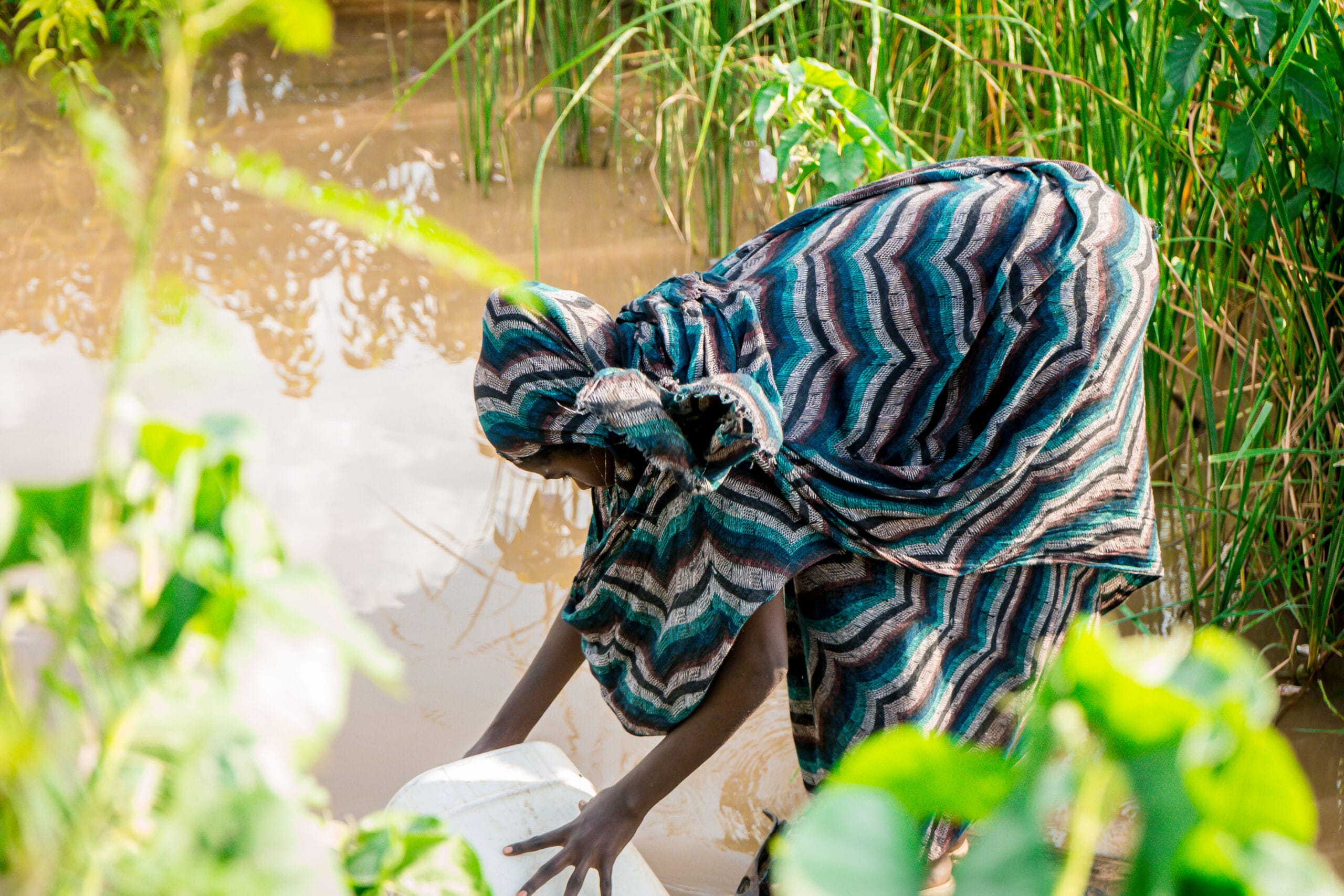
How access to water is helping families to rebuild in Kassala and Gedarif
Access to safe water, sanitation, and hygiene is severely lacking across Sudan. In Kassala and Gedarif, families face some of the harshest conditions. Today, 17.3 million people lack essential drinking water services, and over 12 million rely on unsafe sources (UNICEF, 2025).
In these states, families walk miles to fetch stagnant water, putting lives at risk. Children regularly fall ill due to waterborne diseases.
But thanks to the incredible support of Practical Action’s donors, and players of People’s Postcode Lottery, our work in Sudan was able to continue despite the USAID cuts.
Unfinished water stations have now been completed, solar irrigation systems installed, and communities are once again at the centre of shaping their future.
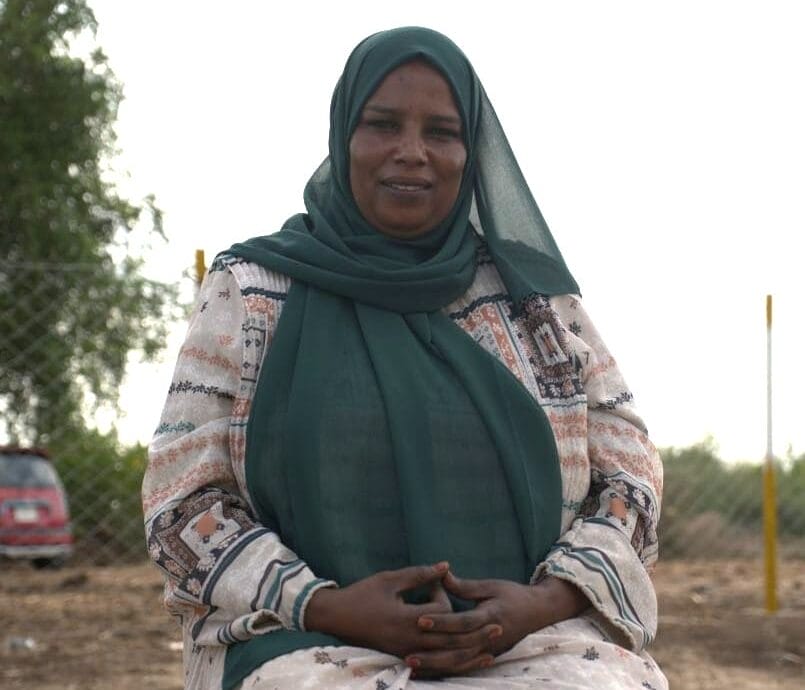
Ghaliya Abdullah, a community leader in Al-Mazraa, described the daily struggle. She said: “We are forced to drink directly from the canal even though it’s polluted and unsafe. People and livestock share the same water. Every day, women and children walk long distances carrying heavy jerrycans.
“During the rainy season, when the canal is cut off, we rely on rooftop rainwater, but it’s never enough, so we return through the mud to the canal. This unclean water spreads deadly diseases like diarrhoea and bilharzia, and with no health centre, children under five keep dying.”
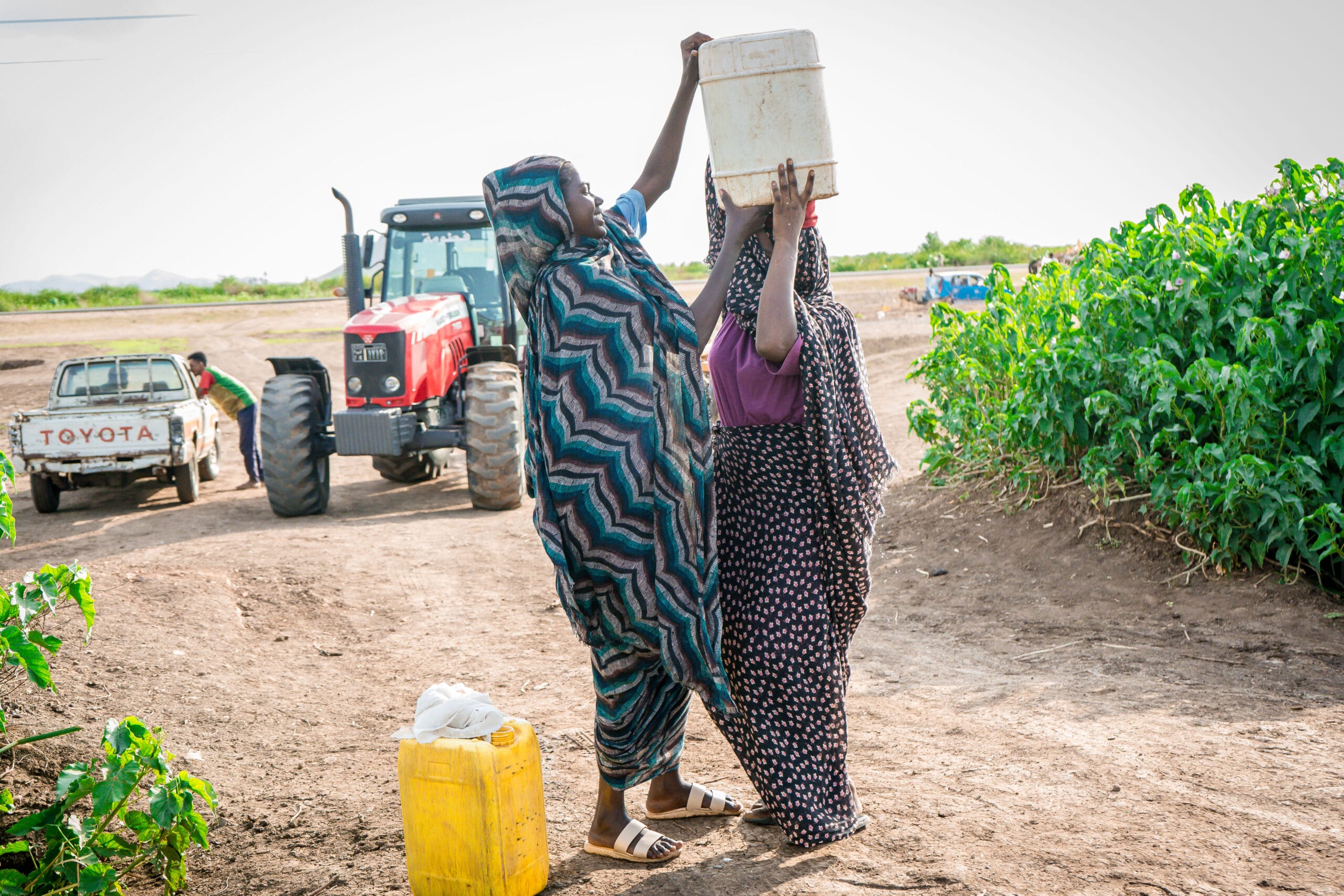
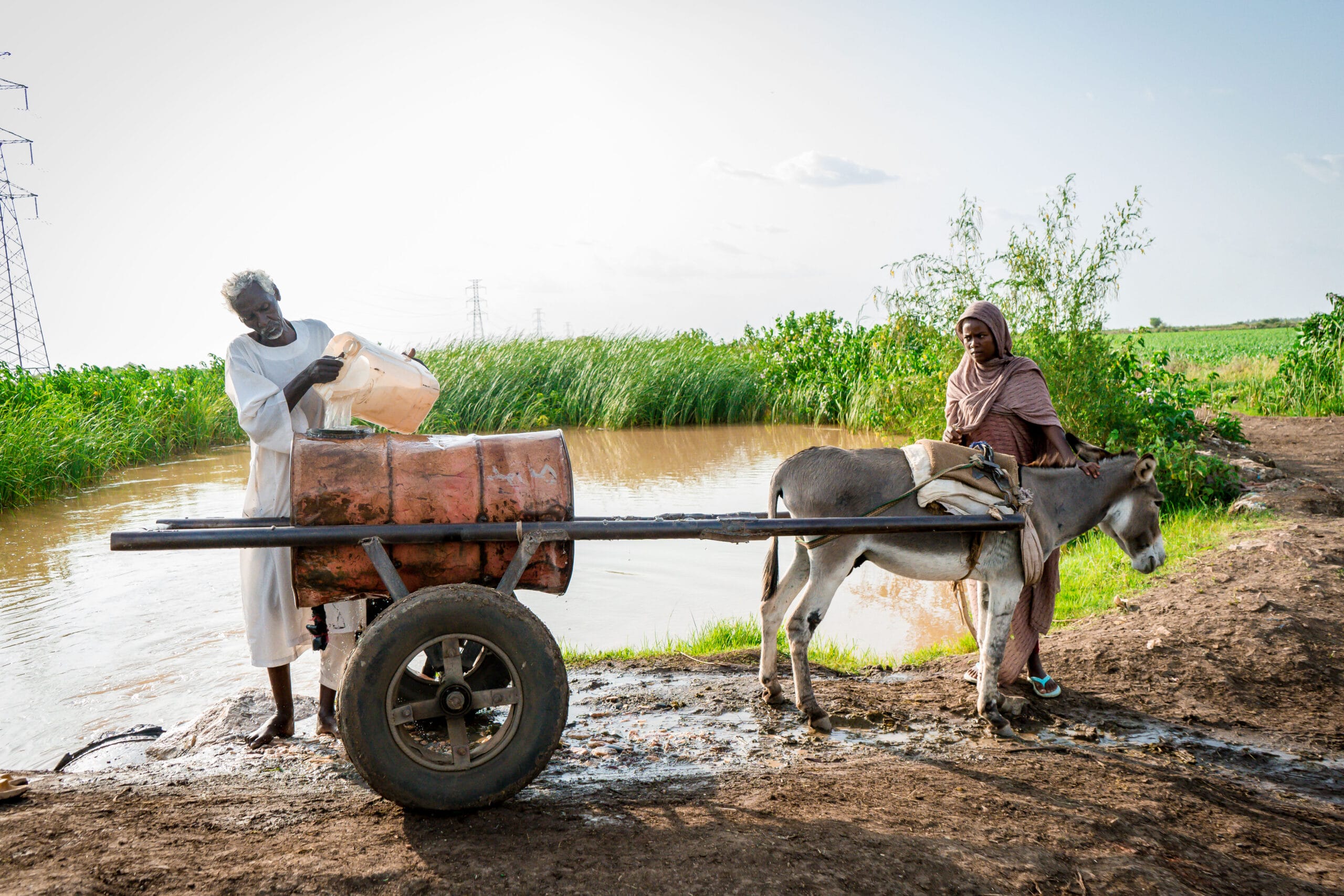
Our Communications officer in Sudan, Maysa Mohammed, met them as they collected water. She said, “When we spoke to them they were busy, but happy for us to take photos. They told us they were really excited about the idea of having a new water yard with clean water close at hand.”
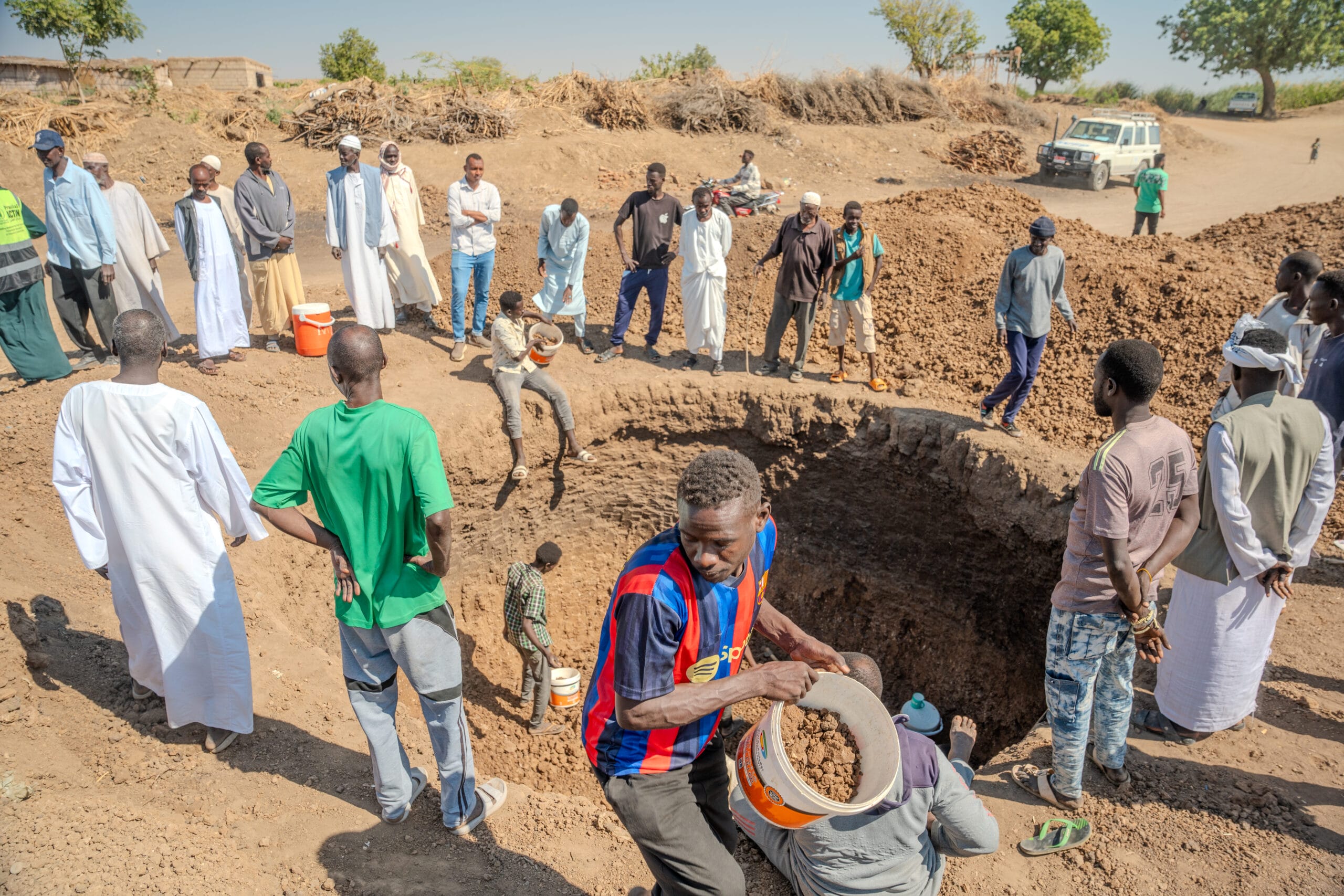
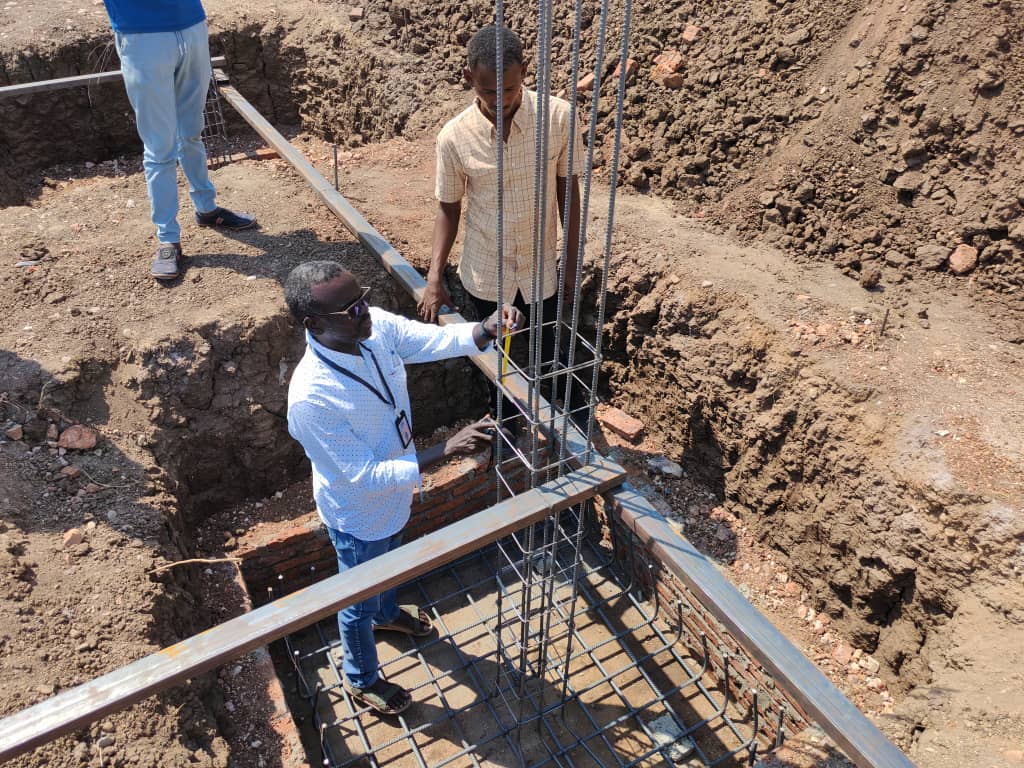
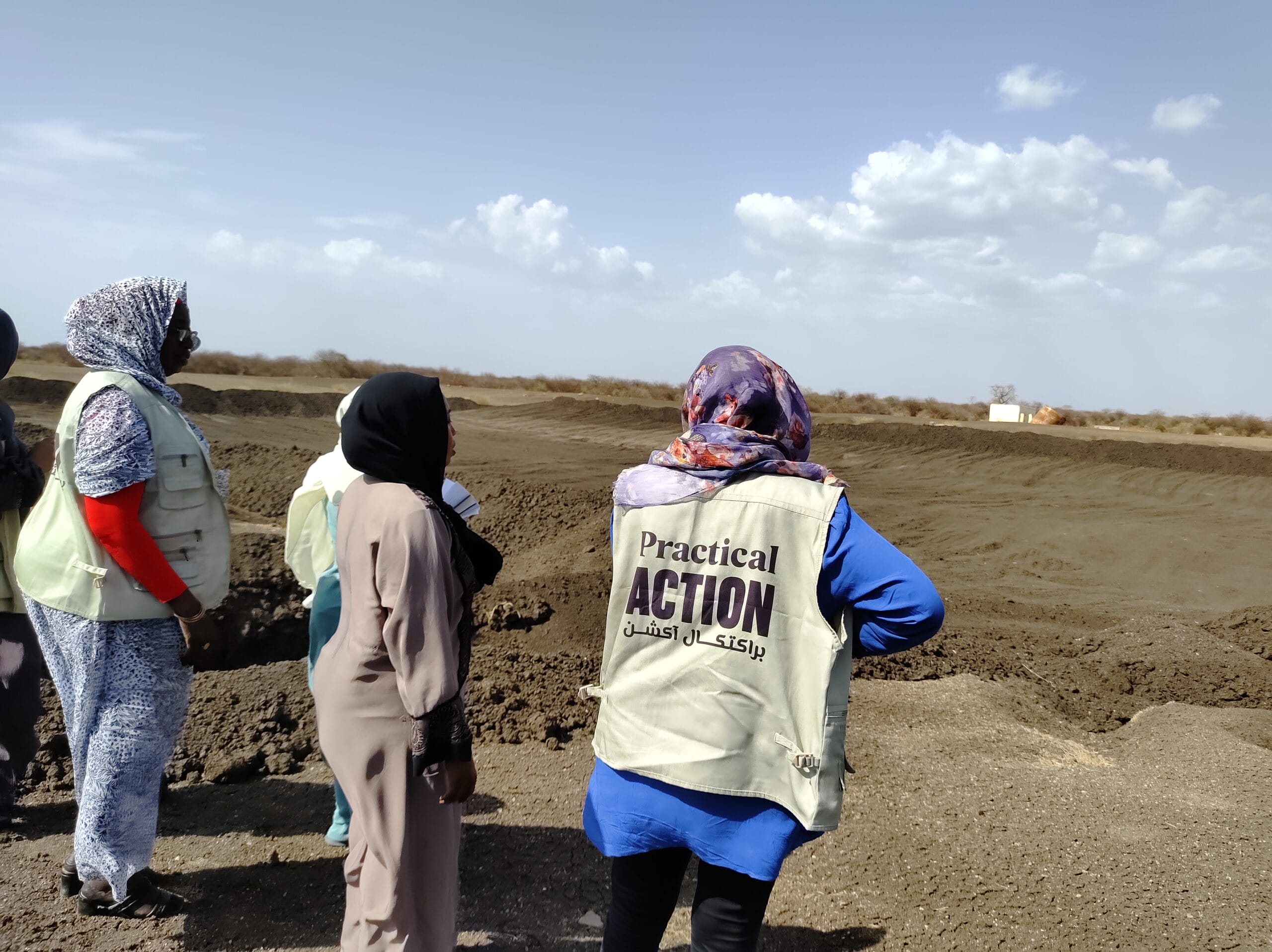
Their excitement was felt by everyone. The whole village joined together to build a new water tower and filtration system that will provide clean water for thousands of people. Hundreds of villagers joined together to dig a circle which will house a new 8 metre sedimentation tank and another slightly smaller 6 metre tank which will house the clean water following the filtration process.
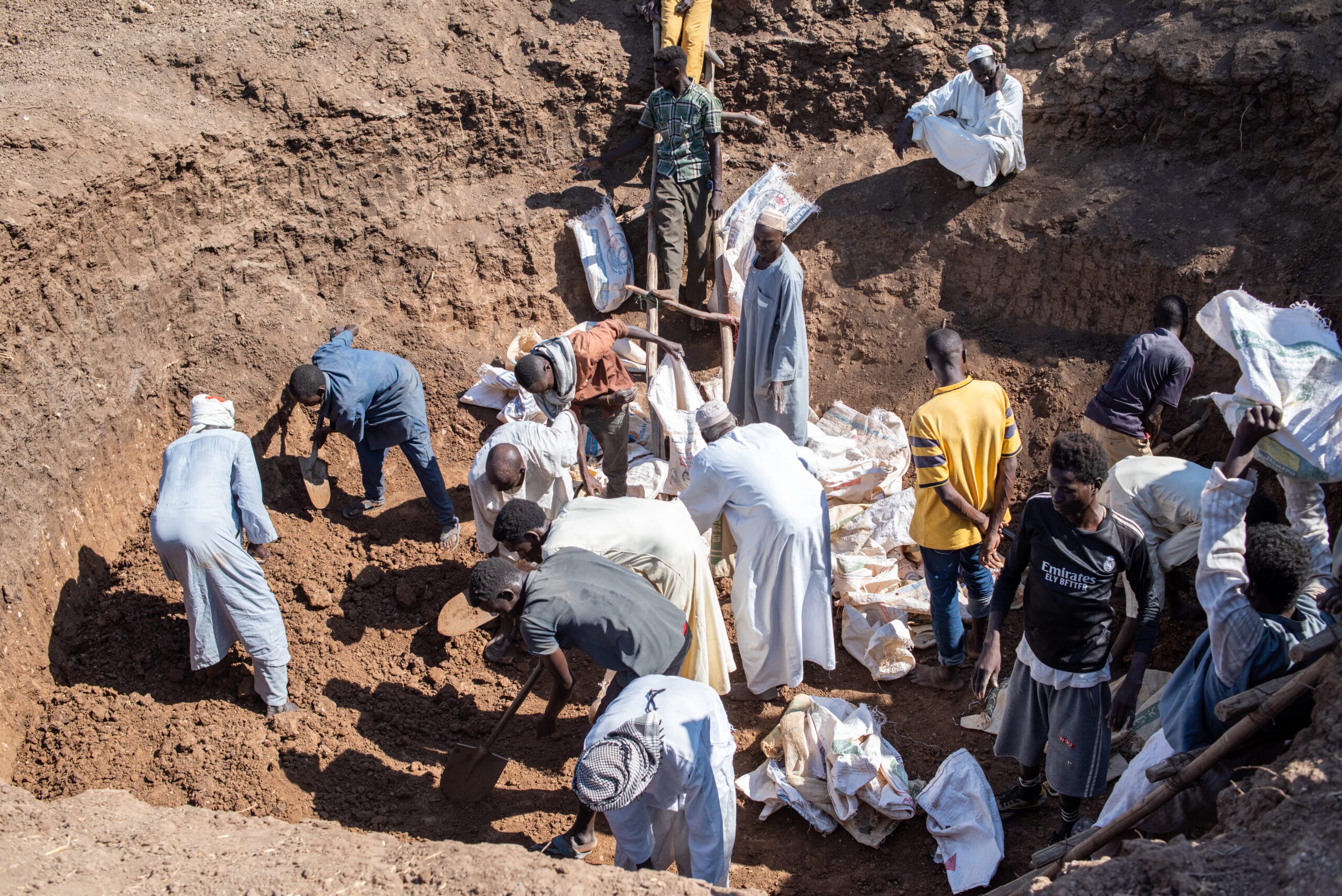
After Practical Action partnered with the community this year, the situation in Al-Mazraa, and other villages nearby, has improved. Now, more than 20,000 families in 23 communities in Kassala and Gedarif states are able to drink safe water after the following work:
- Repair of 16 solar-powered water yards.
- Construction of 10 new solar-powered water yards.
- Five Solar irrigation systems installed to boost agricultural productivity.
- Creation of water committees (consisting of 10 people trained in maintaining these water yard, who are now linked with the local drinking water corporation).
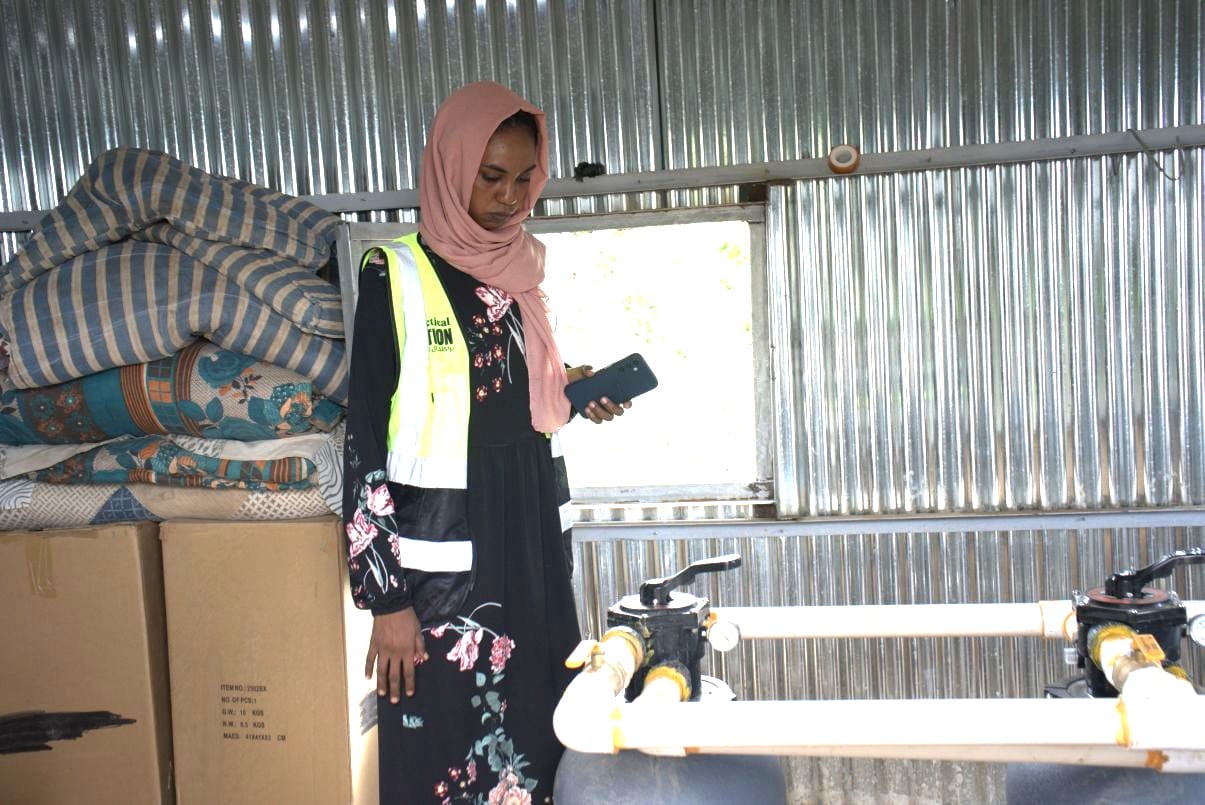
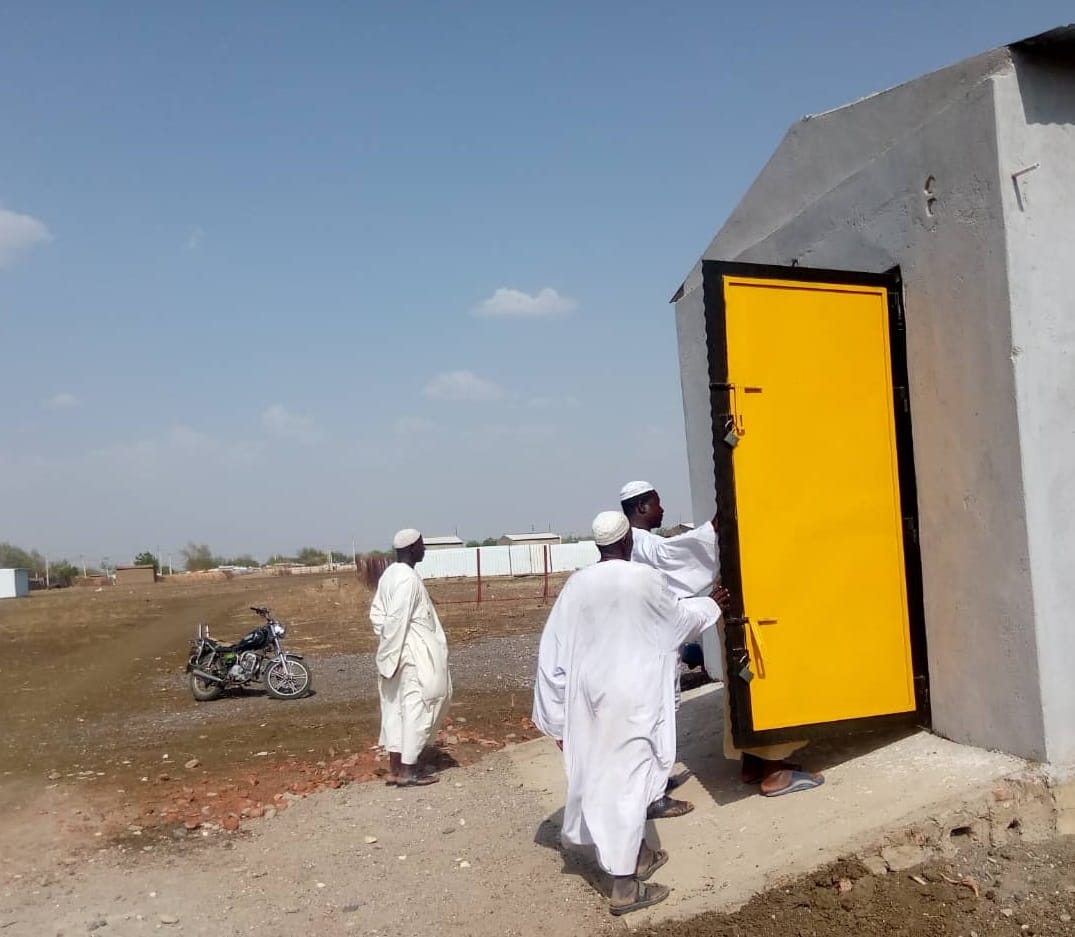
The system works by pumping water with solar power into a raised water tower. From there it travels down into a compact filter and a huge filtration tank, which cleans it and makes it safe to drink, before it is stored in a clean water tank.
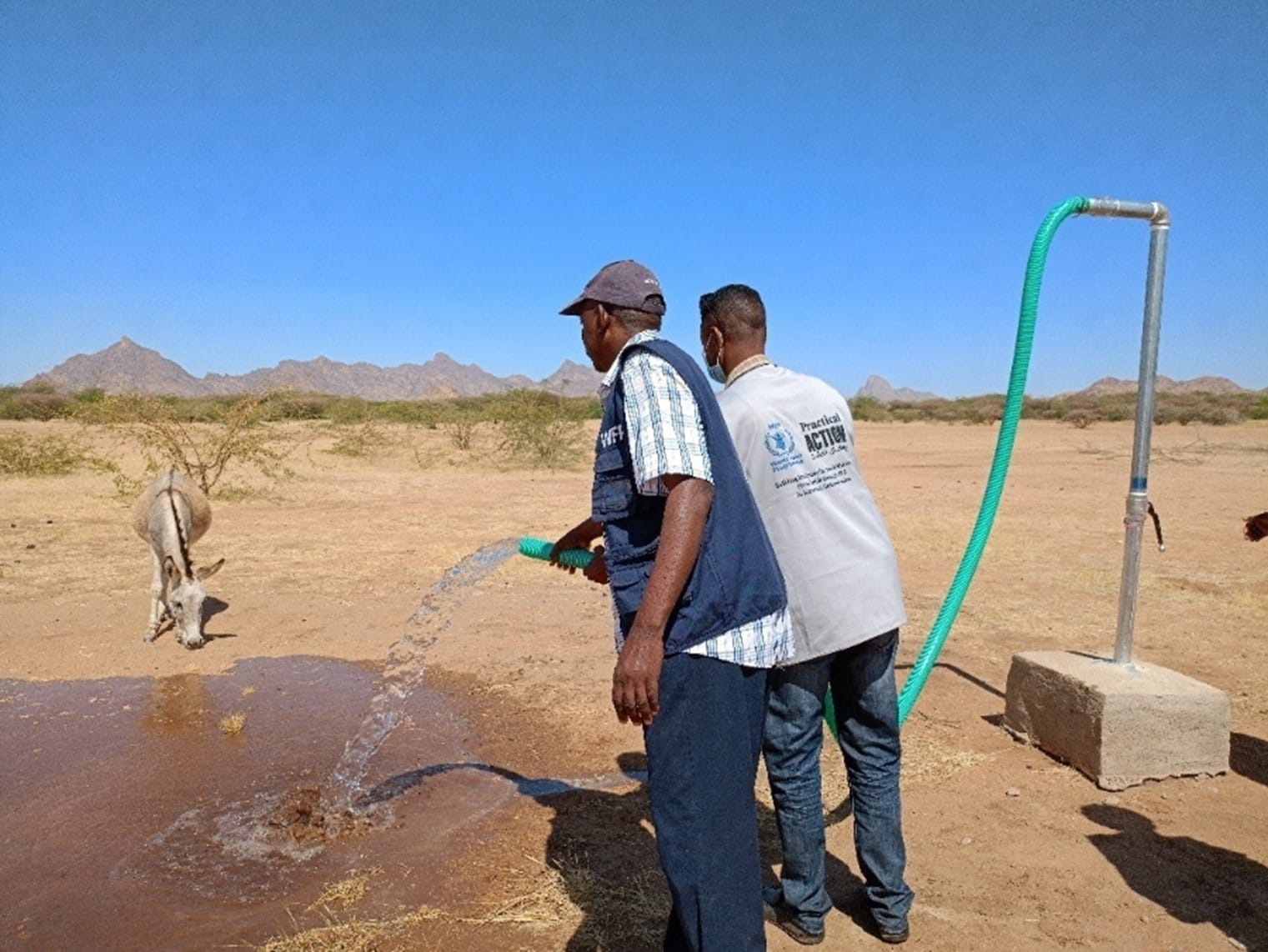
On February 29, just days before the cuts to US Aid, WFP (World Food Programme) staff member (Diwadi) and community mobilizer officer (Osman) got water from the new Donkey Tap in the village of Tawait.
Previously, they had a water yard that needed rehabilitation, so Practical Action installed a water point for people and the Donkey Tap for donkey carts. This makes it easier for big barrels on donkeys to be filled and distributed to people further away.
More food, better farming and long-term jobs
Conflict has turned the Sudanese economy upside down. Thousands of displaced people have arrived in towns and villages in the safer states in Eastern Sudan, places already struggling to provide for themselves. This has put incredible strain on farmers and natural resources, such as water and arable land.
Throughout this year in these states we have been working tirelessly with farmers and rural families to strengthen food security and job opportunities.
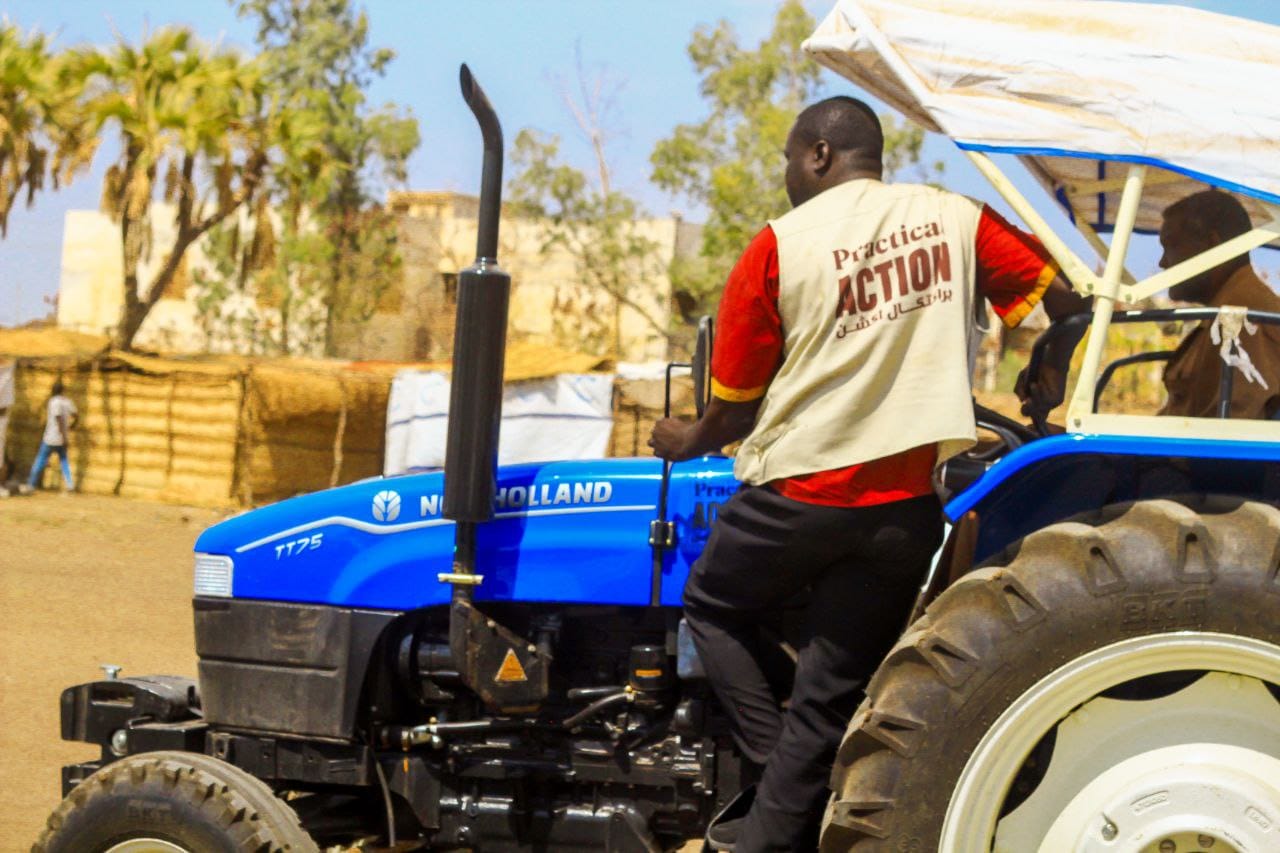
Modern equipment like tractors are essential to increasing crop yields and productivity. Practical Action has provided 5 communal vehicles which are shared between farming families.
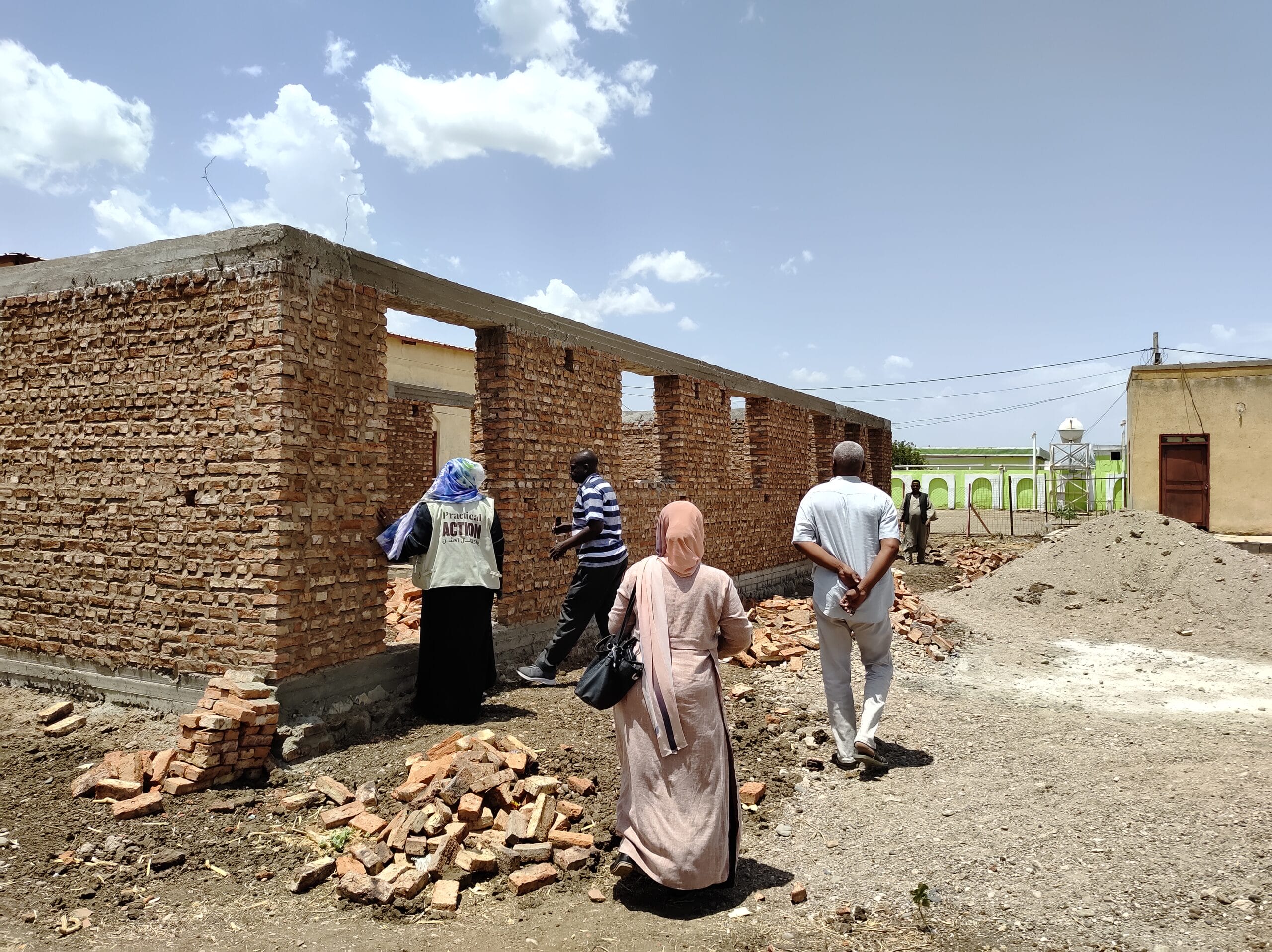
The inability to preserve seeds and crops after harvest can be devastating when there are severe food shortages. Local communities have worked with Practical Action engineers and local builders to provide communal seed banks, crop warehouses and community centres.
Processing is also an important element of food preservation – and offers the opportunity to add value to crops. Hawa Abdelsalam Hassan was one of around 150 women who took part in dairy training and gained the skills needed to make a variety of products, open a shop and create her own business selling delicious ice creams, yoghurts, sweets and cheese.
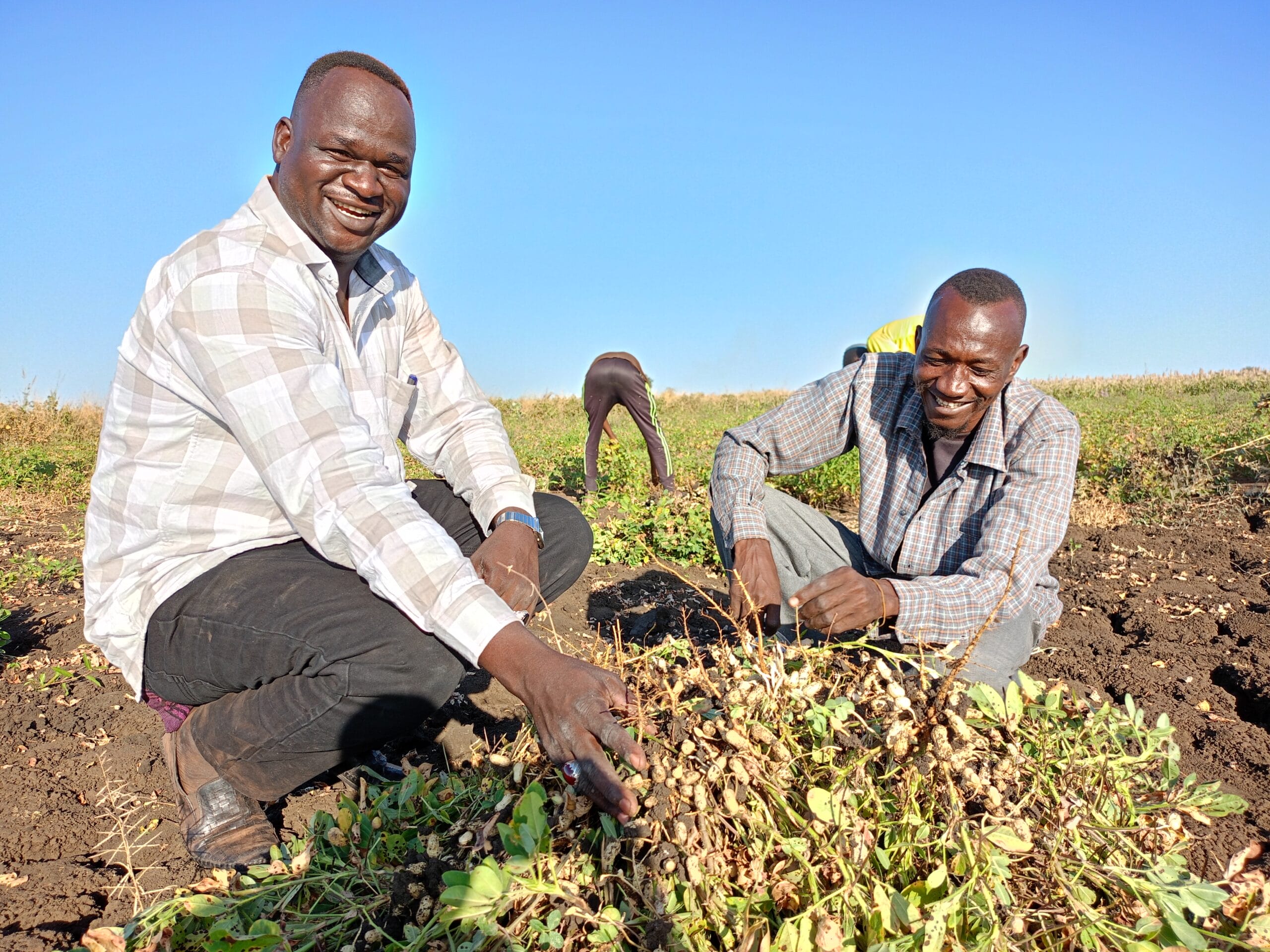
Access to good quality, well-preserved seeds is essential. Practical Action have distributed sorghum, millet, sesame and vegetable seeds to nearly 10,000 farmers.
The seeds, of course, are useless if they are not grown productively and sustainably. Practical Action have held more than 200 farmer field schools where farmers learn the latest techniques, such as this run by agriculture expert Fathi, from the Sudanese government at this model sorghum farm in Basonda, Gedarif State.
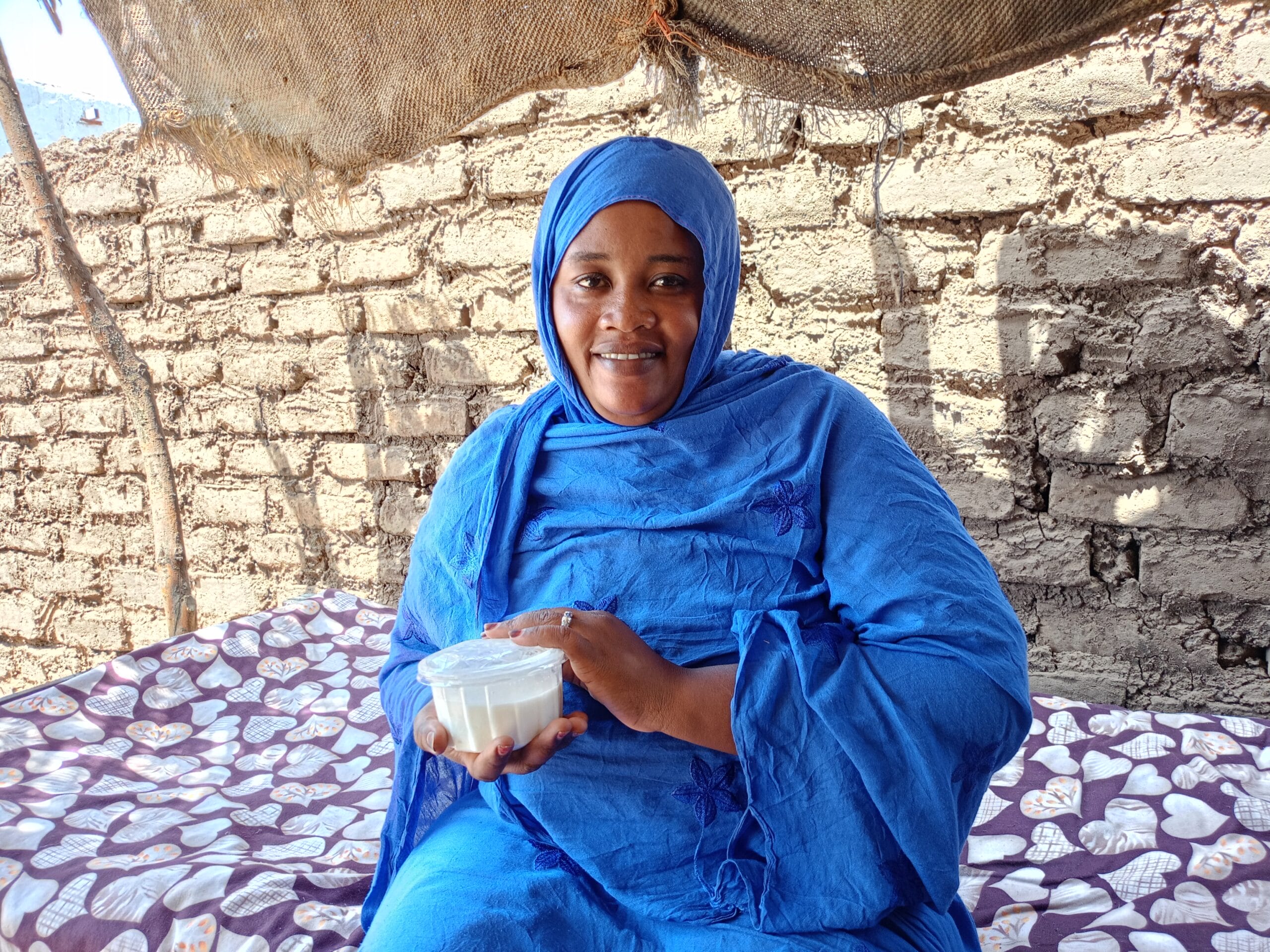
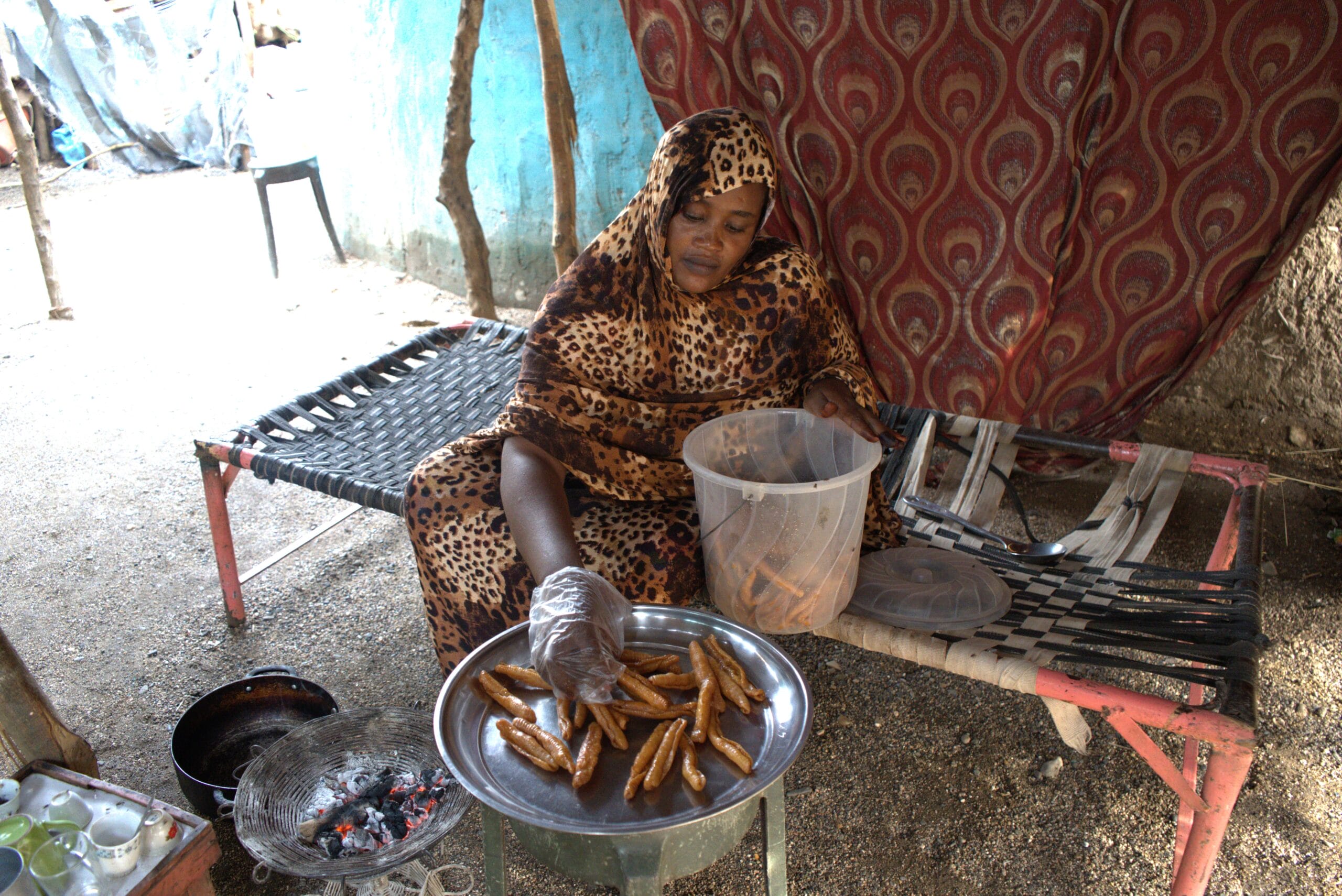
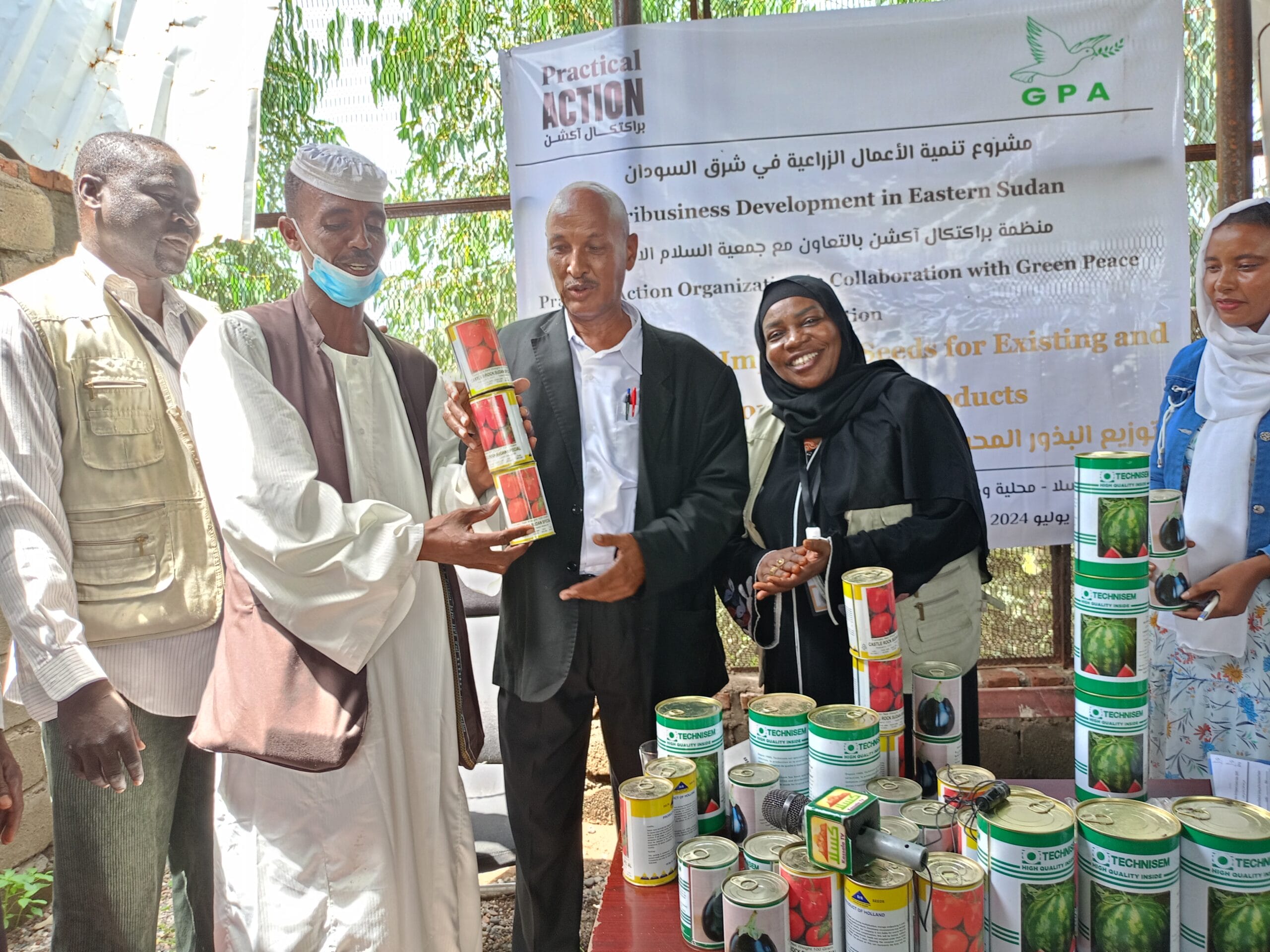
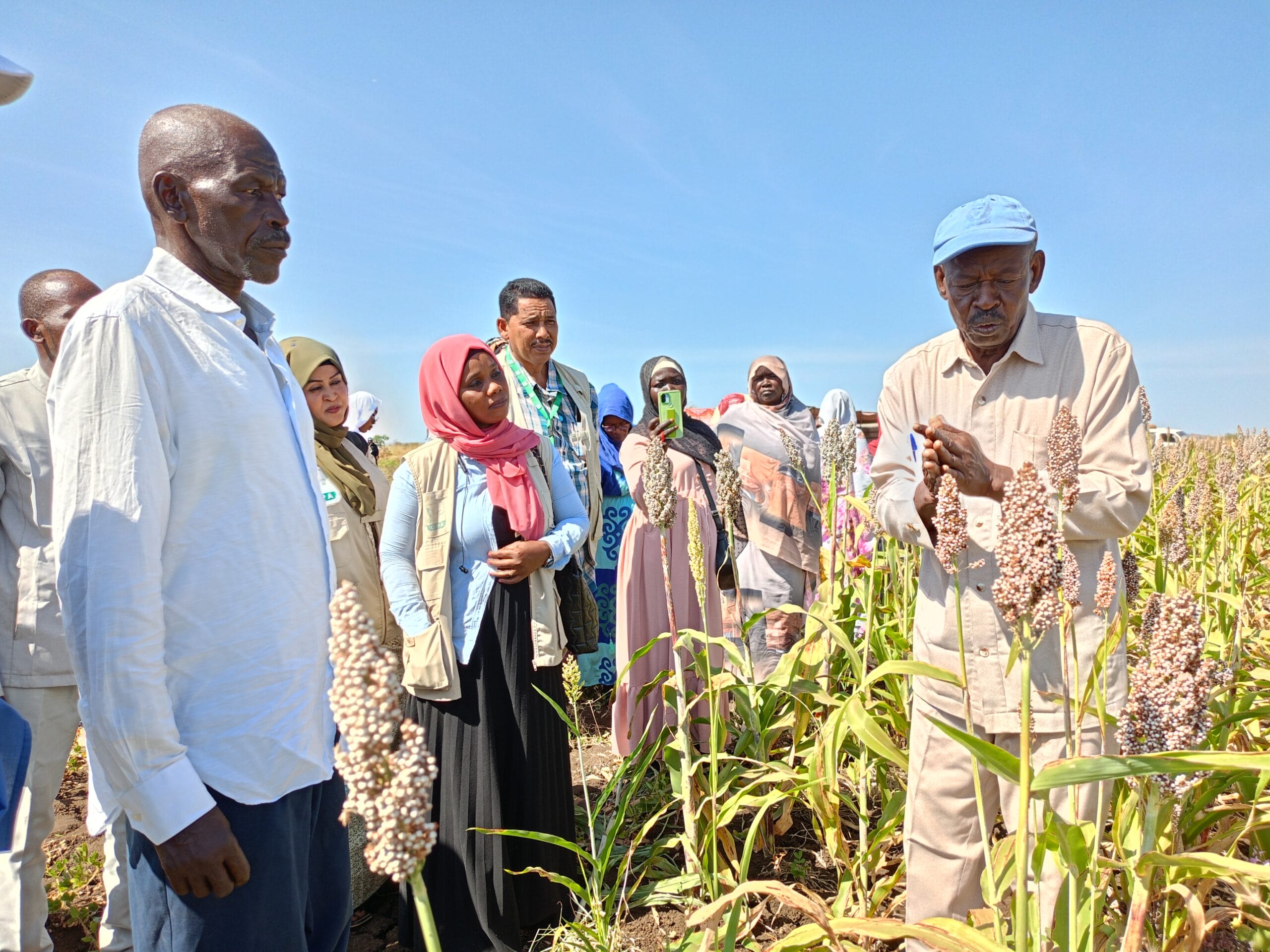
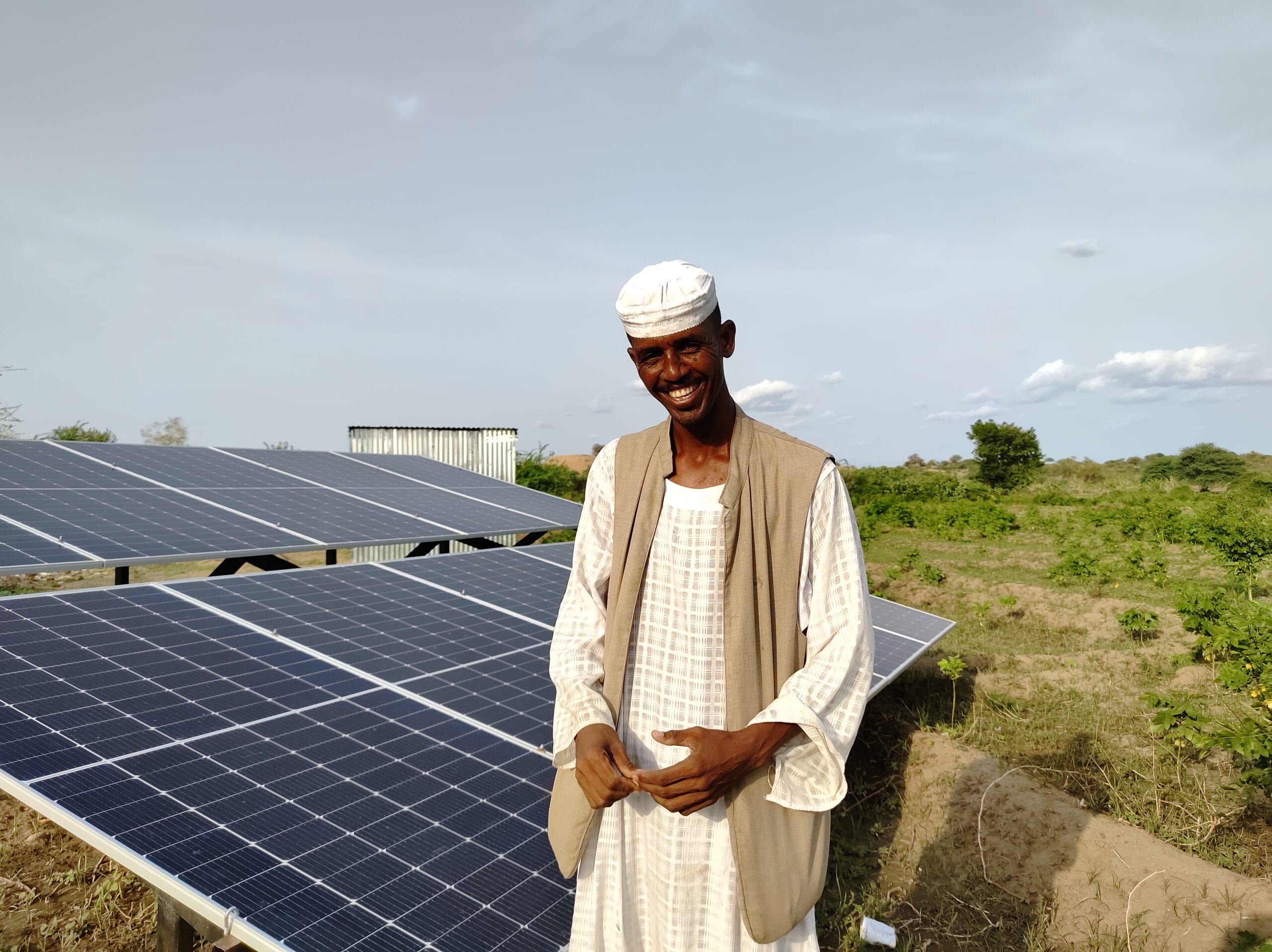
Access to basic natural resources remains a key driver of social upheaval in Sudan and the use of solar panels to pump and irrigate crops is vital to productivity and peace. Here farmer El Rayah stands next to one of the 16 new solar installations in the region. The 35-year-old said when we first met him: “Farmers are having trouble irrigating their crops. High fuel prices, expensive improved seeds, banking difficulties, and the instability posed by war have made a decrease in agricultural productivity.”
After facing bankruptcy and being unable to farm his land due to high prices of seeds and fuel, he is now much more positive. Of the work he has done with Practical Action, he said: “It arrived at the right time when we most needed it. Our health has improved significantly, and our mental well-being has greatly benefited. We feel content and joyful.”
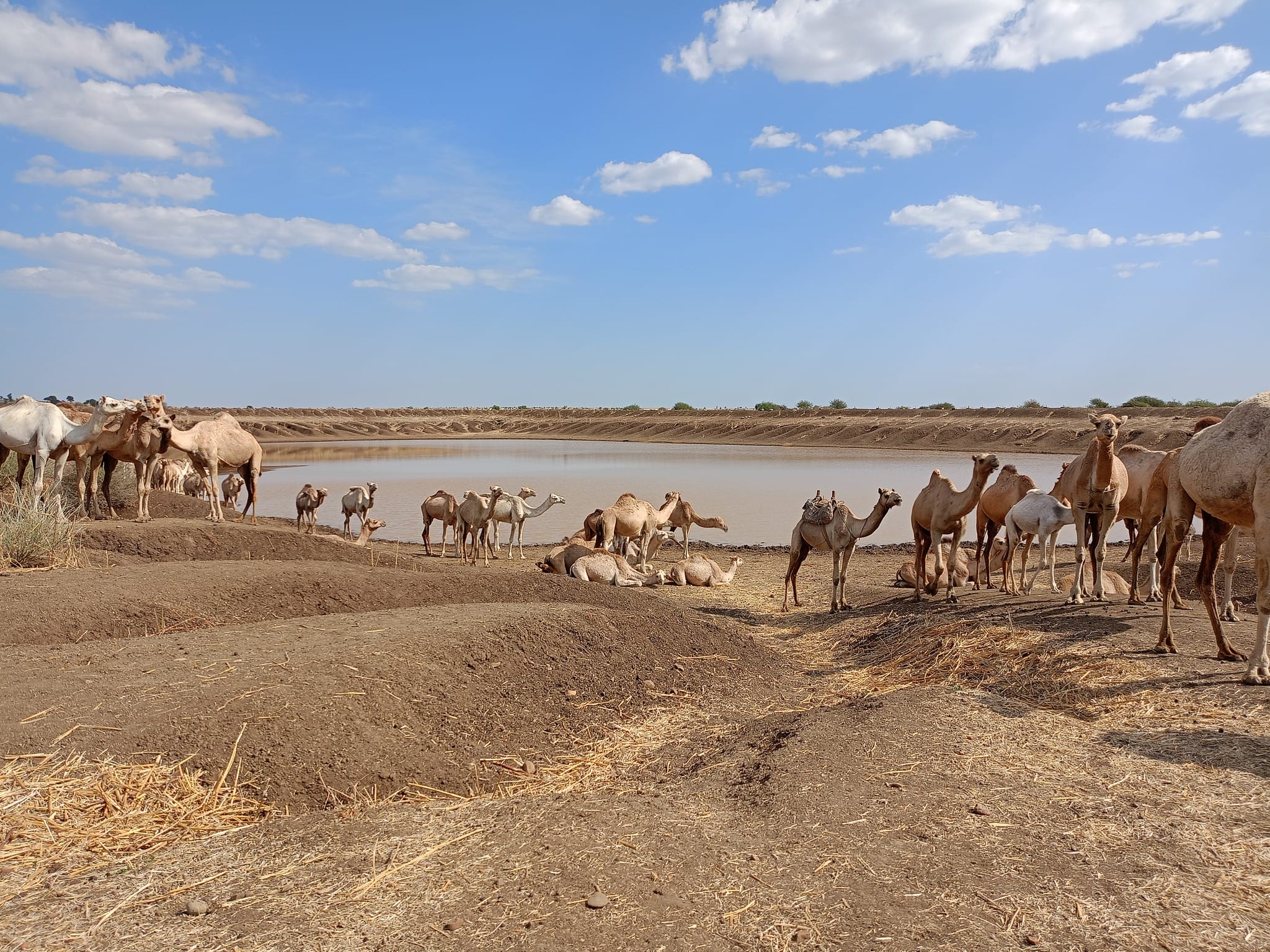
Water access is also vital to the nomads who take their cattle vast distances through Sudan. Fighting over water between farmers and nomads has characterized much of the civil unrest in Sudan for many decades. To help combat this, Practical Action has worked with engineers and leant on decades of experience to rehabilitate five traditional watering holes where nomads can feed and water their camels and goats. Practical Action staff oversaw the construction and now camels can relax and drink.
Practical Action project manager Dr Abdalla Adam said:
“Despite three years of conflict and immense challenges, communities in Eastern Sudan have shown remarkable resilience. Through their efforts in improving food security, restoring water access, and farming, families are rebuilding their lives and creating sustainable livelihoods.
The people I have spoken to and their stories give me hope, show remarkable innovation, and the power of collaboration. Together, we will turn survival into resilience and recovery and ensure a brighter future for generations to come.
From training farmers in climate-smart agriculture to improving access to seeds, water, and energy, our efforts have focused on making sure people have the skills and equipment they need to grow and store enough food now and in future, whilst also creating sustainable jobs for communities affected by conflict. And, the evidence is clear,– with the right approach and funding, there is hope in Sudan.
This work will be completed in December 2025 and our Sudanese team are working hard to extend it into 2026 and beyond.”
Our work in 2025 in Sudan in numbers
Impact Highlights
- 200 farmers trained through Farmer Field Schools in smart agriculture.
- 5,200 rain-fed farmers received improved sesame, sorghum, pigeon pea, and millet seeds.
- 2,200 horticulture farmers received improved vegetable seeds.
- 5 sets of agricultural machinery distributed to farmer networks.
- 2 seed banks and 2 crop warehouses established.
- 3 community centers created for training and coordination.
- 50,000 cattle vaccinated through livestock health campaigns.
- 5 haffirs rehabilitated for pastoralists and nomadic groups.
- 16 solar-powered irrigation systems installed for smallholder farmers.
- 100 women trained in livestock and dairy by-product processing for income generation.
- 30 women trained in small business, home garden and vocational training.
- 3 veterinary drug revolving funds and community veterinary drug revolving funds.
- Train community animal health workers with provision of 55 veterinary kits.
- Broadcasting 2800 feddan of grazing land.
- 217 through Farmer Field Schools on smart agriculture.
- 250 were supported through Cash for Work.
- 1500 farmers received agricultural tools, such as hoes, rakes, spades and sickles.
- 100 farmers were given fertilizer to improve crop yields.
- 100 low-income families received goats, which provide milk and can be used for breeding.