By investing in renewable energy programmes via the UK Aid budget, the United Kingdom has recognised it is critical to development and, in doing so, transformed the lives and livelihoods of millions of people.
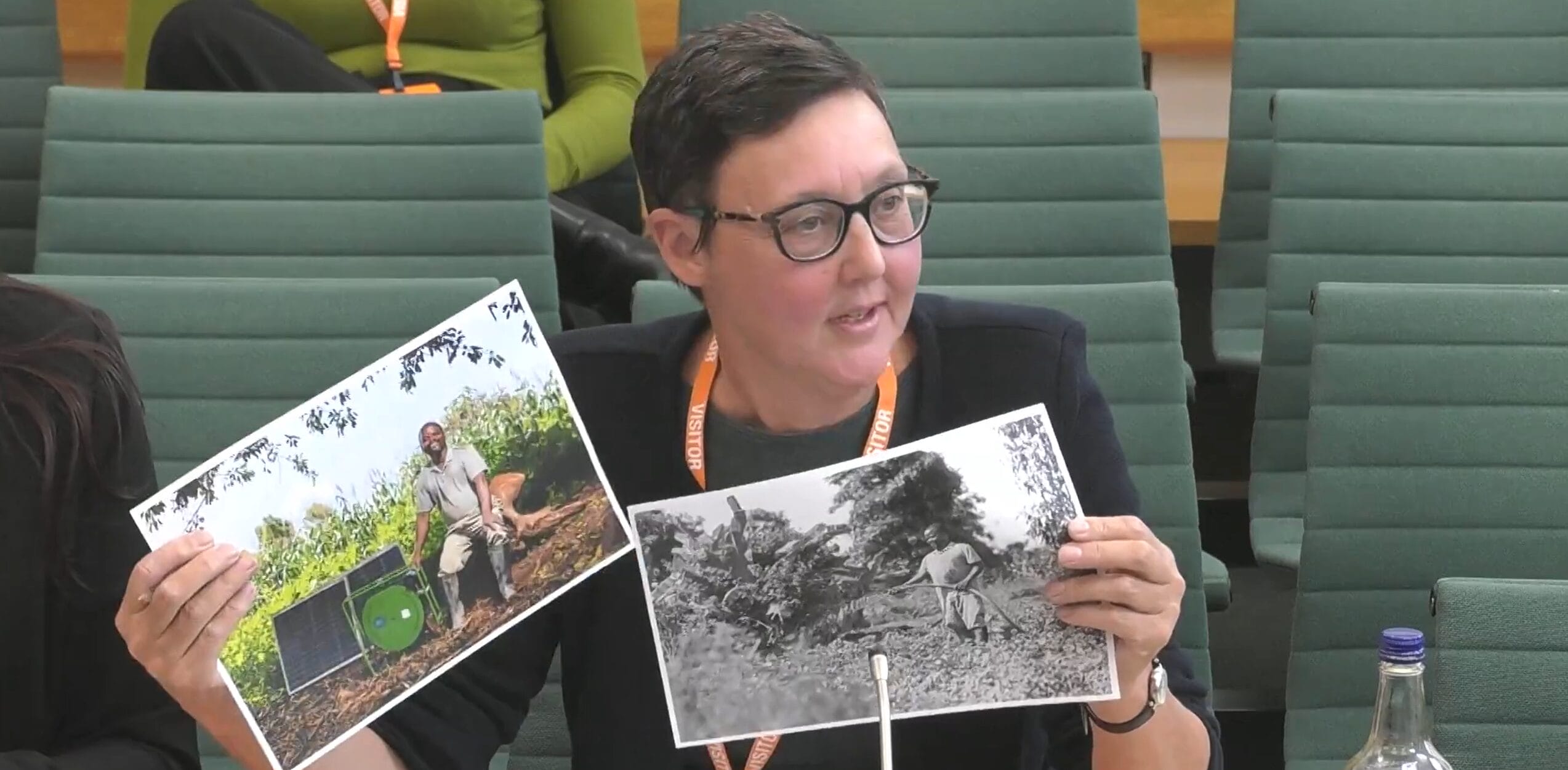
Experts have welcomed a report by MPs calling on the UK Government to protect spending on community led energy access around the world.
Practical Action CEO Sarah Roberts was one of a number of people called to give evidence to the UK Parliament’s International Development Select Committee.
Members of the committee wanted to hear evidence to understand better how the UK Government can support global development goals and the UK’s interests.
In response, they published a new report, Empowering Development: Energy Access for Communities.
The report argued that programmes to increase access to modern, renewable energy can offer opportunities for UK business, help create stable, prosperous partners in lower-income countries, and offer lessons for the UK’s transition to net zero.
MPs also argued that energy access initiatives could be at risk without predictable support and that the UK Government should provide more stable and guaranteed funding.
Practical Action was called to give evidence to the committee in recognition of decades of research and work with people who are displaced, living in extreme poverty, or in remote, rural areas.
This work has demonstrated the positive impact that community energy can have when local people play a central role in governing, managing, and sharing its benefits.
Sarah said: “It is good news that the select committee heard the messages that were coming through loud and clear from myself and other experts who gave evidence.
“As I said to the committee, it is devastating that these programmes are now being cut, given successive Governments have such a strong track record on this issue.
“If this Government are serious about achieving the global development goals they have signed up to, then they must invest. If they don’t, then this excellent report will fail to make a difference.

Practical Action provides a blueprint for good practice
The report made four key points which have been showcased by Practical Action’s energy access programmes around the world for decades.
Energy access gives people a basis from which they can adapt to climate change and thrive
When it comes to climate change adaptation, the report recommends greater collaboration across programmes and within research networks to identify options for deeper integration and progress.
Practical Action, in partnership with GOGLA and Efficiency for Access, launched a set of key resources to help stakeholders–including off-grid solar companies, NGOs, donors and impact investors–better understand and deliver access to off-grid solar technologies intentionally to enhance climate resilience and adaptation.
Energy access initiatives must align with local realities and priorities
The report identified that projects that are product-led rather than needs-led often prove unsustainable, as they fail to align with local realities—such as income patterns, energy uses, or cultural practices.
Practical Action has a long history of being grounded in the communities we work with, listening to, and understanding the challenges they face, before working with representatives of all groups, to arrive at a set of priorities and activities.
Women must be central to community energy projects
The report recommends that the FCDO should ensure women are central to community energy by supporting their leadership, and designing interventions around their needs, so they act as agents of change
In evidence to the committee, Sarah said working with women was front and centre of Practical Action’s programmes. “We have a programme called Women Energy Entrepreneurs in Kenya that has again been funded by a number of Governments through development aid in different ways.
“It has been building a whole cohort of women across Kenya who are energy leaders now and are now very active in the Clean Cooking Association of Kenya.”
Without government finance, the most vulnerable communities will never enjoy energy.
The report highlights that the private sector will never deliver modern energy to those who cannot afford it, or are costly to reach when using traditional business models, and aid “remains vital to reach communities that markets alone cannot serve”.
Sarah told the committee:
You cannot localise without looking at the financial mechanisms that are going to work…[and] if you are looking at rural community energy, there will almost always need to be some subsidisation.
Sarah Roberts, Practical Action CEO
The latest State of the Sector report published within Practical Action’s Global Distributors’ Collective programme highlighted the need for finance that better serves companies who work with the most remote and vulnerable communities.
If you would like to work with Practical Action by helping communities on the front line of climate change enjoy better access to energy, contact Tom Stevenson on [email protected]