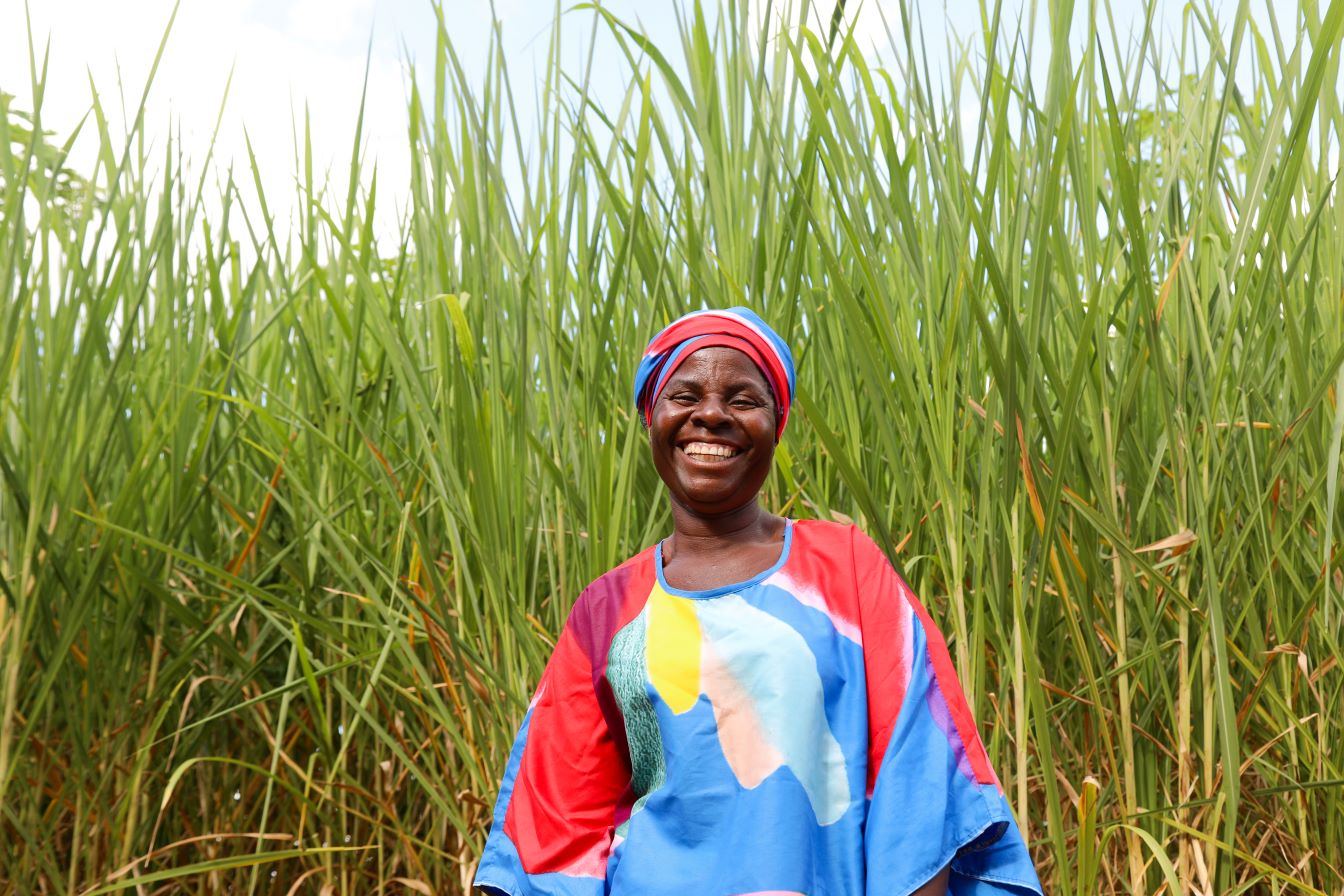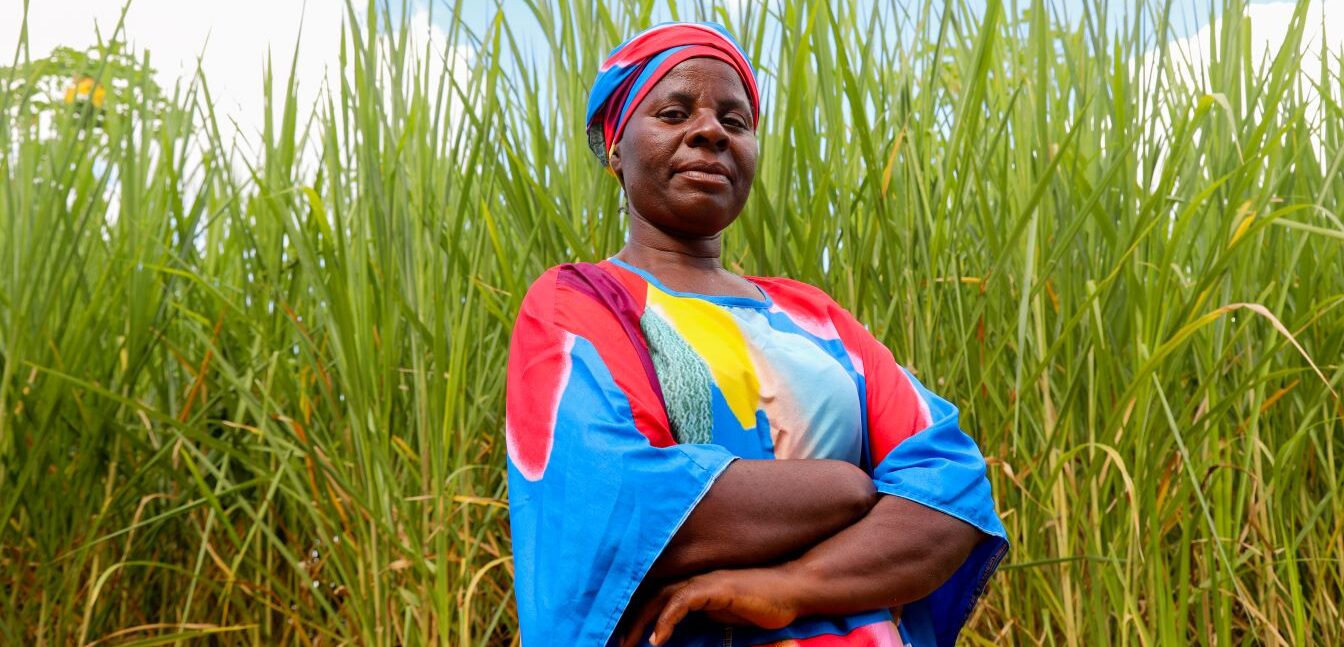
Kelebone Ndlovu is a farmer from Gwanda Ward 19 in Zimbabwe. She is also the chairperson of the Mankonkoni Irrigation Scheme. Farming has become her way of life and her way of providing for her family and others around her.
She began farming at the age of 34. Before that, she worked as a till operator at a supermarket. When the economy worsened, she returned to her rural home. Her decision to farm was shaped by her upbringing. As a teenager, she watched her mother farm in a neighbouring irrigation scheme. “That’s how I started liking irrigation,” she says.
She now grows maize, sugar beans, wheat and horticultural crops. She sells to local markets, boarding schools, and the Grain Marketing Board. For her, farming is more than a job. It is a way to be self-reliant. “If I’m farming, I don’t have to buy everything,” she says. “I can raise goats, grow crops. That means I can provide for my family without spending much.”
Before the solar-powered irrigation scheme, farming was difficult. They used fuel-powered engines that would often break down. Repairs were slow and expensive. Breakdowns during planting affected germination. Breakdowns later in the season stressed the crops. Sometimes they would lose everything. These challenges made it hard to follow the cropping calendar. Yields were low and incomes were uncertain. “It was very different,” she says. “There were so many breakdowns. We had to buy fuel and wait long for repairs. It was difficult.”

Things began to change when Practical Action and its partners supported the scheme. They introduced a solar-powered irrigation system. Since then, the farmers have been able to farm more consistently. Kelebone says they now follow their cropping calendar. They have more reliable access to water. The solar system does not require fuel. It is easier to maintain. “Of course we have challenges like cloudy days,” she says, “but overall, it has made a big difference.”
Kelebone and other members also took part in trainings. These included lessons on good leadership, operations and maintenance, and farming as a business. One topic stood out to her. It was the training on gender. “As an African woman, it taught me how to relate with my male counterparts,” she says. It also opened up conversations about the role of women in farming leadership.
She became the first female chairperson of the Mankonkoni Irrigation Scheme. The scheme has been running since 1960, and before her, it had always been led by men. She says the trainings gave her confidence. They also helped her male colleagues see that women can lead and achieve results. “Now they understand that a woman can lead and produce great results just like a man,” she says.
The scheme is made up of 40 farmers. There are 28 men and 12 women. Each person irrigates about 0.6 hectares of land. Everyone receives the same share, including youth and persons with disabilities. Kelebone explains that while inclusion was already part of the policy, the trainings helped them see why it is important in practice. “Even someone living with a disability has a right to farm, to eat, and to go to school,” she says.
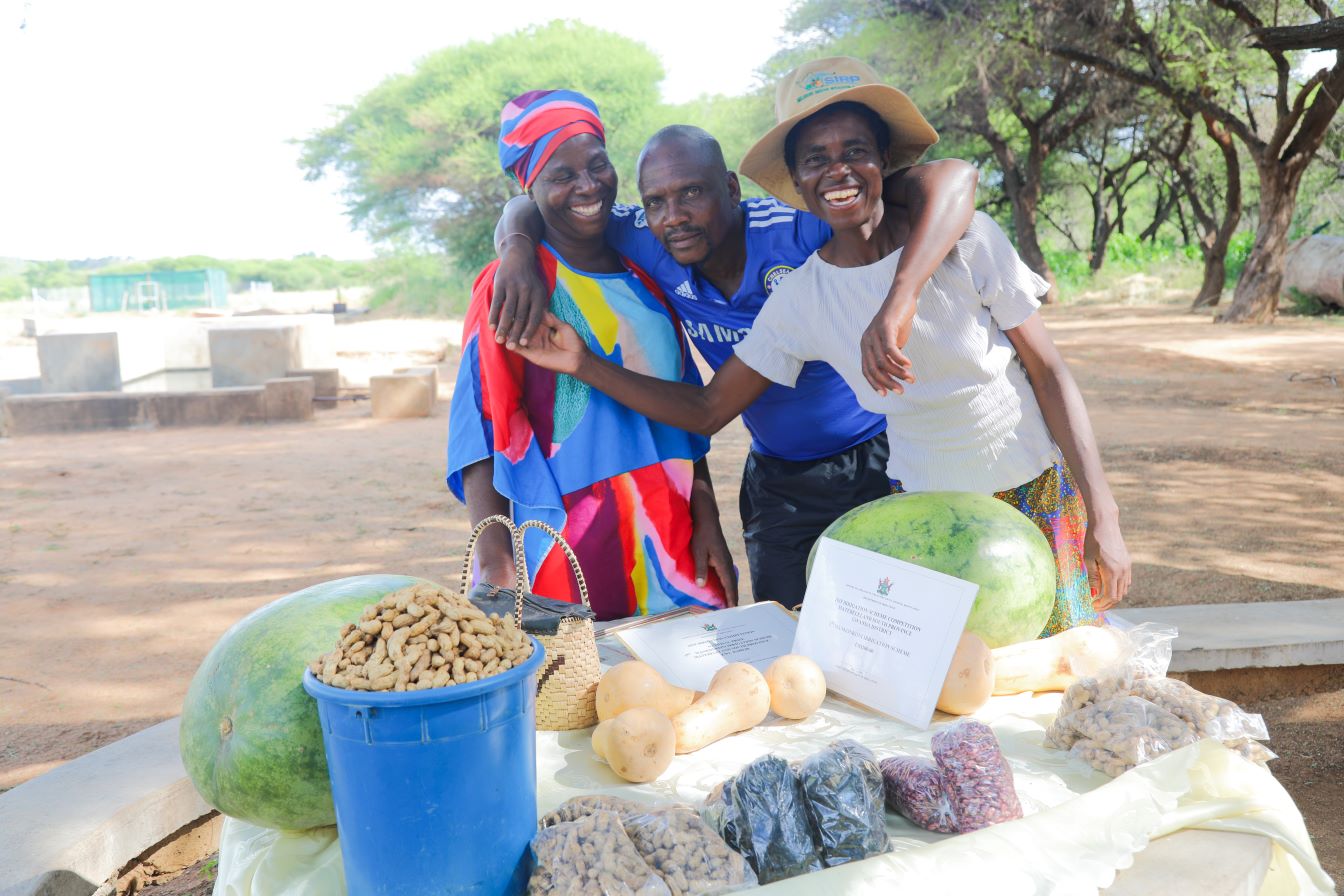
The impact of the solar irrigation system has gone beyond the farm. With better harvests and more income, farmers have been able to send their children to school. They also formed internal savings and lending groups. These groups help members save money and support each other. The savings are used to pay workers, repair equipment, and respond to emergencies. “We are always farming and always selling something,” she says. “We always have money.”
There are still challenges. Frost remains a problem that farmers cannot control. Kelebone also says they need a backup system for cloudy days when the solar system does not pump enough water. The savings group is not yet focused on that specific goal, but the funds are helping meet other essential needs.
Looking to the future, Kelebone is hopeful. She says the community is stronger now. More people recognise what farmers in Gwanda South can do. They are now linked to other organisations. They are beginning to explore export opportunities. In March, they plan to begin training to grow melon seedlings for export to Dubai. “The training has built our confidence,” she says. “The whole country now knows about Mankonkoni.” She hopes that one day, visitors will return and see the progress they have made. “Maybe next time you come, you’ll see our own cars parked here.”