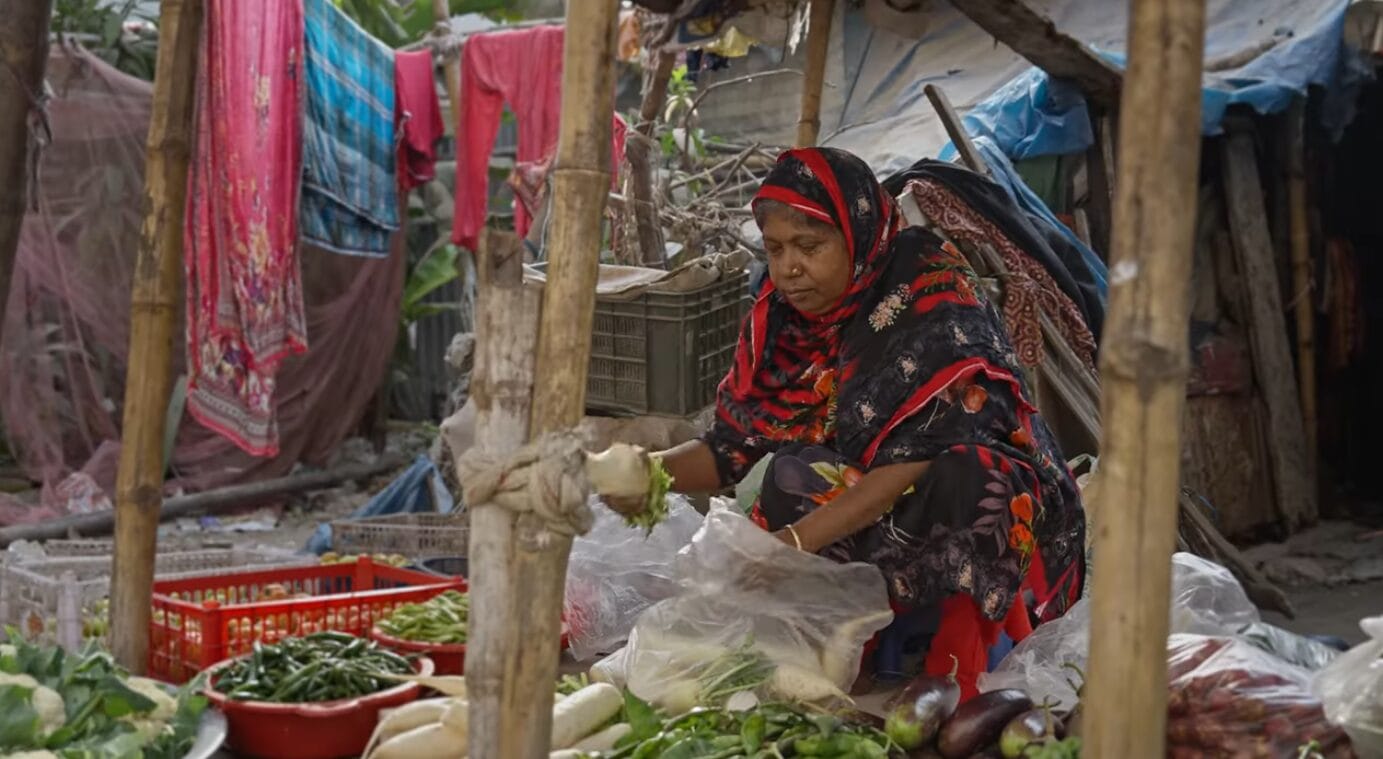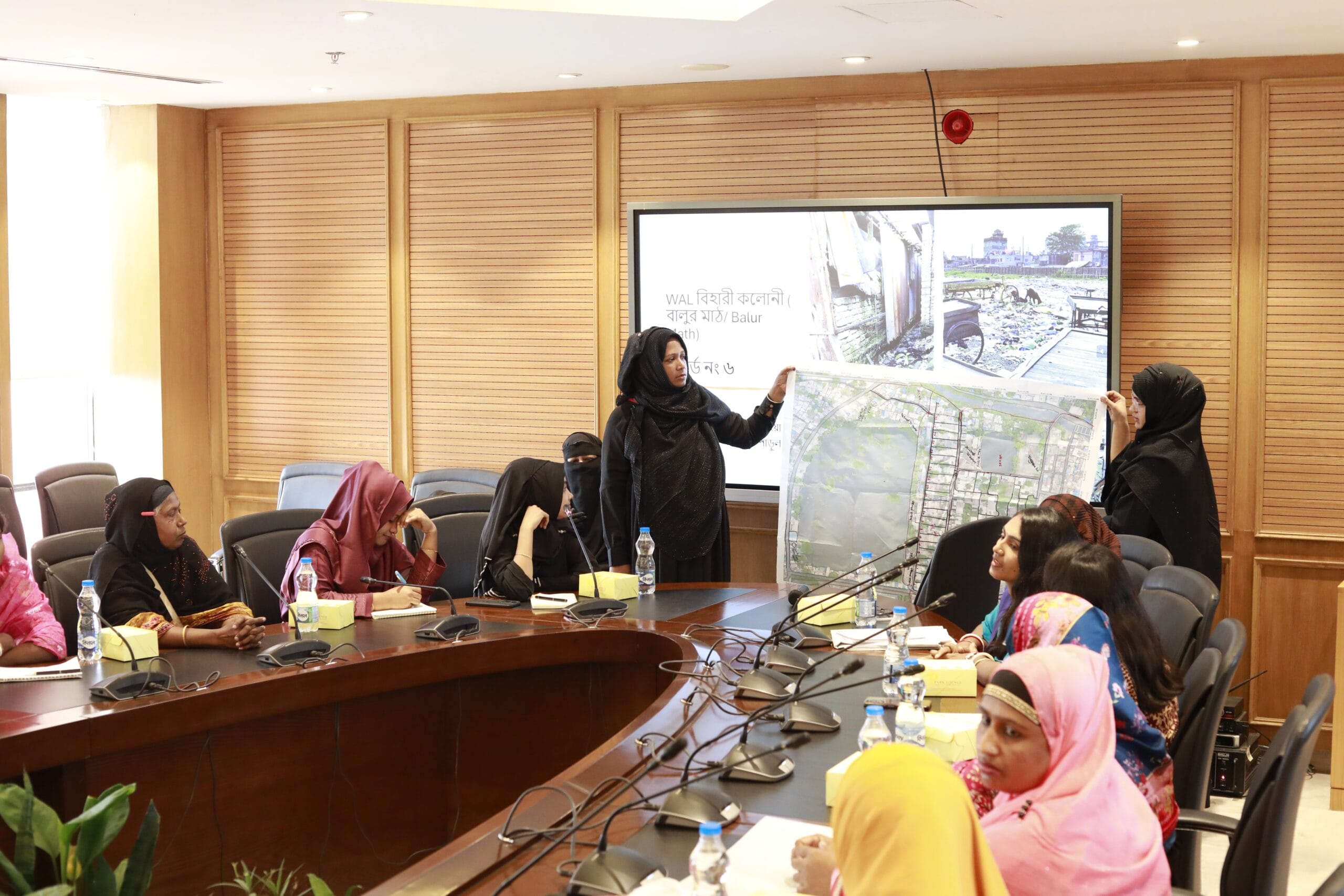
Narayanganj City Corporation (NCC), located south of Dhaka in central Bangladesh, is home to thousands of women living in low-income informal settlements who bear a disproportionate burden of climate change.
Waterlogging, urban heat stress, water scarcity, and poor sanitation disrupt daily life in ways that fall hardest on women, whose roles in managing households, caring for children and the elderly, and securing food and water make them both the most exposed to rising risks and the most knowledgeable about what resilience actually requires at the community level. Yet in most urban adaptation planning processes, their voices remain absent.
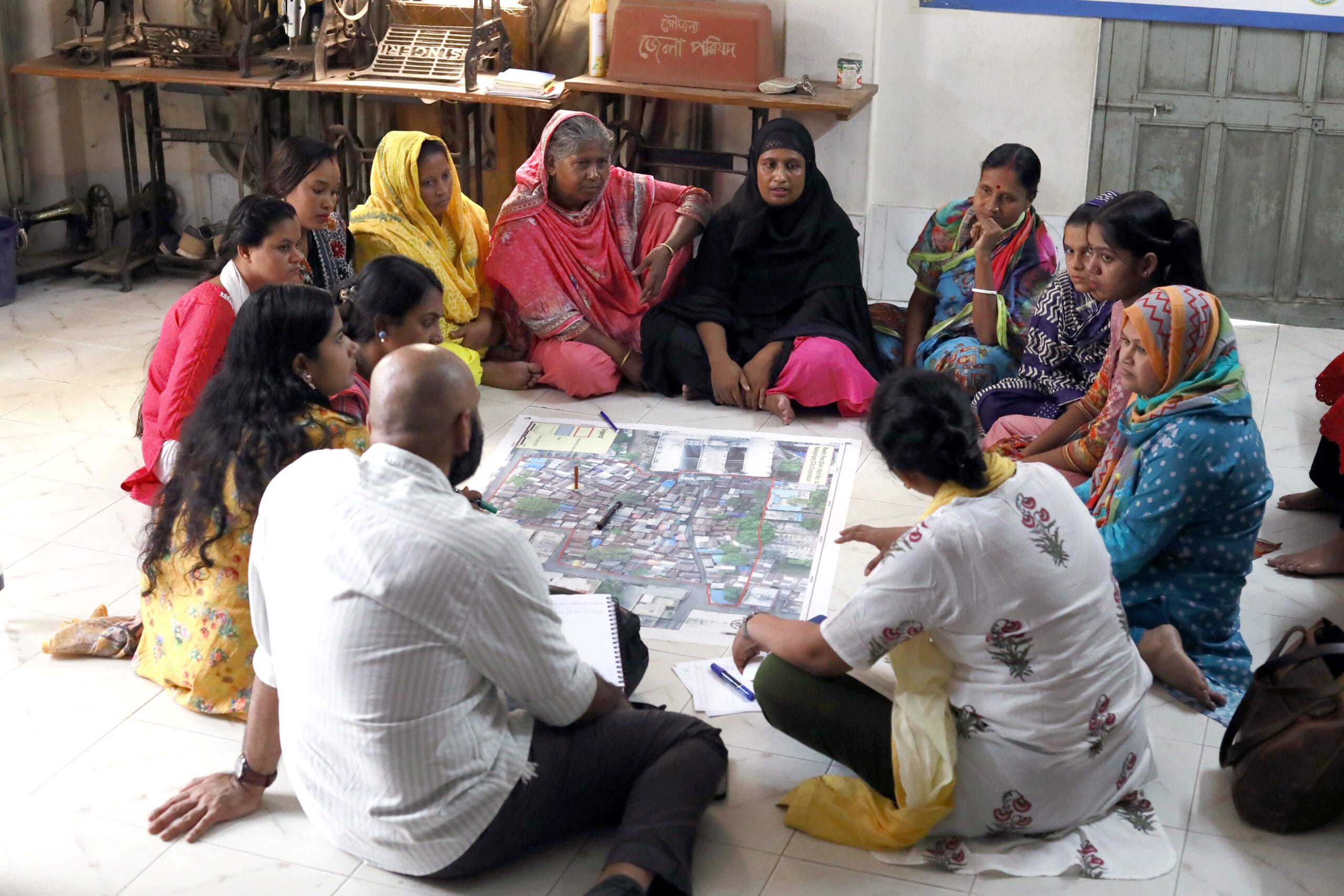
The Women’s Adaptation Labs (WALs) were designed to change that. The idea of creating these spaces emerges from the global challenge of climate impact that people living in urban informality face, despite heavy investments made in the area of development. Developed by Design for Change Ltd., facilitated by practical Action in Bangladesh associated with Global Center on Adaptation and Global Affairs Canda, the Women Adaptation Labs are structured, women-led spaces embedded within existing community networks, conceived as resource centres for resilience where women identify, articulate, and champion locally grounded adaptation solutions that reflect their own priorities and lived realities.
The process began with a rigorous settlement selection methodology supported by a detailed settlement profiling process. Communities were assessed through secondary data review, stakeholder consultations, and ground-truthing visits. A weighted scoring framework helped identify priority areas based on climate risk exposure, women’s vulnerability across health, income, and care roles, the presence of existing women’s groups, infrastructure deficits, and the feasibility of interventions.
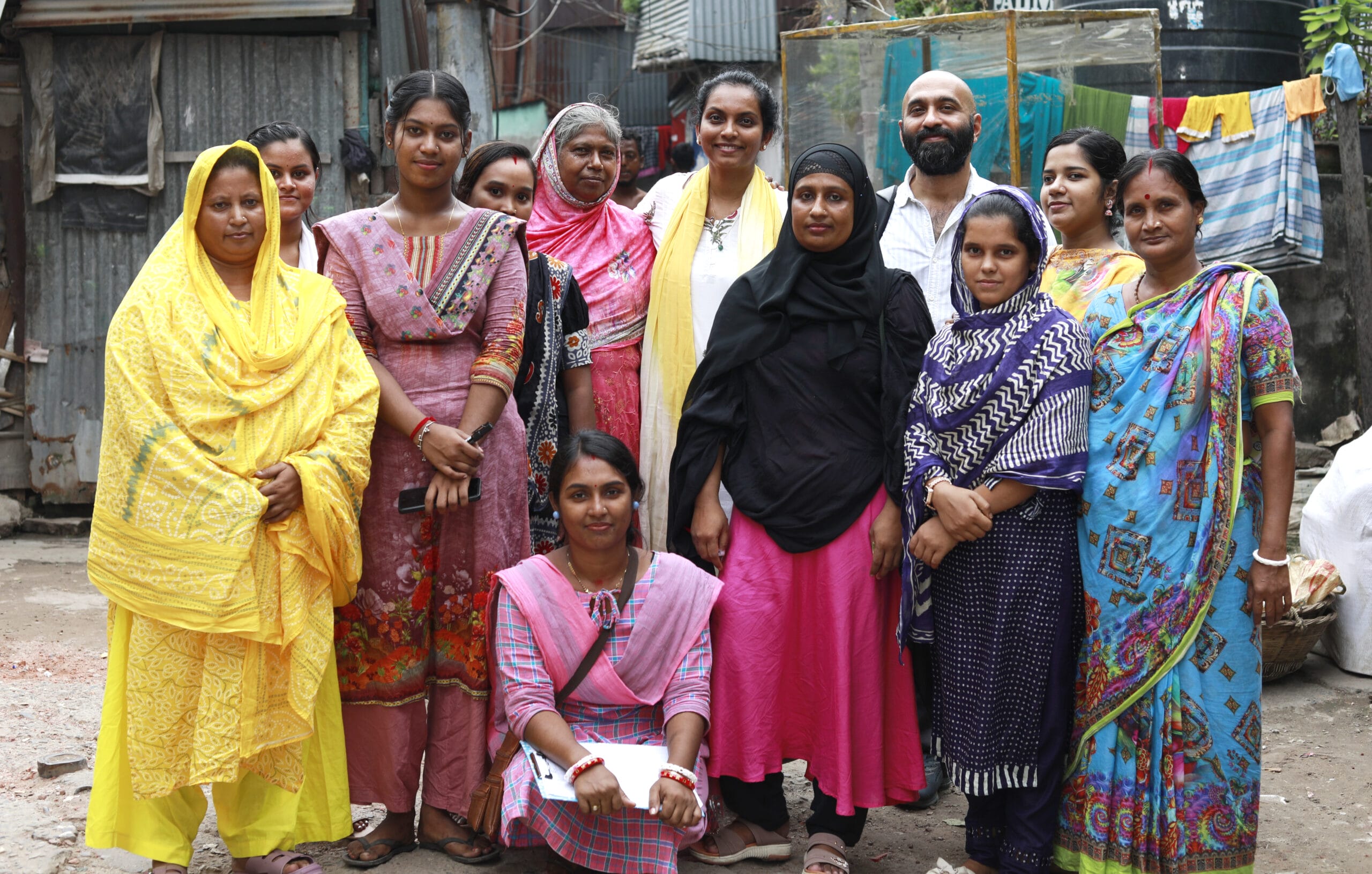
Five demonstrations were carried out across four of the most climate-vulnerable low-income communities in NCC: Bihari Camp, Rishi Para, Guhobari, and South Rally Line. These settlements were selected based both on the level of need and the potential for meaningful, sustained women-led participation.
Within each settlement, the Labs brought women residents together through focused group discussions, participatory mapping, walk-through observations, and direct conversations about lived experiences of climate stress. A central feature of the process was the development of a community-level data bank, capturing locally held knowledge about resources, risks, and adaptation practices that is often invisible in formal planning systems. By making this data available at the local level, the Women Adaptation Labs ensured that communities themselves hold a record of their own vulnerabilities and capacities, rather than remaining dependent on externally produced assessments.
The Labs engaged women directly in identifying resources available within their settlements, diagnosing problems, and generating possible solutions rooted in practical local knowledge. These were not solutions handed down from outside but ones developed by the women who live with climate risk every day. The outputs were subsequently shared and validated with NCC and other relevant stakeholders, creating a structured pathway for the solutions identified by women to be taken forward into implementation for genuine improvements in living conditions and livelihoods.
The Women’s Adaptation Labs offer a practical and replicable model for gender-transformative urban climate planning. They show that when women are given a meaningful, structured space, adequate support, and genuine agency, the result is adaptation planning that is more grounded, more equitable, and more likely to hold over time. In a city like Narayanganj, where informality, rapid urbanisation, and climate vulnerability converge, that kind of locally led, women-centred approach is not optional. It is essential.