We’re celebrating International Women’s Day by highlighting the incredible resilience and strength of women around the world, especially those facing the challenges posed by climate change.
Author: Monica Cuba
Here we turn our focus to the rural women of Bolivia, whose challenges illustrate the urgent need for inclusive action in the face of climate change. Their journey from crisis to resilience not only shows the disproportionate impact of climate change on women but also showcases their role in building sustainable solutions that benefit people and the planet.
Climate change and the gender gap
In rural Bolivia, women feel the effects of climate change more deeply. Their vulnerability makes them more susceptible to the weather’s impacts, widening gender gaps and poverty.
In developing countries like Bolivia, low economic participation, limited access to education, and a lack of decision-making power lower women’s quality of life. The Global Gender Gap Index (2023) ranks the country 56th out of 142, highlighting the gap between men and women in accessing resources and opportunities.
Rural women, who are responsible for food security and household care, are most affected by water scarcity, soil degradation, and extreme weather events. This situation forces them to take on more work and limits their social and political involvement.
Practical Action is at the forefront of fighting climate change in Bolivia, working closely with rural women to build a more resilient future. This article explores the context and strategies being implemented to strengthen their resilience and empowerment.
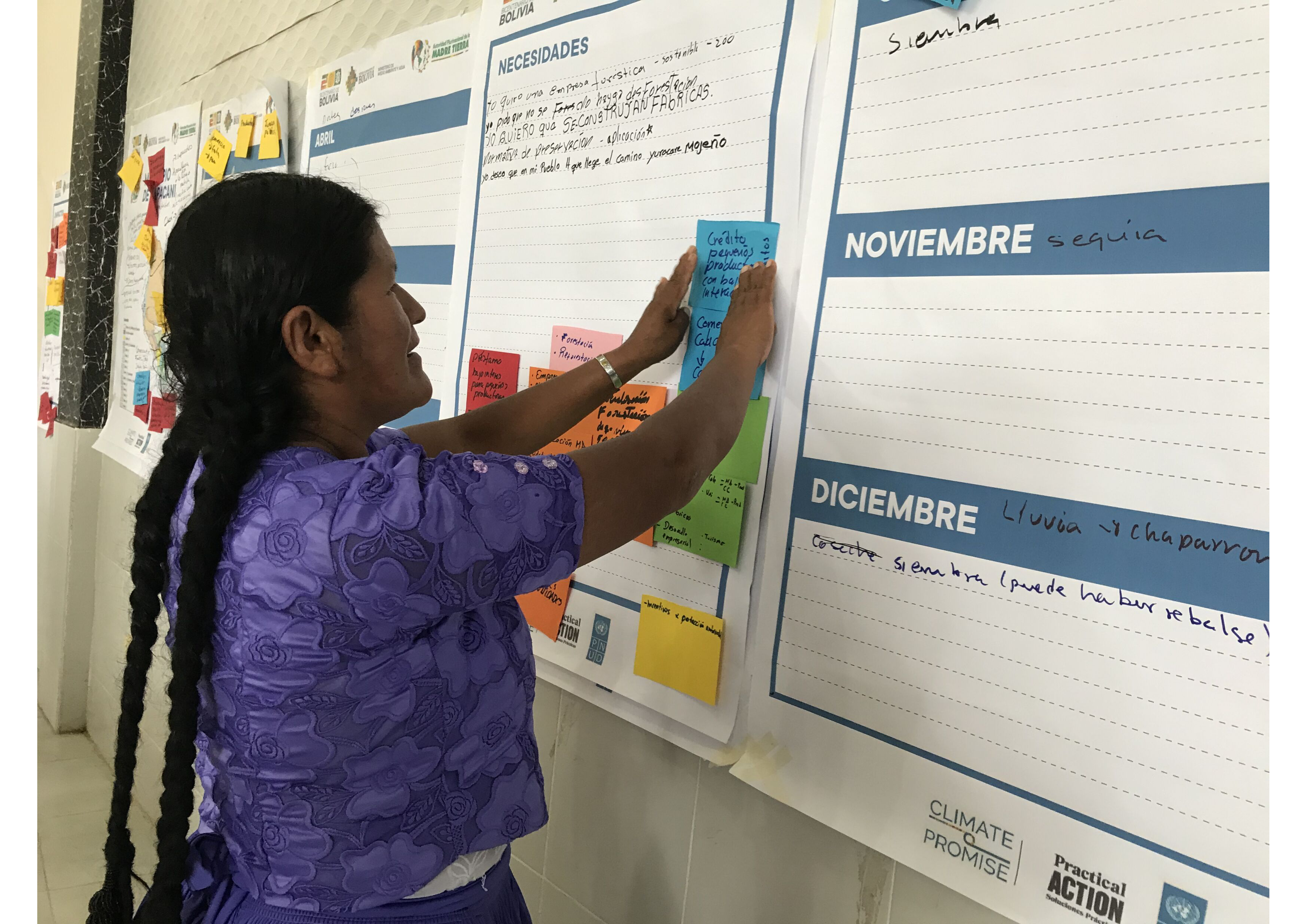
The negative effects of climate change on rural women
Rural Bolivian women are not only poorer than men, but climate change also increases their workload and reduces their opportunities.
Despite national policies and programs for equality, women, especially indigenous women in rural areas, are still far from achieving universal access to health and education, as well as real participation in decision-making. Their inclusion in climate change adaptation and mitigation should be a priority.
Their dependence on natural resources makes them more vulnerable. “They have less access to land, water, forests, and biodiversity,” says the Women’s Coordinator (2022). 65% of productive units led by women are smaller than 5 hectares, and at the family level, they only manage 5% of productive plots, while men control 95%.
Benita Isidro Coche, from Santiago de Callapa, talks about the impact of the climate crisis:
“Back then, there was no drought or anything like that. Everything was fine. I planted and harvested potatoes, and it went well for us, but this has changed since last year.”
A gender diagnosis by Practical Action in Bolivia revealed the local perception of the differentiated impacts of climate change on men and women. Residents of La Paz, Cochabamba, and Santa Cruz are aware of the effects of climate change: droughts, floods, frosts, fires, sudden temperature changes, and imbalances in the production calendar. This creates economic, social, and environmental uncertainty.
Female farmers on the front line of climate change
“These years we have planted in dry conditions, because we have no other choice,” says Rosa Condori. Drought and frost have reduced the harvests of rural women in Bolivia, leaving them struggling to feed their families.
Climate change has doubled these women’s workload. Water scarcity and soil degradation directly affect their crops, while extreme weather events like frosts and floods destroy their harvests.
“We are feeling the effects of climate change more strongly,” says Alejandrina Torrico, a fruit producer. “The produce is getting smaller, and this year we lost several.” Livestock is also affected, with less weight and size due to the lack of water and fodder. In the Bolivian valleys and tropics, the situation is similar. Productive work requires more investment, while accessing a fair market price is increasingly difficult.
“Last year was a flood. I planted four hectares of rice. The flood drowned the crop (…) I lost my investment, I couldn’t recover even the grain for my family, nor the capital, much less the profit I expected. This affects my home, and it’s also demotivating because we put in so much work for nothing. Soon after, we had drought with fires and, although it now seems to be raining, it doesn’t rain on the plots. We already know that this year we won’t have good harvests either.” Noemí Soliz, producer in Yapacani, Santa Cruz, told us.
Women not only work in production but also in caring for the home and community. ECLAC reports that, in 2018, women dedicated more than 23% of their time to unpaid tasks. Many are looking to diversify their activities into activities like sewing.
Migration to cities also becomes a way to escape poverty and the uncertainty of climate change. “Before, young people stayed because they could support themselves,” remembers Verónica Villca. “Now they are gradually leaving the communities.”
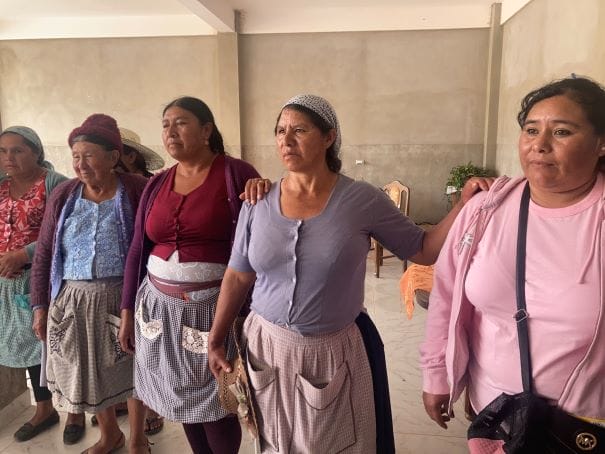
Seeking solutions: The voice of rural women
As well as being most affected by the climate crisis, rural women also have unique knowledge and perspectives that help find solutions. However, despite their importance, “they are often disproportionately affected by the effects of climate change due to their social and economic vulnerability,” says Techno Serve (2023).
Their participation in decision-making is crucial for the success of any initiative. Their practical needs, such as access to water, food security, technology, machinery, land, and loans, must be the starting point for any proposal.
Rural women in Bolivia are already seeking solutions. Some of the proposed strategies include access to water, food security, equitable access to technology and machinery with strengthened capabilities, as well as access to land and inclusive, contextually relevant loans.
Building resilience for future generations
The Plurinational State of Bolivia, through the Plurinational Authority of Mother Earth (APMT), implements the Plurinational Policy and Plan on Climate Change. This policy aims to manage the climate crisis across the country comprehensively, promoting adaptation, mitigation, and resilience actions. Its main goal is to respond to the impacts of climate change and promote holistic development to “Live Well” in harmony with Mother Earth.
It also develops the Long-Term Low Emissions Development Strategy (LT-LEDS), which, with funding from the Climate Promise, is implementing prioritized actions including pilot projects in alternative energies with a gender focus, identifying different roles and barriers, and a strategy for localizing climate actions, led by the UNDP in consortium with Practical Action.
In this context of implementing innovative and inclusive technologies based on alternative energies, our successful experiences from the project “Access to energy for productive uses and market systems for SMEs and community-based enterprises in Bolivia” are being replicated. This project, funded by Endev, included capacity building, facilitation of leadership and empowerment processes for women and youth, maintenance and operation, as well as access to suppliers. Finally, sustainability is sought through business plans built with associations or municipal governments.
This is a significant step towards a more sustainable future in Bolivia, where alternative energy and technologies are vital for building resilience, mitigating, and adapting to the impacts of climate change. Women are key to the success of this process.
This project is just one example of many initiatives being implemented in Bolivia to address the climate crisis. Greater effort and collaboration among all sectors of society are needed to achieve climate justice and a sustainable future for the country.
The progress made by Bolivia’s female farmers in the face of climate change embody the spirit of #inspireinclusion, reminding us of the critical importance of including women’s voices, knowledge, and leadership in addressing global challenges.
That’s why, at Practical Action, we’re committed to building a more inclusive and equitable world where every woman has the opportunity to thrive, contribute, and lead the way toward a sustainable future for all.