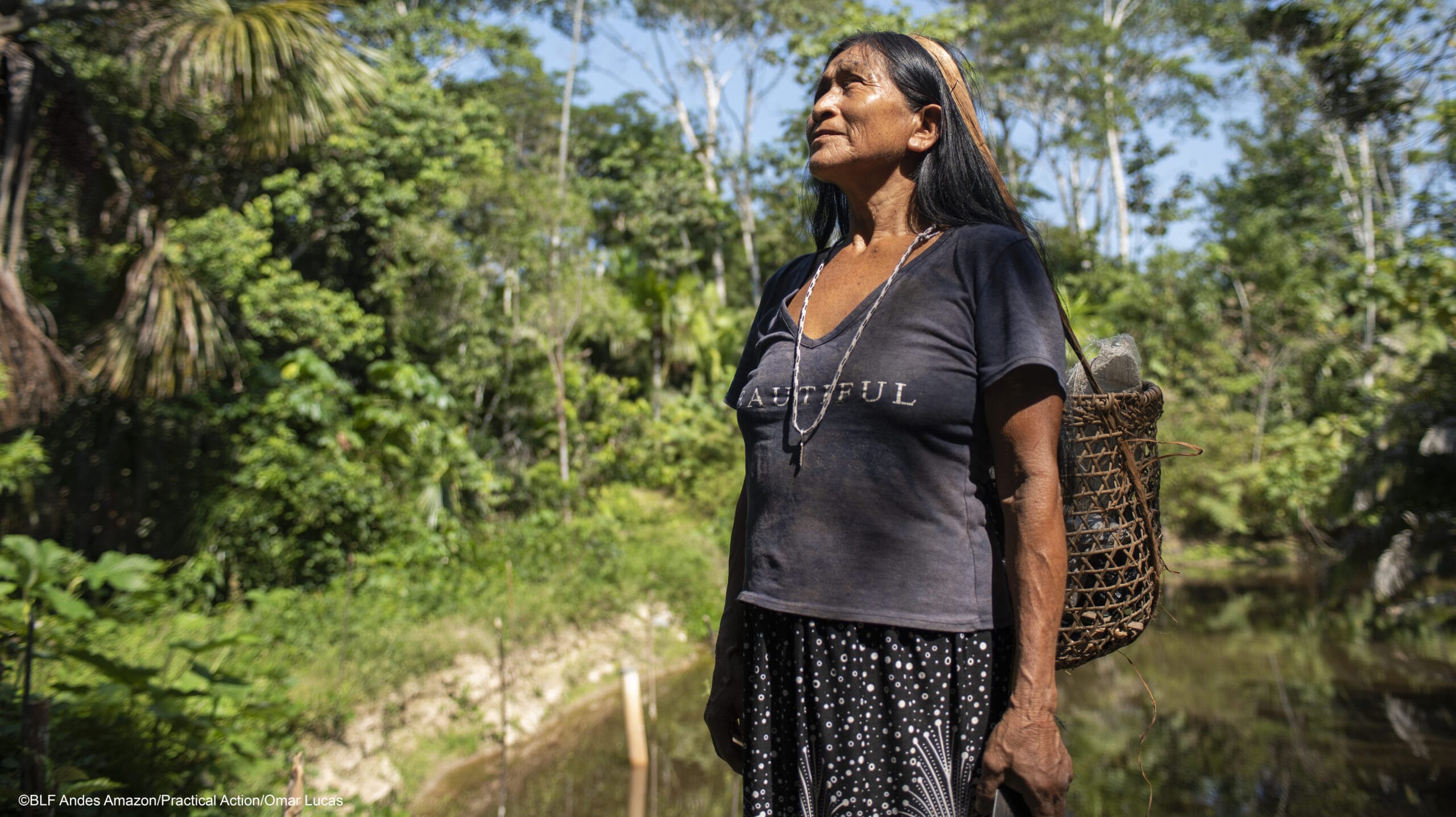
COP30 is the annual meeting of the UN Climate Change Conference in 2025, the world’s most important summit on climate change.
Indigenous leaders from across the Amazon today presented a new mechanism designed to create direct channel of funds to Amazonian territories.
The new proposal at COP30 in Brazil will ensure climate finance finally reaches the communities living in the Amazon, if it is adopted.
Developed by Indigenous organizations from across the world’s largest rainforest, the plan demonstrates how climate finance can be made simpler, fairer, and more accessible to ensure it truly reaches the territories and guarantees Indigenous rights.
Although global climate finance reached around USD 1.27 trillion per year between 2021 and 2022, only a small fraction benefits the communities living on the frontlines of the forest—those doing the most to conserve nature.
The proposal was coordinated by the Interethnic Association for the Development of the Peruvian Rainforest (AIDESEP), with technical support from Practical Action.
Apu Jorge Pérez Rubio, President of AIDESEP, said:
“For too long, the money intended to protect the Amazon has been lost in systems that neither understand nor respect our ways of working.
This new proposal aims to change that, because Indigenous peoples already have experience successfully managing direct funds — a clear example being the MDE Saweto. Now it’s about building trust and recognizing that we know how to take care of our communities, forests, and rights. That will be possible through direct access to climate finance to implement our own proposals.”
By directing resources where they are most needed, the proposal seeks to address the deep inequalities in the Amazon, where many communities face threats from illegal mining and logging, pollution, and organized crime; issues that perpetuate poverty, weak governance, and limited opportunities.
The proposal invites Indigenous organizations, governments, partners, and international cooperation agencies to provide input that contributes to its implementation and future development. It focuses on five key steps to make climate finance work for Indigenous communities:
By strengthening Indigenous leadership and ensuring better access to finance, this proposal will help reduce power imbalances, promote safer and more sustainable livelihoods for those living in the forest, and relieve pressure on ecosystems.
Alicia Quezada, Practical Action’s Latin America Regional Director, said:
“My colleagues and I see large sums of climate finance being promised, but very little reaching the people who have lived in—and protected—the forests for generations. We have witnessed the environmental and social destruction caused by illegality, poverty, and limited financial capacity.
This proposal has the potential to change that reality. It shows how climate finance can be simpler, fairer, and truly effective when it works with Indigenous governance systems instead of around them.
If we want real progress on climate and biodiversity, we must trust and invest directly in the knowledge, leadership, and solutions that already exist in Indigenous territories. Doing so will not only protect the forests but also help reduce inequality and the insecurity that keeps the Amazon trapped in poverty.
I call upon the international community to listen to those who are putting forward this plan and to join us in giving them the means to implement change.”
By connecting Indigenous leadership with global cooperation, the goal is to build a financing system that works for forests, for communities, and for the planet.
This proposal was presented at a press conference on November 12, in Press Conference Room 2 – Area D, at the COP30 venue in Belém.
Contact Steve Kubate:
Contact Andrew Heath: