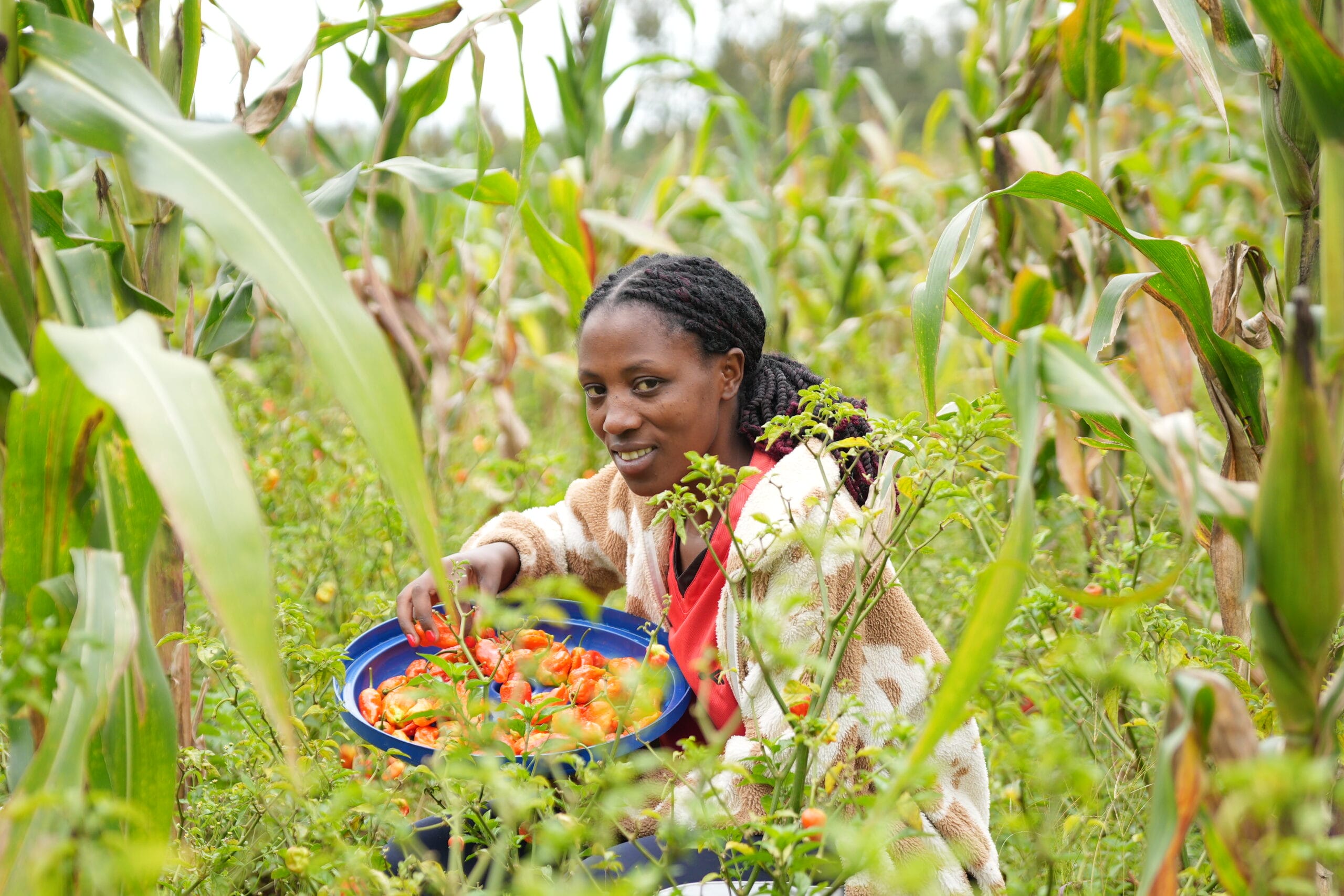
There was a time when Alice spent her days trying to get by. Today, her weeks follow a different rhythm: harvesting chillies, earning an income, and planning a future with her child. In Mugombwa refugee camp, where livelihood opportunities are limited and formal work is hard to access, chilli farming has become more than a source of income. It has given her a stronger footing from which to build what comes next.
Alice Mutoni has lived in Mugombwa refugee camp for thirteen years. She is a young mother raising her child largely on her own. Before joining the chilli farming initiative, she had no steady source of income and very limited options for work. Providing for her child was difficult, and there were times when even basic needs depended on whether she could borrow or ask others for help. As Alice puts it, “Life is very difficult when a person has no job yet they have a child they must care for.”
For Alice, the lack of work was not simply about jobs not being available around her. It was also about the barriers that come with being a refugee. She recalls applying for a job outside the camp and being rejected once it became clear that she held a refugee ID. After that, formal employment felt even further out of reach. She did casual labour where she could, but it was not stable, and it was not enough to build any real security for herself and her child.
When she first heard about the new chilli farming programme, she was not convinced it would amount to much. Growing chillies did not immediately seem like something that could support a household. She says many people around the camp also dismissed it and felt there was little value in it. The assumption was simple: chillies were not a staple food, so how could they meaningfully change someone’s life?
That changed with the first harvests.
Alice now harvests chillies every week and earns a steady income from the crop. The programme helped her and other participants connect with buyers —so far, she has harvested 162 kilos, selling at 500 Rwandan francs per kilo. The money earned has allowed her to take care of her household needs, care for her child, and begin saving some money of her own. She speaks with particular pride about this shift to independence. “Now I am able to support my child,” she says, “and they are doing well because I can provide what they need.”
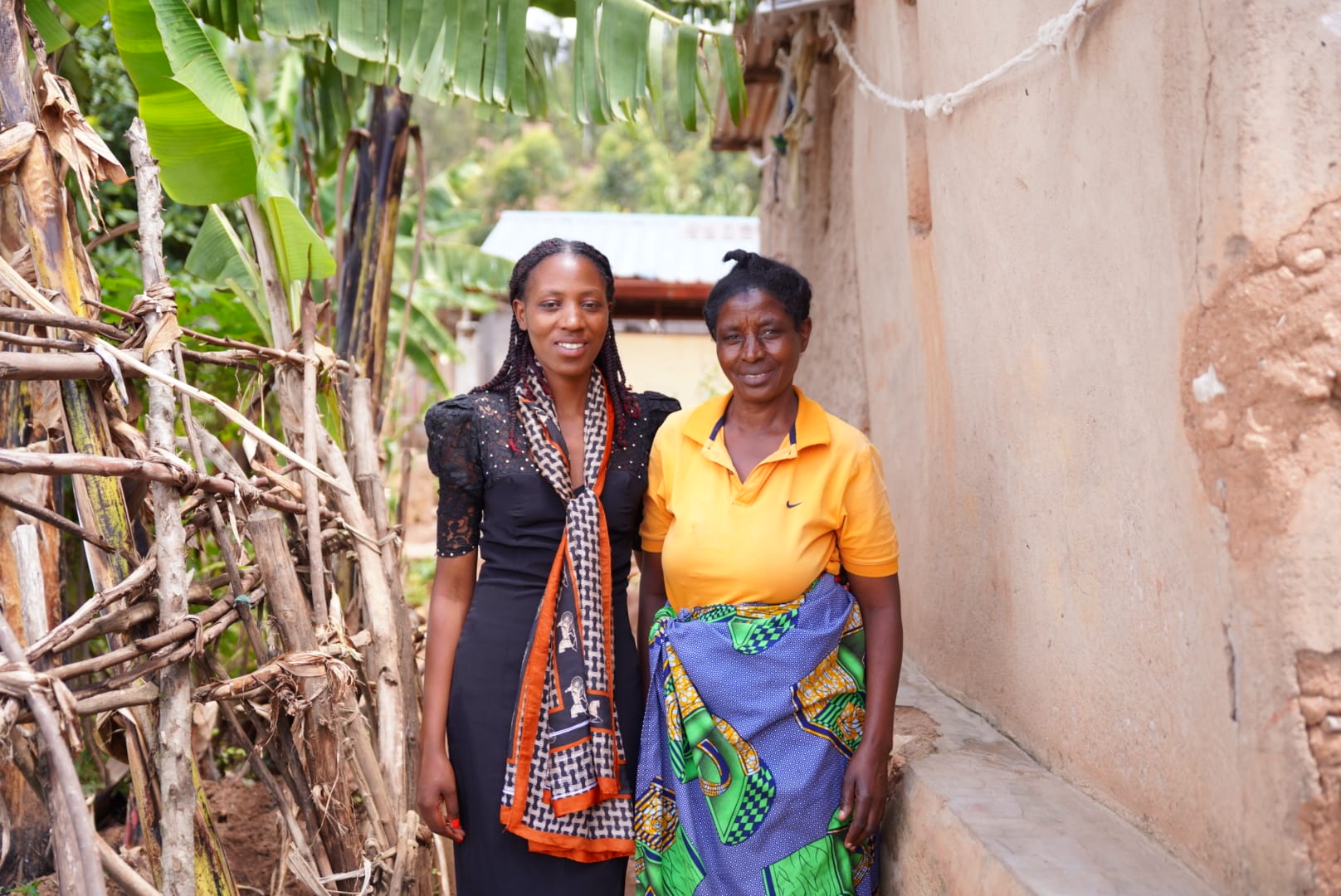
What the project has given Alice is not only income, but a greater sense of stability and self-worth. Before, she says, people at home did not really look to her as someone who could contribute much. Now that she is earning, saving, and helping solve problems in the household, that has changed. “Since I joined this project, I can care for my child and also save,” she says. Her mother watches this change with quiet pride.
Alice also gained practical knowledge through the programme. She learned how chilli farming works from planting and land preparation to the use of fertiliser, manure, and disease control. One of the more difficult aspects was irrigation, especially during the dry season. In the beginning, watering the fields with buckets was exhausting and inefficient. The introduction of pedal-operated pumping machines made that work easier and helped reduce one of the main barriers farmers faced in managing the crop. As she says, “At that time, it was hard using buckets, but then Practical Action brought us machines.”
Another part of the experience that stands out in Alice’s account is the way the work has brought people together. Farmers share techniques, learn from one another, and work alongside both refugees and members of the host community. For Alice, this has been an important part of the opportunity: not only earning an income, but being part of something collective, productive, and respected. In her words, “we work with others, including those from outside the camp, which brings us together and lets us get to know each other.”
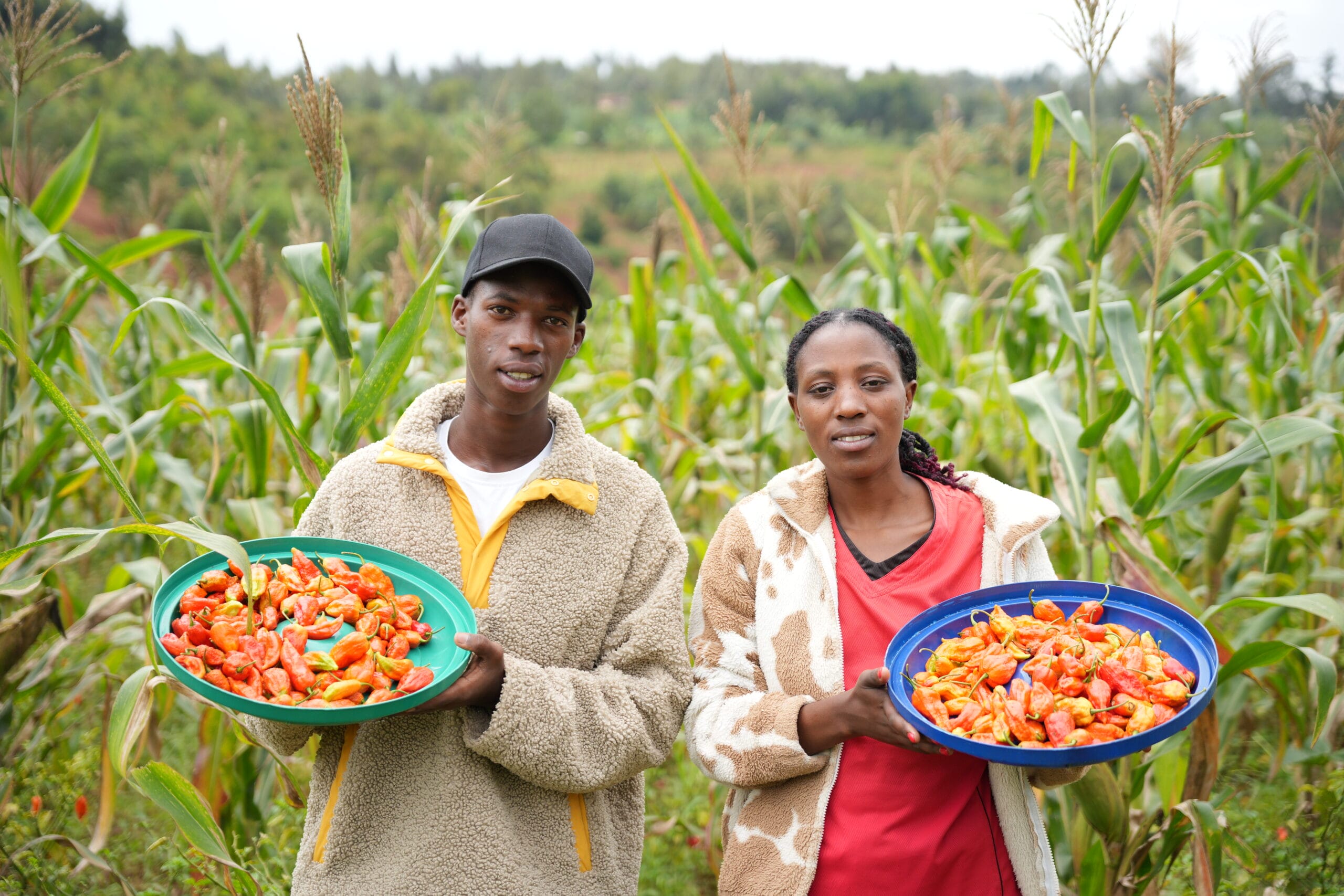
The income from chilli farming has also allowed her to think beyond immediate day-to-day survival. She is saving consistently and has started thinking about what could come next. One of her ambitions is to use her savings to start a small canteen business. Farming has become more than a source of weekly earnings —it is beginning to shape a more secure and independent future.
Alice believes more young people could benefit from opportunities like this, especially those who feel stuck with no clear way to earn a living. She says some have already become interested after seeing what chilli farming has made possible for her and others. At the same time, she points to the practical constraints that still limit wider participation, including lack of land and limited access to seeds.
Looking ahead, Alice hopes the work can go further. She imagines farmers eventually coming together more formally so they can build something larger from what they have started. “Perhaps we could be trained on how to process them,” she says, “so that in the future, we could even start a factory to process the chillies ourselves.”
This work is part of the Farm to Market for Refugee Youth (F2MARY) project, which aims to create new opportunities for young people in and around Mugombwa Refugee Camp through chilli and poultry farming, while boosting incomes, creating jobs, and strengthening resilience to climate change. It is funded by the Mastercard Foundation through AGRA (formerly the Alliance for a Green Revolution in Africa).