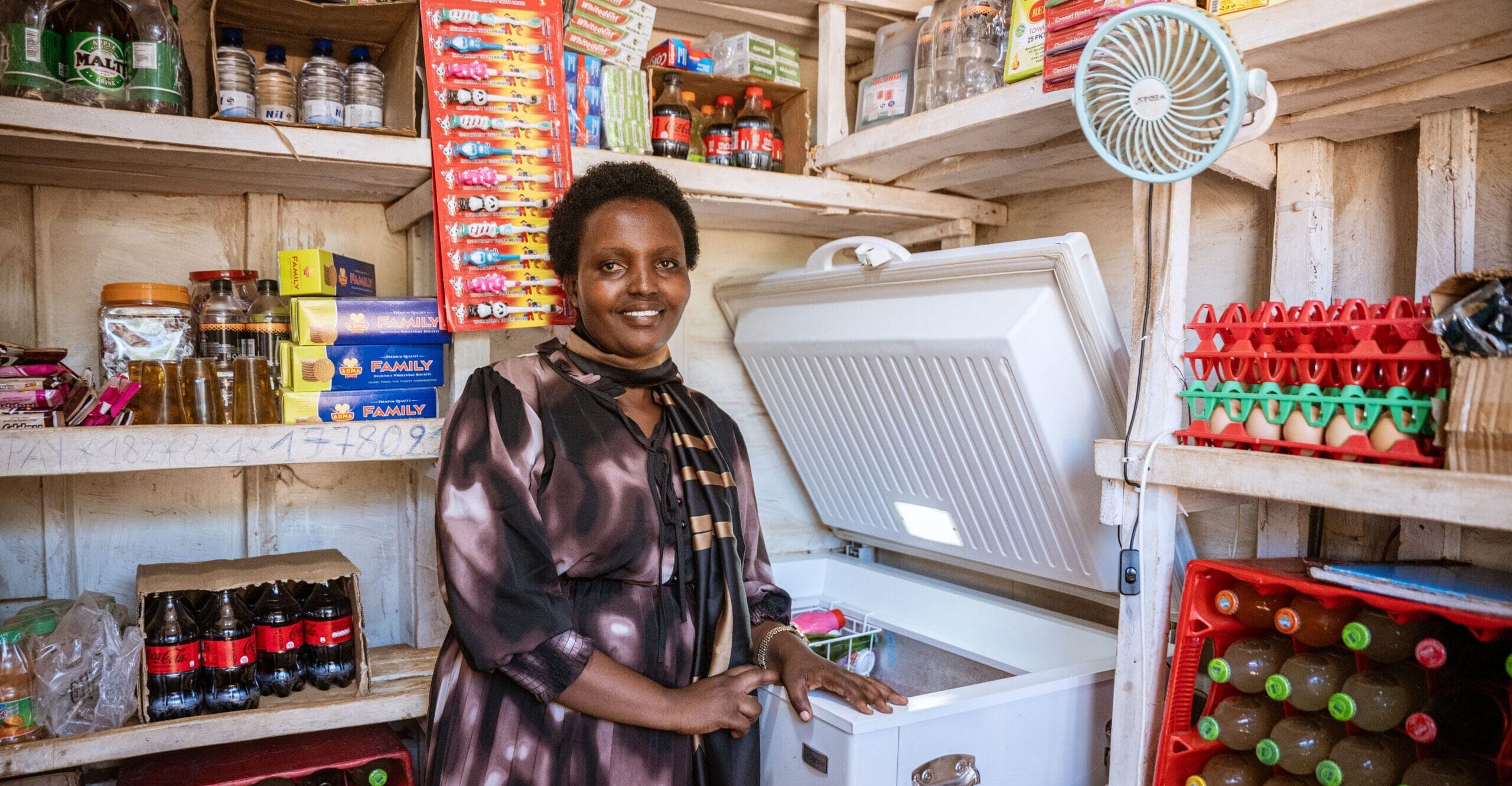
In partnership with Practical Action, Energy Saving Trust, co-Secretariat of Efficiency for Access, is delivering the Humanitarian Productive Use of Renewable Energy (H-PURE) demonstrator across three refugee camps and host communities in Rwanda.
Through this demonstrator, we’re introducing a range of standalone solar-powered appliances – everything from refrigerators and freezers to energy kits, hair clippers, grain mills, and sewing machines – at an 80% subsidy to help entrepreneurs grow or start businesses. To make this happen on the ground, we partnered with three local distributors who are selling the appliances across the camps and surrounding host communities.
When we launched the H-PURE demonstrator in Rwanda, we knew affordability would play a big role in whether people in refugee camps would be able to access solar-powered appliances. Even with subsidies and flexible payment options built into the demonstrator’s design, we weren’t sure whether entrepreneurs on the ground would prefer to buy these products, or what would truly work in their settings.
So, after nearly half of the appliances earmarked under the demonstrator were sold, we visited the refugee camps in Rwanda to speak directly with distributors and entrepreneurs.
Across the camps, one message came through loud and clear, ‘We want more appliances, give us more technology’. Whether for powering businesses or creating new income streams, people were genuinely excited about what these appliances could do to improve their lives.
But the reality is that most cannot afford the cost without support.
We anticipated this challenge early on, which is why subsidies and flexible repayment schedules were part of our strategy. Most of the solar appliances were Pay As You Go (PAYGo) enabled, meaning that our customers could avoid high upfront costs for appliances, and entrepreneurs could choose their preferred repayment period. We also planned to involve microfinance institutions (MFIs) to help entrepreneurs access small loans and reduce risk for distributors.
In theory, this should have worked. In practice… it didn’t.
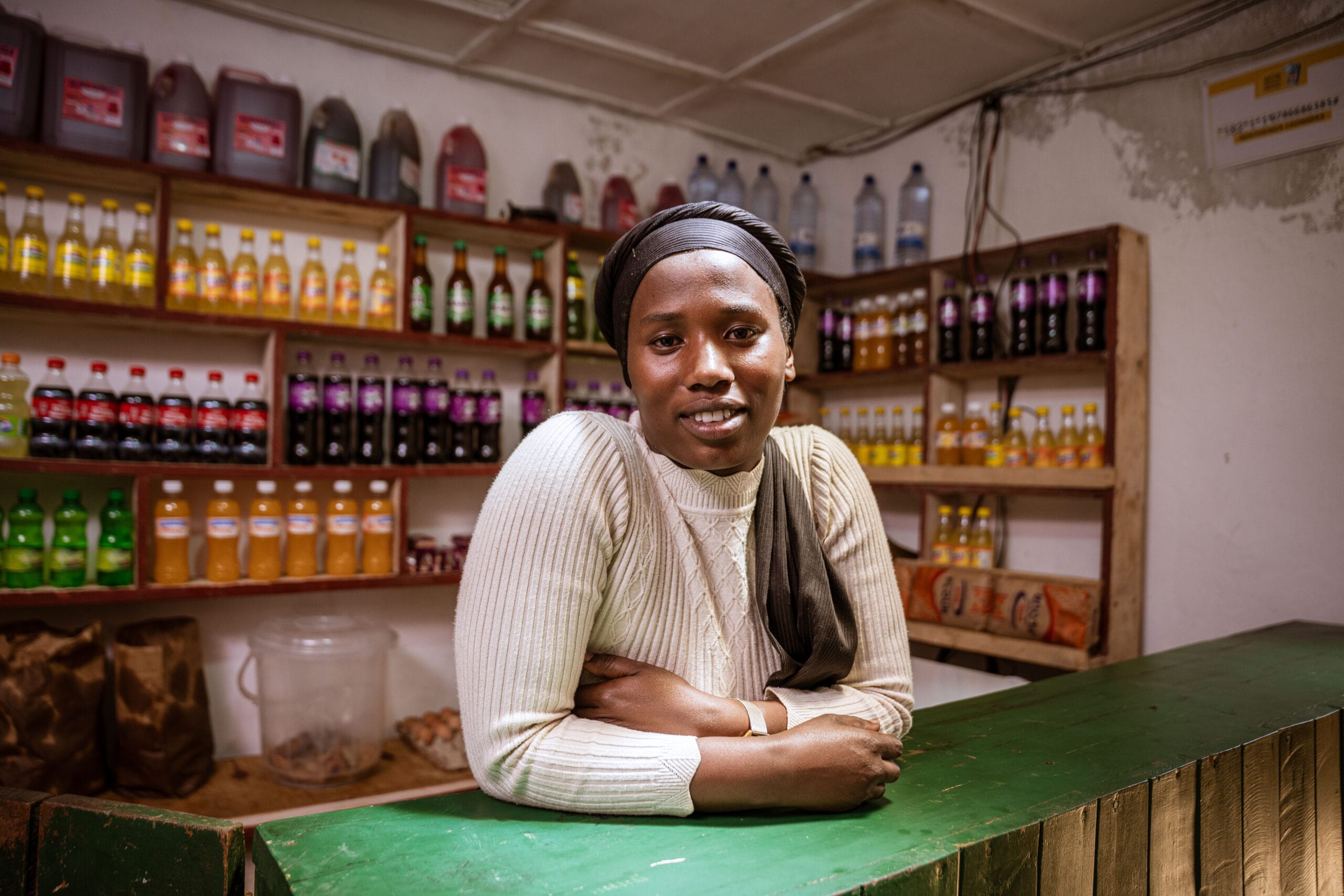
Microfinance sounded promising, but on the ground, realities were much more complex
We entered the demonstrator thinking MFIs would be natural partners. Some already operate in and around the camps, and we assumed that they would welcome a chance to support new business opportunities.
Instead, we learned about the roadblocks in this strategy:
- MFIs had little or no experience financing energy products.
- Their lending is typically focused on business inventory, not equipment.
- Due diligence processes are long and extensive.
- Interest rates were steep, between 8 to 10% per year.
- They were unfamiliar with the risks and repayment behaviour related to appliance financing.
- And most importantly, MFIs hesitated to partner with private companies (in our case these were the distributors) that didn’t have long-term presence in the camps.
While the idea made perfect sense on paper, it was premature to expect results. We didn’t yet have the evidence to show that appliance loans could succeed in these settings.
We did, however, come across something that has been working in the camps for years. This is what is popularly called informal lending groups. Most of the entrepreneurs in the camps are part of this lending group. Informal lending groups are often built on trust and social ties in the community and allows people to get quick money for emergencies or big purchases.
These groups have existed in the camps for years and have been working well. Here’s why:
- Getting a loan is quicker, as there are no long waiting periods.
- There is no lengthy due diligence process; members already know one another and lending is built on trust and familiarity.
- Interest rates are lower, at less than 5% per year.
- Repayment follow-ups happen organically, due to social ties within the group.
- Default rates are lower because missing payments damages trust and a person’s standing within the community.
In many ways, these informal groups are a fully functioning financial system, one tailored well to the realities of humanitarian settings.
So, what’s our biggest learning? If we want solar appliances to continue reaching people in humanitarian settings, we need financing solutions that communities already trust and use. Sometimes, the best system is the one already embedded in the community.
And some good news, PAYGo works
A significant number of entrepreneurs preferred PAYGo, and they could afford the 20% cost of the appliances with monthly repayments.
For appliances without PAYGo integrated system, distributors opted for monthly cash collections from the entrepreneurs. This helped sales but created new challenges for the distributors, such as the need for closer monitoring and monthly cash collection.
What our learnings mean for future programmes
From our experience under H-PURE Rwanda, future approaches to financing solar appliances in refugee settings might include:
- Designing community-friendly loan products that feel familiar and are built on existing financial behaviours, rather than introducing something entirely new.
- Working closely with MFIs to understand their risk concerns and co-developing financing strategies that make sense for both the institutions and the entrepreneurs.
- Tailoring subsidy based on affordability. We capped subsidies at 80% across all businesses after multiple rounds of consultations and affordability assessments and drawing on Practical Action’s longstanding programmes in the camps. And while 80% subsidy worked in this context, subsidies are never a one size fits all solution; getting them right always depends on the realities of each local community.
The H-PURE demonstrator in Rwanda showed us that financing strategies in humanitarian settings must be grounded in how people actually manage money day-to-day. Real success comes from building on financial practices communities already trust, while working with MFIs in ways that match their risk appetite and understanding of the market.
With thoughtful project design and the right partnerships, solar appliances aren’t just products, they are practical resources for refugees to build, grow, and sustain their own businesses.
Authored by Liya Bensy Thomas (H-PURE Lead, Energy Saving Trust) and Mutalindwa Robert (H-PURE Delivery Lead, Practical Action). To learn more about H‑PURE, contact: [email protected] or [email protected]