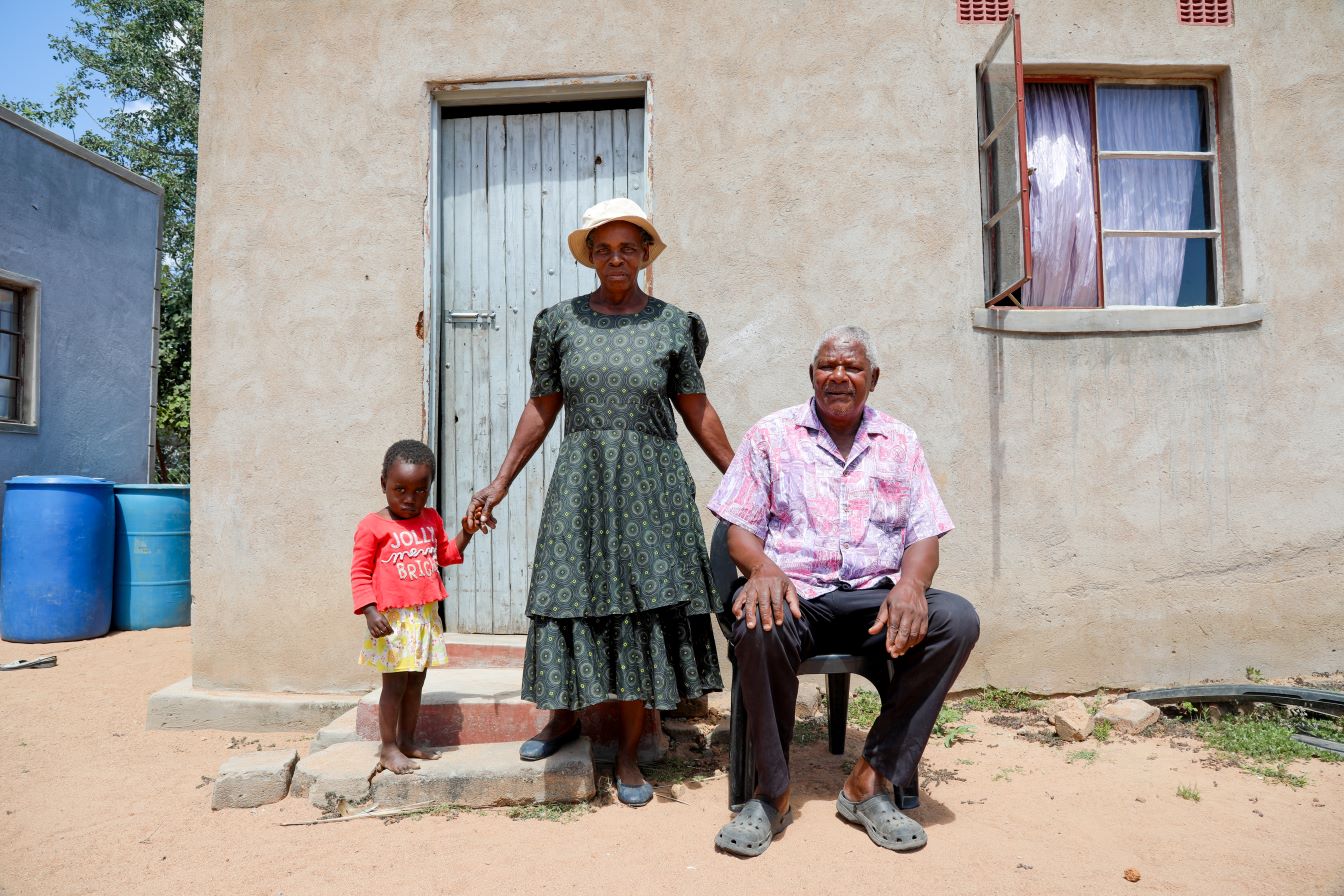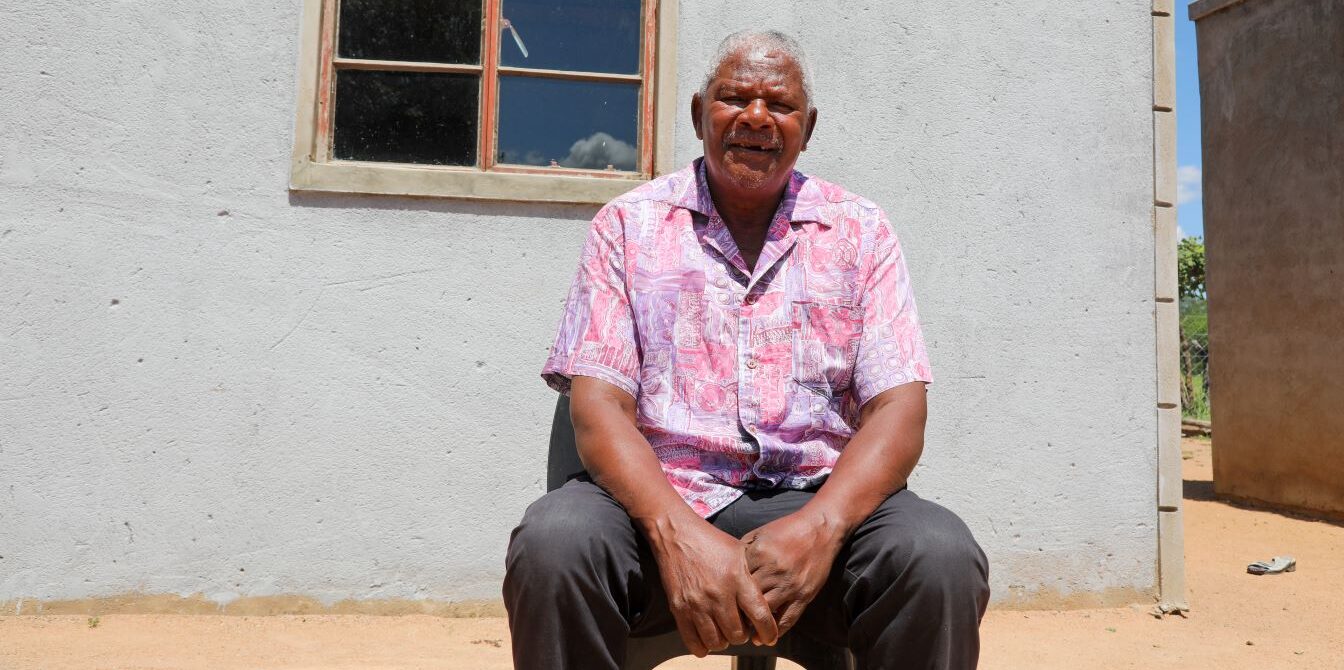
In Ward 8 of Gwanda, Zimbabwe, Royal Nare sits at the intersection of tradition and resilience. As the chief overseeing Wards 8, 9, and 12, his responsibilities stretch far beyond cultural leadership – he is a community advocate, a mediator, and often, a messenger to the state.
“When there’s something happening, the village head comes and tells me what is going on, what is needed from the government,” he explains. But too often, what is needed is not what is received.
His wards face deep, structural challenges. Water is scarce. Roads are broken. The mobile network barely works. “We’ve got no water here. Not for our cattle, not for irrigation,” he says. “If you visit the irrigation site, the dam is small and water just passes and goes.”
One project, however, offered a glimpse of what is possible when support is available and reliable. The “Greening Humanitarian Response Through Enhanced Solar Harvesting” project, which involved 33 local farmers in Retsweletsi, became a lifeline. It provided vegetables, income, and a tangible sense of purpose. “People were eating there. They are able to irrigate now,” Royal shares.
But like many community-led initiatives dependent on external funding, the project was not immune to disruption. After support was suspended due to a broader funding cut, following the USAID pause in 2025, the garden has gone quiet. Royal worries that the pause may turn into a permanent stop.
“If it stops, children are going to cry,” he says bluntly. “Because they get something from there. Even when the farmers sell, sometimes they get money for school fees. It would affect everyone.”
The ripple effects of these pauses are not abstract. They are felt in stomachs that go hungry, in children who drop out of school, and in parents who have to make impossible trade-offs between food and medicine. For communities like Royal’s, the uncertainty of development funding is a burden they must carry on top of all their others.
His message is clear: The cost of stopping halfway is too high. Development doesn’t thrive on interruptions. Hope, once kindled, should not be abandoned.