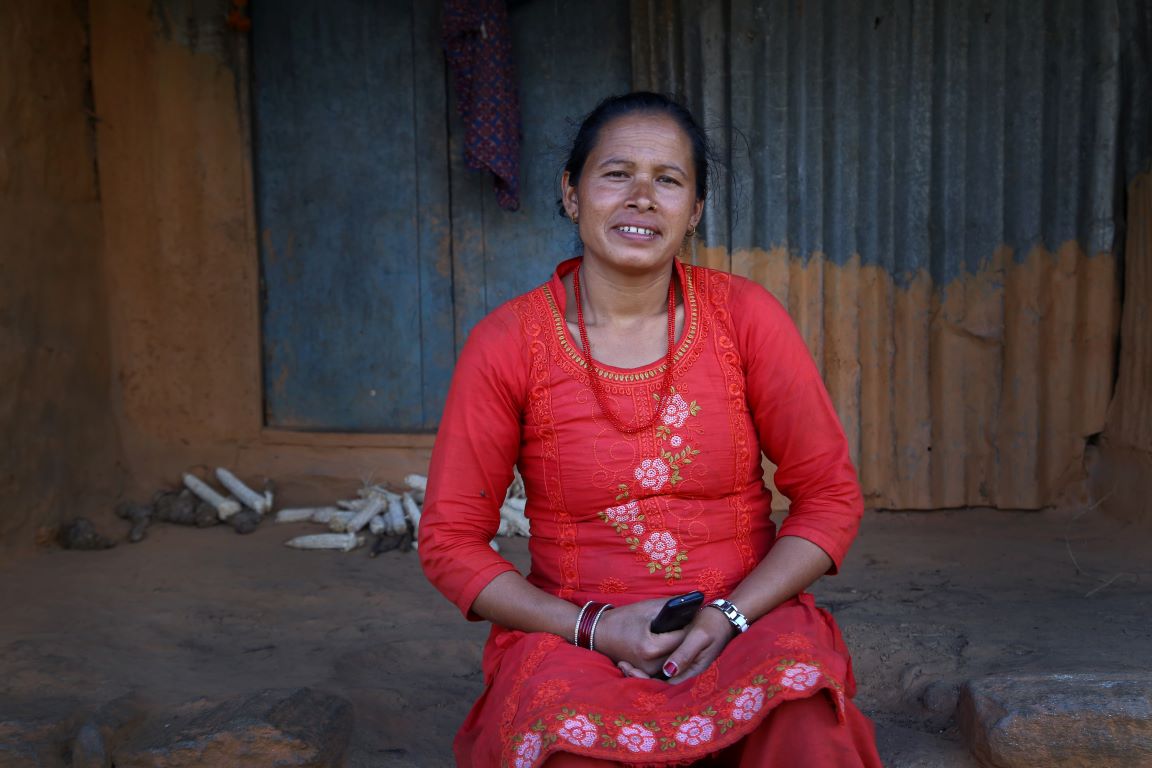
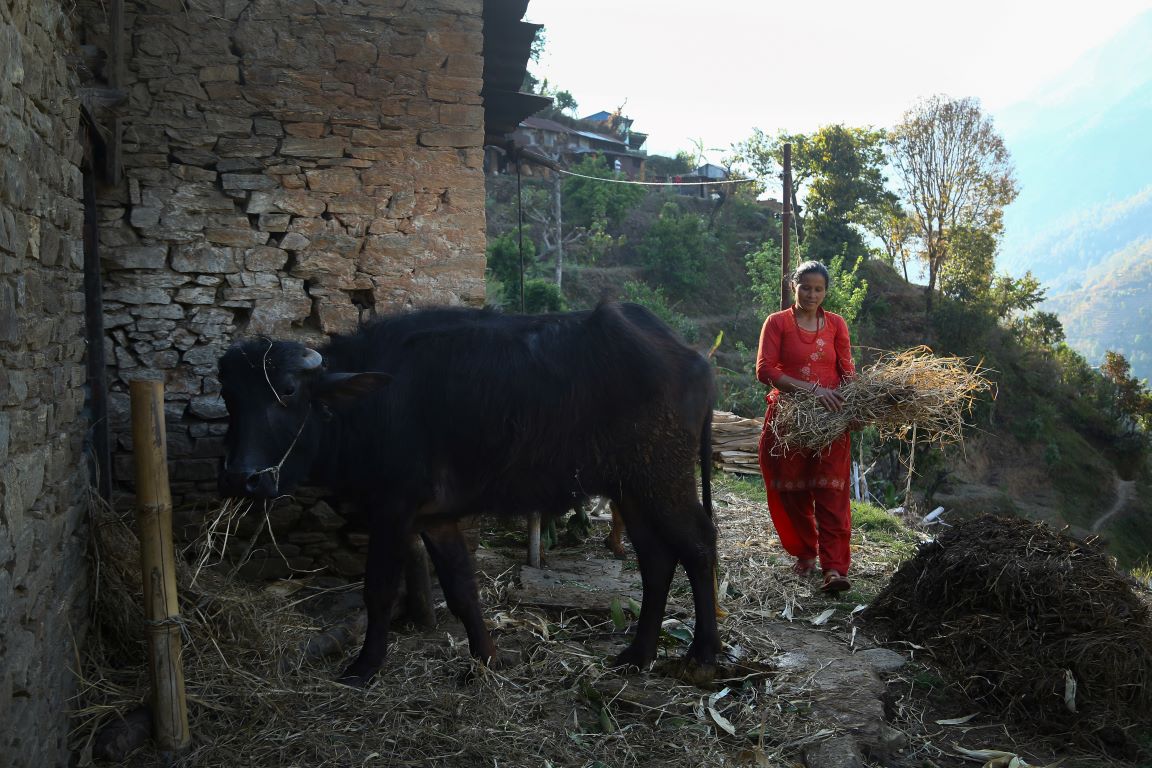
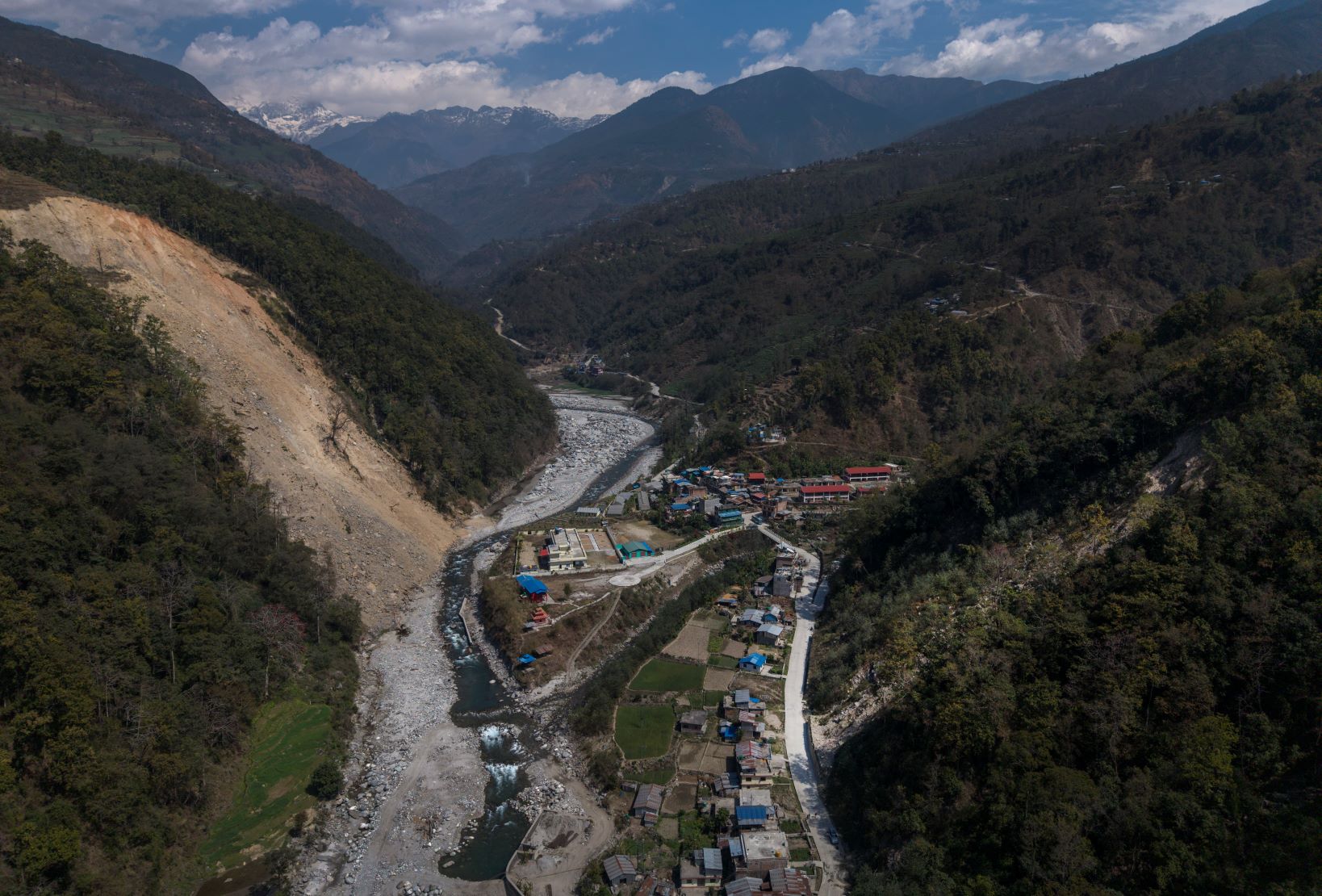
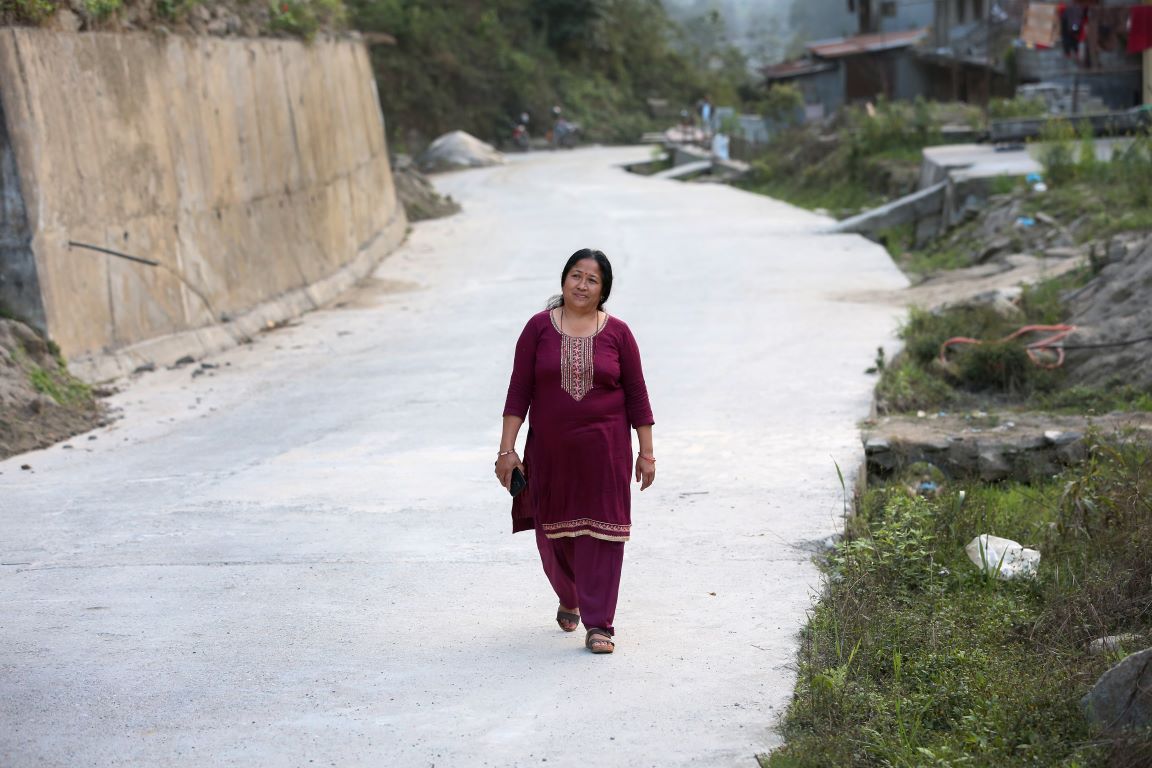
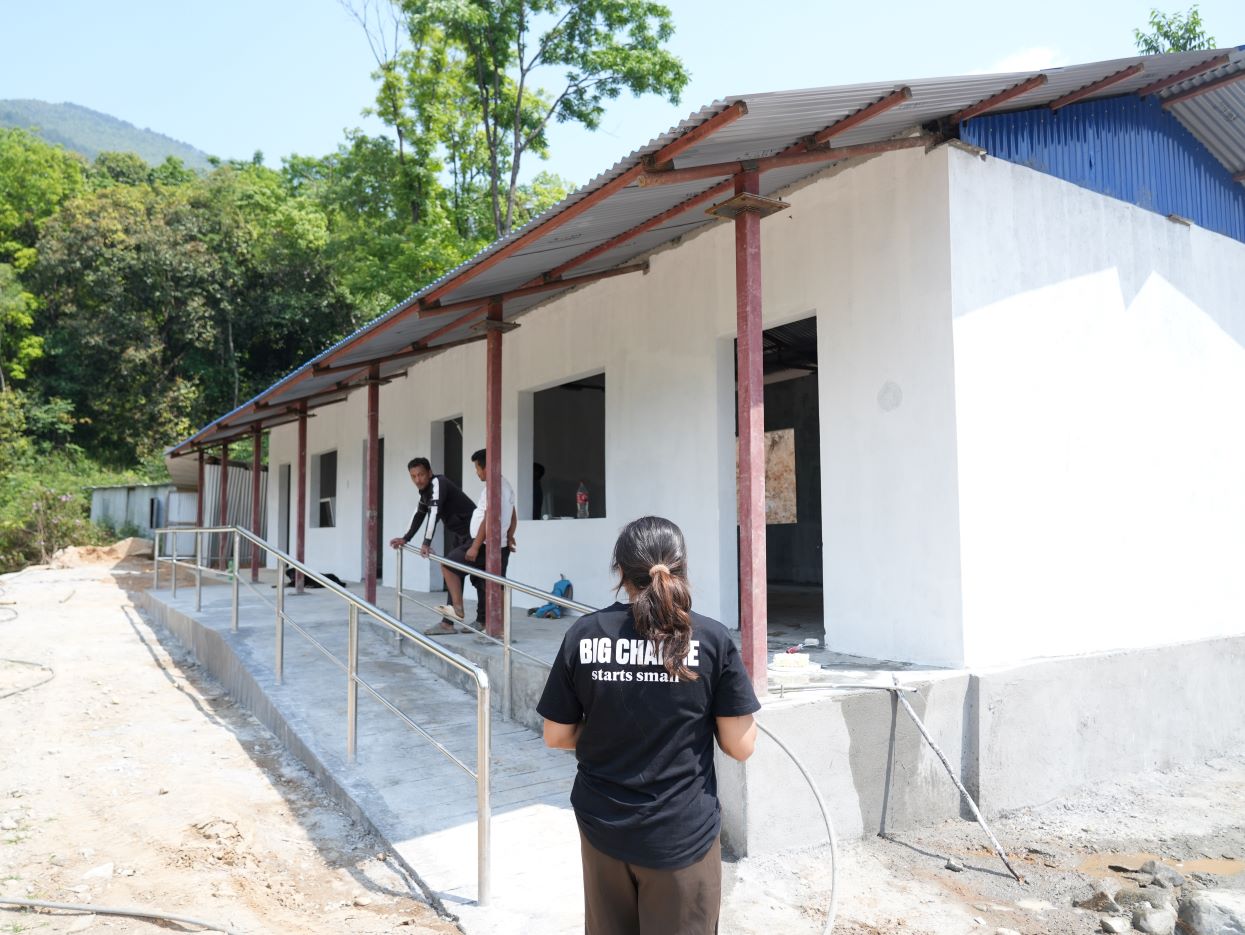
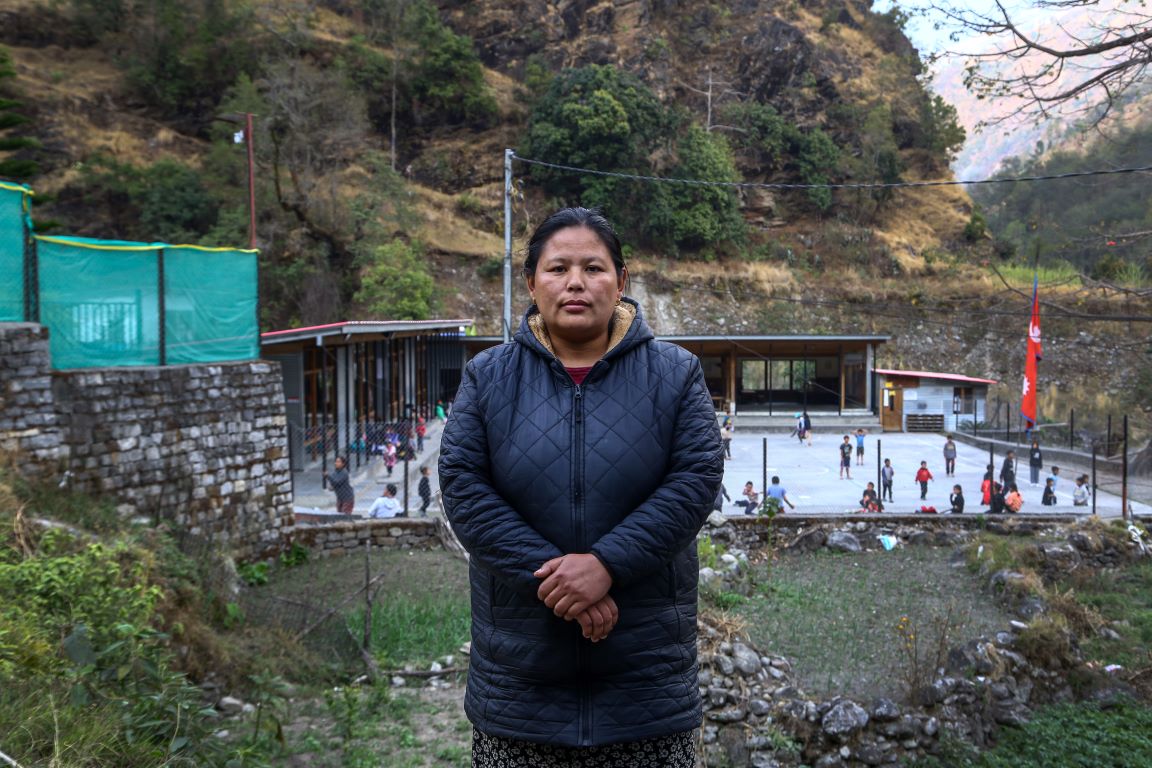
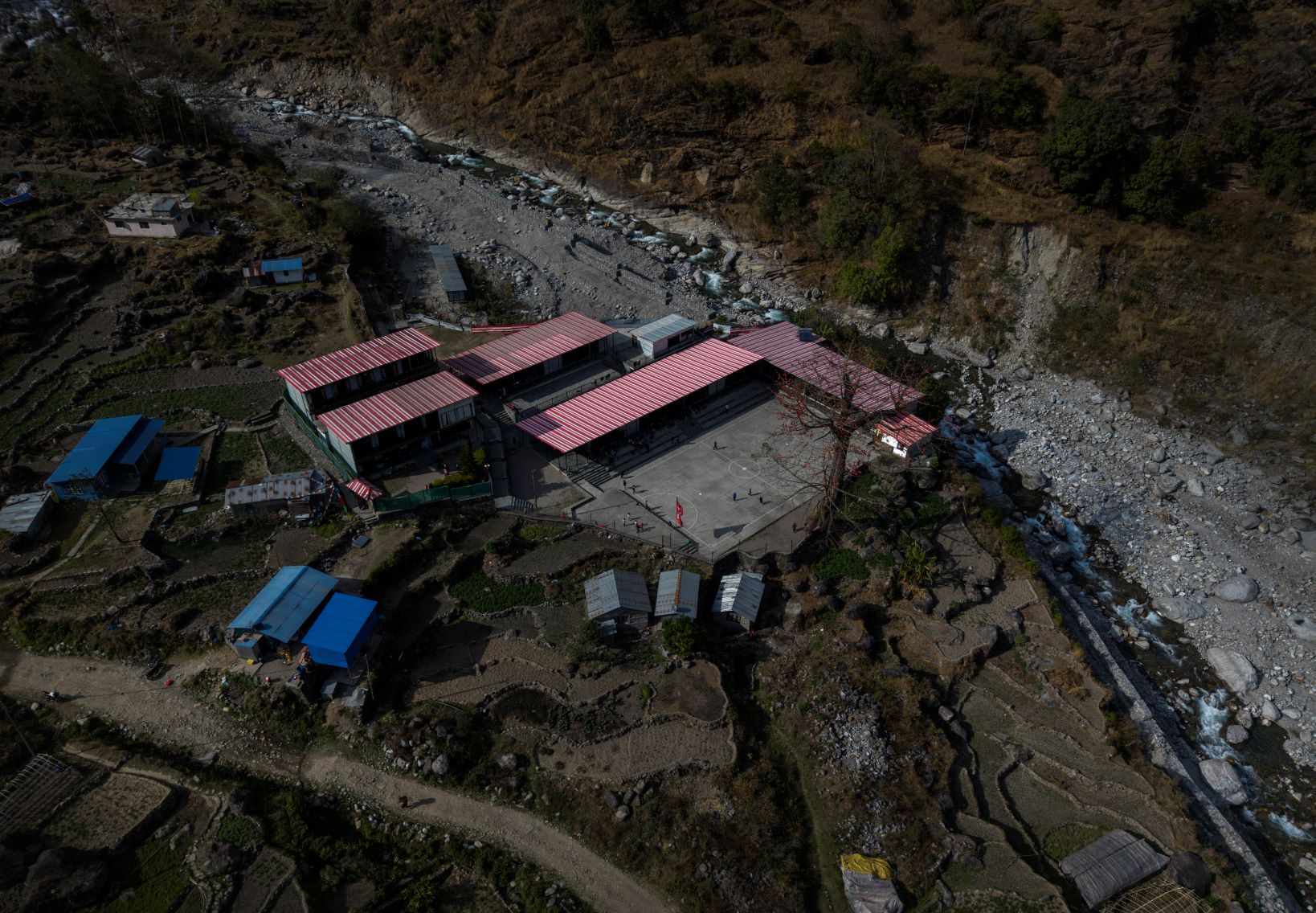
One of Rina’s biggest worries is the safety of the local school, which is located right at the bank of the Indrawati. Currently, she serves as a member of the school management committee and her daughter is a sixth-grade student there. In past floods, three school buildings have been washed away. Now, protecting the children is the top priority of the villagers. The school has 134 students from nearby villages, and 110 of them stay in the school hostel.
To keep the children safe, the whole community works together in case of emergency. Through experience, the villagers have learned about the safer places. When in a safe location, women manage the community’s needs. “Women plan and allocate who is going to live where. We also have to bring kids down again to feed them in the school canteen and then move them back to a safe location.” Rina shared.
As she speaks, it’s clear how deeply Rina cares for her village and people. She is not only thinking about today but also about the future of the children and the whole community. Her role may be quiet, but it is powerful.
Community Disaster Management Committees members including Saraswati, Nirmala, and Rina, recognise that their primary responsibility for preventing disasters, is to inform their communities and ensure the safety of those most vulnerable—especially the elderly, children, and women. Disasters often hit these groups the hardest; studies have found that women and children are 14 times more likely to die in disasters than men. Yet, despite being among the hardest hit, women often step into critical but frequently overlooked and undervalued leadership roles in times of crisis.
At Practical Action, we believe in recognising the strength, knowledge, and leadership that women bring to disaster resilience and in ensuring they have the resources and respect they need to lead. With our focus on gender transformation, we’re not just helping women survive disasters — we’re supporting them to lead resilience efforts in their communities and become powerful agents of change in disaster risk reduction.
These stories are part of the “Developing a Community Centric Early Warning Protocol for Landslide Early Warning System (EWS)” project”, led by Practical Action with support of Australian Embassy. This project has helped form Community Disaster Management Committees (CDMCs) and task forces in the communities in Helambu and Panchpokhari Thangpal Rural Municipalities in order to empower them through preparedness and timely assistance during emergencies.