Gravity ropeways
Depending solely on gravitational force – and using no external power – gravitational ropeways are simple and inexpensive to operate as well as environmentally friendly.
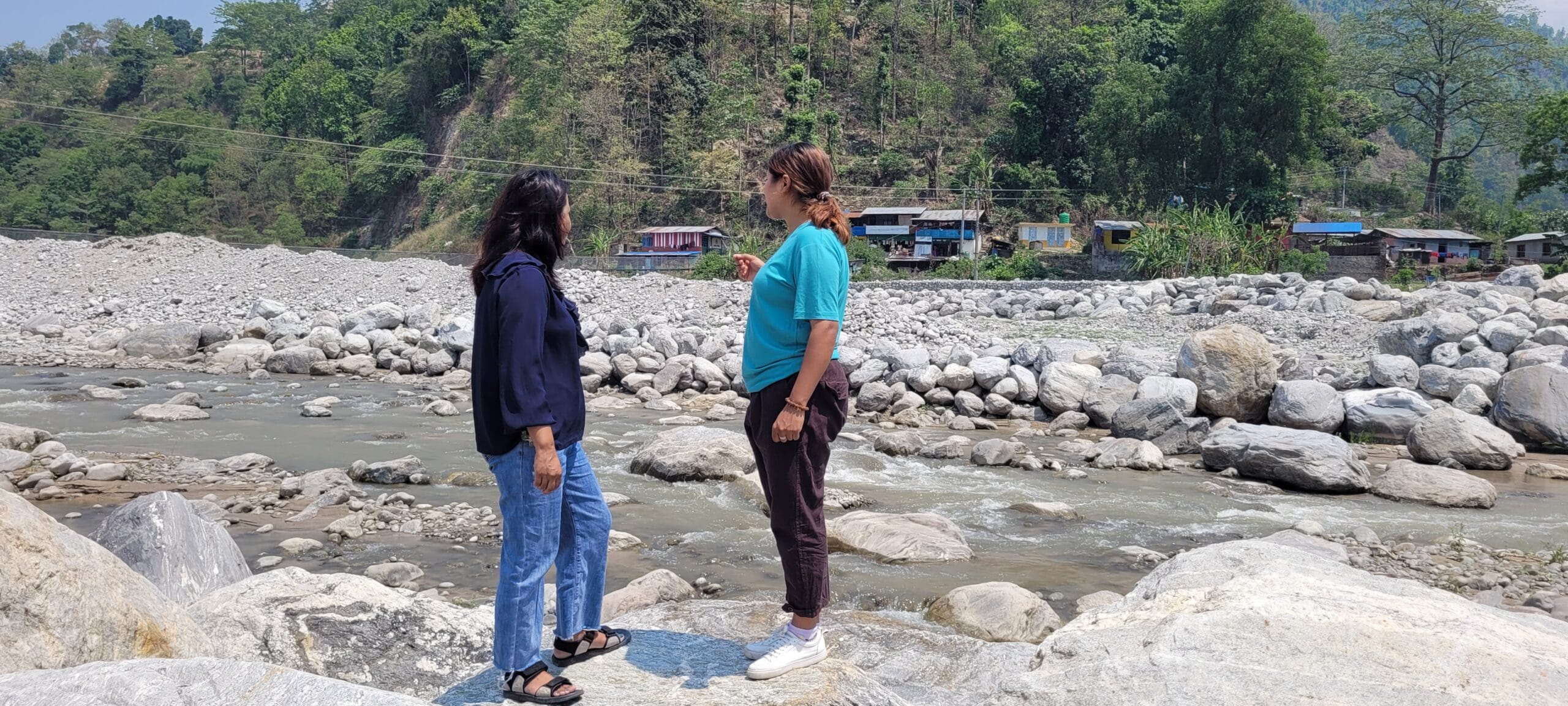
Life is difficult for families living in the remote mountainous areas of Nepal. Getting crops to market can be exhausting and dangerous – it is generally mules, women and children who carry these heavy loads on their backs, down treacherous, winding dirt tracks. When it rains, or there’s a landslide, it’s completely impossible.
Six communities in Nepal, together with Practical Action, have found a surprisingly simple answer that’s transforming their lives. It used to take two people over three hours to carry a 120kg load of apples 1.3 km down a steep mountain path – and that was just the first part of the gruelling journey to market. Now, with a gravity ropeway, the apples take less than five minutes to cover the same distance.
Read how the gravity ropeway has helped people in the village of Janagaon.
Video report: see a gravity ropeway in action
How it works
Gravitational ropeway use no external power, only gravity.
Two linked trolleys, on pulleys, run on separate 10mm diameter steel wires which are suspended from towers: as the full trolley comes down, pulled by the weight of its load, it pulls the empty one up, ready for the next load. The trolleys’ progress is controlled by another, 8mm wire, looped over a flywheel. A wooden drum brake, with bearing and bracket, governs their speed.

|
|
Practical Action has also helped communities in Nepal to develop powered aerial ropeways.
Your donation could help us to develop more innovative technologies like this, and transform the lives of poor communities around the world. Donate online or find out about other ways to help.