Food production
800 million people - one sixth of the developing world's population - suffer from hunger and the fear of starvation.
In a world where the richest fifth eat 45 per cent of all meat and fish, while
the poorest fifth consume just five per cent, and where four out of five malnourished
children live in countries with food surpluses, there are clear problems in
distribution. This means that any effort to improve agricultural productivity
must go hand-in-hand with measures that address inequality.
The challenge of delivering and sustaining food security for all is all about how we go about managing this fragile balance.
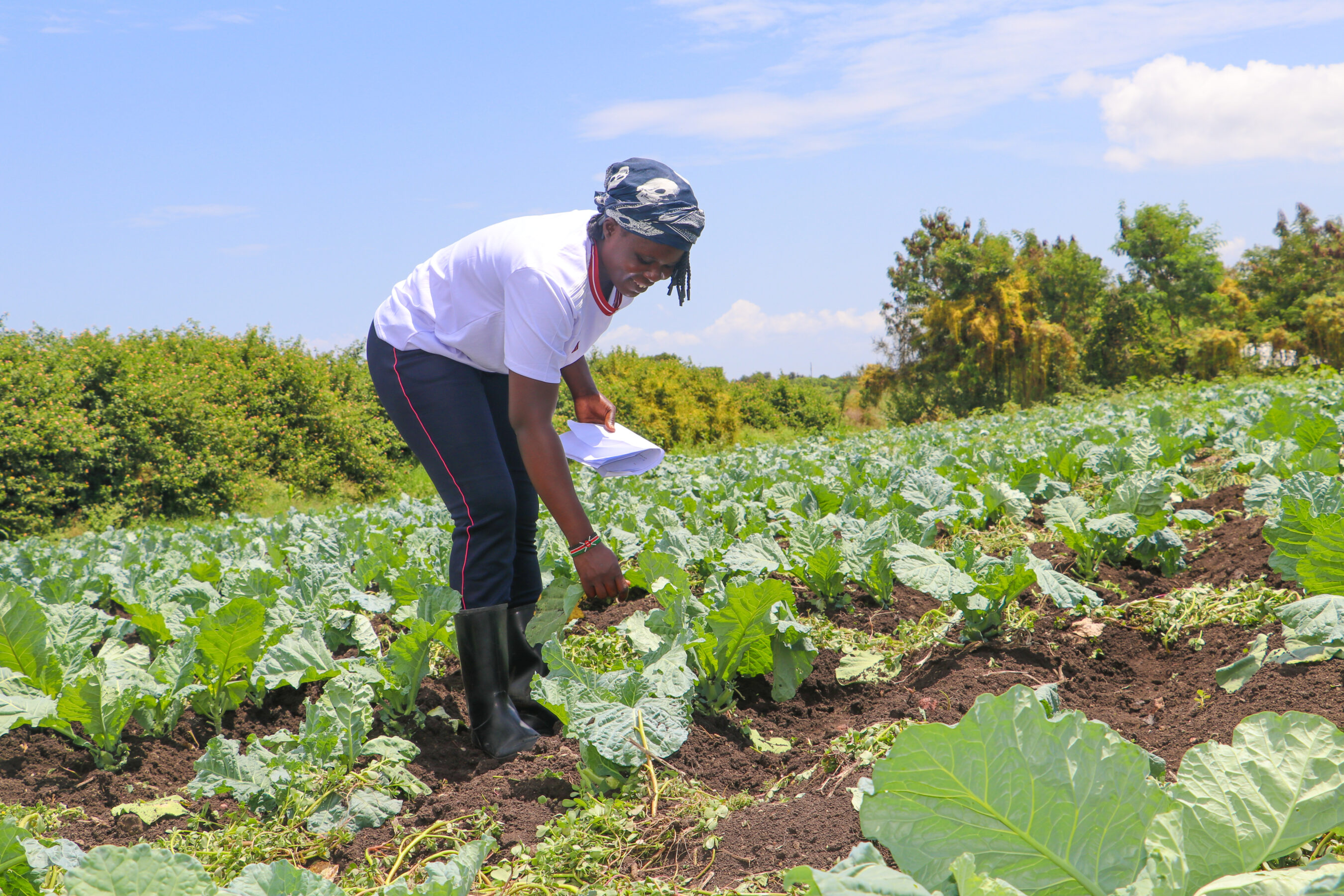
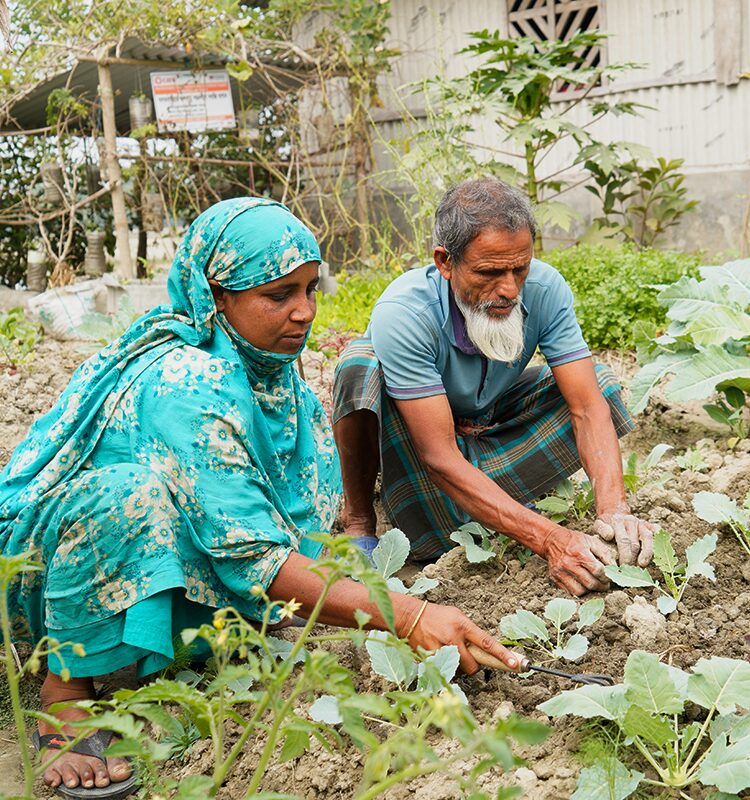
When we speak of eliminating hunger, of increasing agricultural productivity, and of balancing the equity of how people access food, we cannot forget that it is farmers who feed the world.
The success or failure of small scale farmers in developing countries in managing the natural and biological resources available to us will determine the diversity of foods we eat, support our nutritional needs, produce many of the goods we live by, and, crucially, determine whether ecosystems are maintained and whether biodiversity is protected and conserved.
In the light of increasing evidence of the impacts of environmental change, the role of farmers can help shift the balance back toward a revitalisation of the ecosystem: rebuilding eroded soils, reducing runoff and the threat of floods, protecting habitats and reducing the levels of carbon dioxide in the atmosphere.
Recent research by international institutes funded by the World Bank points to the dangers becoming apparent from the unsustainable use of natural resources through industrialised models of farming - see http://www.ifpri.cgiar.org/
Sustainable approaches to agriculture
Practical Action's experience in Food Production is that traditional crop and animal combinations can be adapted to increase productivity - when the biological, land and labour resources are efficiently used. This has enhanced not only yields and the food security of farmers, but also the agricultural diversity and environmental integrity of the production system.
These low-input, sustainable agriculture approaches are a win-win strategy - more stable levels of total production per unit area than high-input systems, economically favourable rates of return, a livelihood acceptable to small farmers and their families, and sustainable use of the natural resource base.
Practical Action's work with small scale farmers and pastoralists aims to help them increase their food production capacity, to achieve sustainable livelihoods in the context of a rapidly changing global food system.
With farmers in East Africa, Latin America, Southern Africa and elsewhere, Practical Action assists communities to develop and improve low-input sustainable agriculture.
With
pastoralists in East Africa, Practical Action assists in establishing sustainable, community
based systems to care for animal health, as well as to manage natural resources
and to reduce conflict over these scarce resources between competing groups.
In both cases the key 'technology' which is being developed is founded in the existing knowledge, skills and practices of small scale food producers and herders.
Farmers use the knowledge acquired over centuries of crop production and animal husbandry, adapting and developing the huge range of varieties and resources available in their specific local environments. Both farmers and pastoralists also draw upon indigenous community knowledge of animal care, often using herbal and other locally available remedies to treat illness.
The 'experts', the 'scientists' in this case are the food producers themselves.
Using appropriate technology
The technology options appropriate to rural food producers and herders include, for example:
- improved soil usage through drainage, terracing and intercropping of food crops so as not to exhaust the soil;
- conservation, management and development of 'agricultural biodiversity', to make use of the vast range of plant genetic resources for food and agriculture which farmers themselves have developed over centuries, such as the thousands of indigenous varieties of staple food crops which are adapted to particular local conditions;
- sustainable use of wild foods and medicinal plants;
- irrigation and water harvesting;
and many other techniques appropriate to their circumstances.
ITDGPractical Action does not impose technologies upon farming or herding communities but seeks to build on local knowledge, secure community partnership, and help the producers themselves to build their own capacity to achieve sustainable livelihoods.
The need for change
While
ITDGPractical Action's projects in Food Production are themselves an investigation and demonstration
of the potential of appropriate technologies to provide practical answers to
the world hunger crisis, the direct raising of production and incomes in some
particular communities does not suffice.
We also help small scale farmers and herders to build up their bargaining power, both in the market (where middlemen often take the largest share of value from crops and other products) and with the institutions and agencies which are supposed to meet their needs but are too often remote, top-down and insensitive to the real marginal livelihoods of the rural poor.
And, in a globalizing economy, solutions to the great challenges surrounding agricultural and environmental resources - and the livelihoods of those who manage and depend on them - must also be found at the international level.
This is why ITDGPractical Action advocates for policy change, with partners and with small scale food producers themselves, at global level, through for example:
- influencing the UN Food and Agriculture Organisation to move its emphasis from sheer food production to a rights-based approach to farmers' livelihoods;
- lobbying through the legally-binding Convention on Biological Diversity for more priority to be given to the conservation and sustainable use of agricultural biodiversity through farmer-centred approaches;
- campaigning for the successful negotiation of an International Undertaking to protect and conserve free access for all who need them to the plant genetic resources sued in food agriculture.
Expertise
Practical Action's expertise in food production includes:
-
Training farmers in agricultural techniques, such as terracing and wadi cultivation
-
Constructing dams and training farmers in rainwater conservation
-
Working with farmers to improve irrigation, including community construction projects to build reservoirs, canals, and gravity-fed irrigation systems
- Developing alternative techniques to cope with land that is regularly flooded, such as floating gardens, sandbar cropping and rice-fish culture
Further reading
See also our pages on Agricultural Biodiversity:
- Preserving the Web of Life: the need for action on agricultural biodiversity
- Sustaining Agricultural Biodiversity and the integrity and free flow of genetic resources for food for agriculture
- The Global Commons: ITDGPractical Action advocacy