'Small is beautiful': making decentralised energy a reality
Report on the side event at the Commission for Sustainable Development, 8 May 2006, New York
Over 85 people attended the side event 'Small is Beautiful', which examined the role that decentralised energy services can play in getting electricity to isolated areas in developing countries, and how to make such services more viable and sustainable.
![]() |
The meeting was opened by Chairperson Sarah Adams (Programme Co-ordinator, GVEP), who welcomed the speakers and introduced the issue of decentralised energy as an energy option for the rural poor.
The Hon. Syda Bbumba MP, Minister for Energy and Mineral Development in Uganda, described the energy picture in Africa. Despite the continent having vast renewable energy resources, including hydro-power resources which are virtually untapped (only 5% has been developed), access to electricity on the continent now stands at about 8% having dropped from 12% in the last 10 years.
She detailed the current issues and constraints in Africa's power sector, including the "sorry state" of transmission networks, and called for a different approach in undertaking rural electrification in Africa. In addition to grid extension, governments and the international community should consider small and medium-scale decentralised power generation and distribution at the village level. She went on to describe the situation in Uganda, where the Energy for Rural Transformation Programme (ERT), which was developed to accelerate the rural electrification coverage from 1-2% in 2001 to 10% by 2010, includes components of renewable energy resources to supply decentralized grid systems. Rural electricity access in Uganda has increased from 1% which was achieved in 50 years to 5% in five years.
Rene Karottki from the EU Energy Initiative spoke about the growing global consensus on the important role of energy in poverty alleviation and economic growth. He said that the EU Energy Initiative (EUEI), launched at WSSD to contribute to the achievement of the MDGs through the provision of energy for the poor, operates with a wide menu of technical options which should be adapted to the specific conditions in each country. The EUEI is implemented in dialogue with and through ownership by participating developing countries, and the dialogue has confirmed a role for decentralized forms of energy. He said that a range of decentralized energy technologies are mature and can be applied, both electrical and non-electrical (for example thermal energy), but that standards are needed to ensure quality and reliability.
Wendy Aulakh, Managing Director of Winrock International's Clean Energy Group, described a successful decentralised energy programme in Nepal - the Nepal Biogas Support Programme. The programme uses simple technology to increase access to improved energy options for rural households, processing cow dung into biogas. The benefits of biogas are numerous including: offsetting the demand for firewood that in turn conserves forest resources; promoting effective manure management; reducing indoor smoke-related respiratory diseases, and reducing CO2 emissions.
Wendy described how the private sector was a key part of programme - biogas construction companies were responsible for marketing and installing biogas plants, providing maintenance and after sales service guarantees for at least three years. Financial support mechanisms through micro-credit facilities were also crucial to the success of the programme. It is a positive example of government, donors and the private sector working together, and the program is now expanding in Nepal, Laos and Cambodia and new programmes are being replicated in Bangladesh and Vietnam.
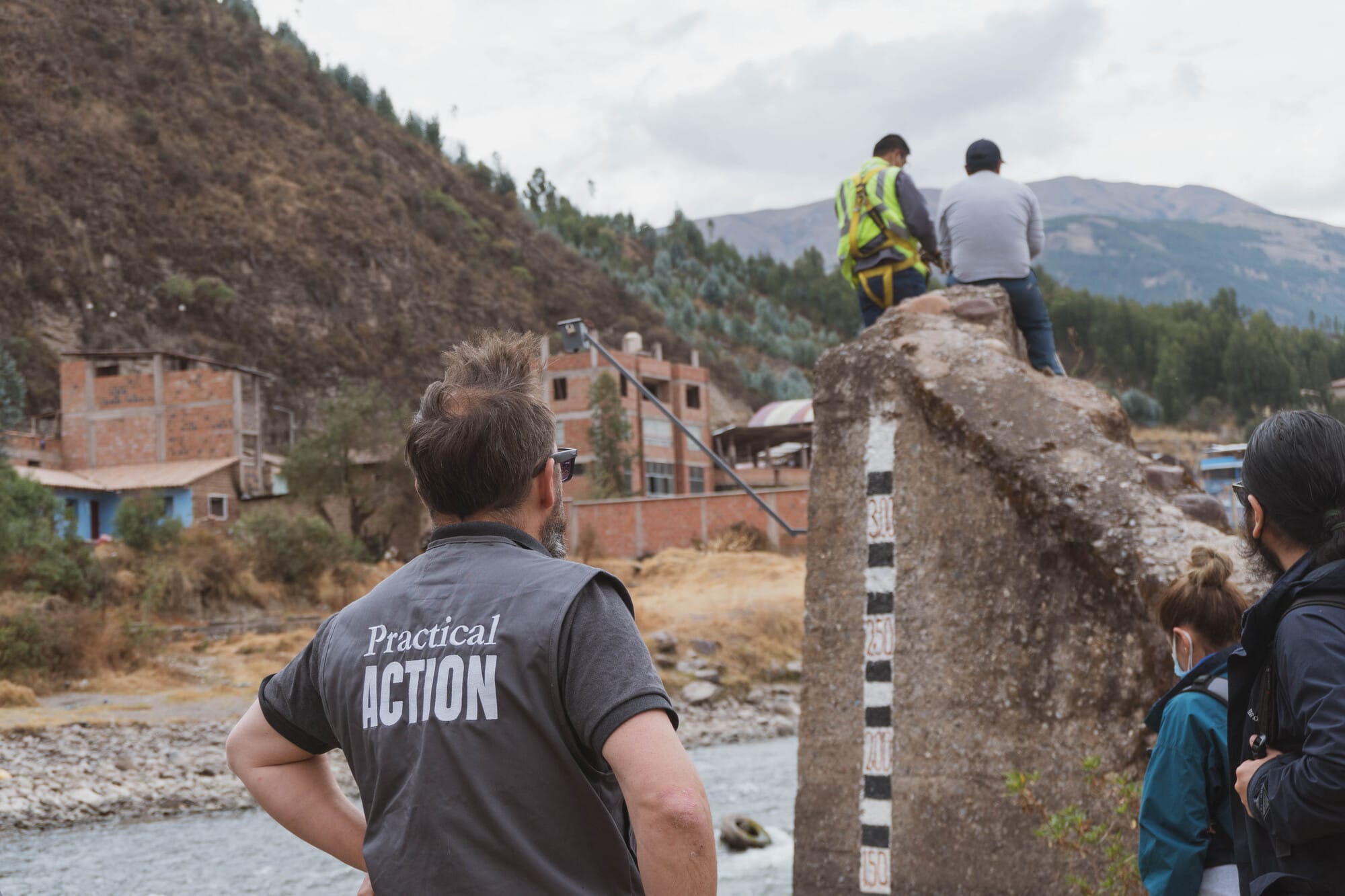
The final speaker was Teo Sanchez, Energy Technology and Policy Adviser with Practical Action. Teo began by highlighting the enormous challenges of providing access to modern energy services for the rural poor. A lack of financial resources is not the only constraint; there are numerous other barriers including a lack of technology, a lack of financial mechanisms, and in particular a lack of capacity in the local communities. He went on detail a case study in Cochan, Peru, in which Practical Action developed a new management model for a micro-hydro scheme, based on private enterprise management and a tariff scheme. This management model is now being adopted by the World Bank in their water programme.
Decentralised energy schemes: the option for most rural poor

The presentations were followed by a number of questions and comments from the audience. These included:
-
A comparison between the economic costs of macro and micro-hydro projects and the need to make a better financial case for decentralised energy;
-
The links between increasing access to energy services and the provision of micro-finance;
-
Micro-hydro project's costs for the local community;
-
How do people access new technologies if they cannot access subsidies;
-
The role of the State in supporting the fledgling private sector in Africa, providing incentives to work in rural areas which are less financially viable.
For more information about this event, please contact Teo Sanchez at teodoro.sanchez@practicalaction.org.uk.
| Household energy, indoor air pollution and health at the UN Commission for Sustainable Development New York, 11 May 2006 On 11 May, WHO, GTZ, the Partnership for Clean Indoor Air, Practical Action and the US Environmental Protection Agency organised a joint side event to make the case for the urgent need to improve access to household energy among the poor by drawing attention to the severe risks of using biomass and coal for cooking and heating in developing countries. |
Speakers
-
The Hon. Syda N.M Bbumba MP, Minister of Energy and Mineral Development, Uganda
- Sarah Adams, Programme Co-ordinator, GVEP
- Wendy Aulakh, Winrock International
- Teo Sanchez, Practical Action
- René Karottki, EC
Partner organisations
-
Practical Action (the working name of the Intermediate Technology Development Group), a UK-based international NGO, providing technical assistance, training and technology for poverty alleviation of marginalized groups in developing countries.
-
OLADE (The Latin American Organization for Energy Development), an Intergovernmental Energy Organisation for Latin America and Caribbean countries, in charge of policy and development of energy in the region.
-
GVEP (The Global Village Energy Partnership), a Type II partnership, made up of developing and industrialised country governments, public and private organisations, multilateral institutions and others in an effort to ensure access to modern energy services by the poor.
-
Winrock International: a non-profit organization that works with people in the United States and around the world to increase economic opportunity, sustain natural resources, and protect the environment.