Make the Link
climate change and poverty
The Millennium Development Goals will be an unachievable aspiration if climate change is not tackled.
World leaders need to make the link between climate change and poverty and:
- take strong action on climate change by immediately adopting stringent policies to reduce emissions so that the rise in global temperature is kept well below 2°C.
- ensure that significant funds over and above committed development assistance are put in place in order to provide sufficient resources for adaptation for the poorest and most vulnerable communities in the world.
Make the Link
Climate change and the Millennium Development Goals
“I am here today to tell you now that my people are already suffering from the terrible effects of changing climate, making our survival even more difficult. Without urgent action by each and every one of us around the world, I fear for our future.” -- Sharon Looremeta, Practical Action, Kenya (speaking at LiveEarth)
The world was introduced to a bold and exciting vision in 2000. The United Nations unveiled plans which meant within 15 years we would see a world where poverty was reduced by half; a world with less disease where people would have a greater chance of survival; all children would receive primary education and women would be given more opportunities and we would all live in a more sustainable environment. The eight goal action plan – known as the Millennium Development Goals (MDGs) – was adopted by more than 180 countries worldwide. However we now stand at the halfway point and the devastating reality for millions across the world is we stand little chance of meeting these goals. To make the situation worse, the world is facing a new enemy, climate change, which is seriously undermining progress.
Without urgent action to tackle global warming, millions will continue to live in a world where poverty and illness remain a stark reality.
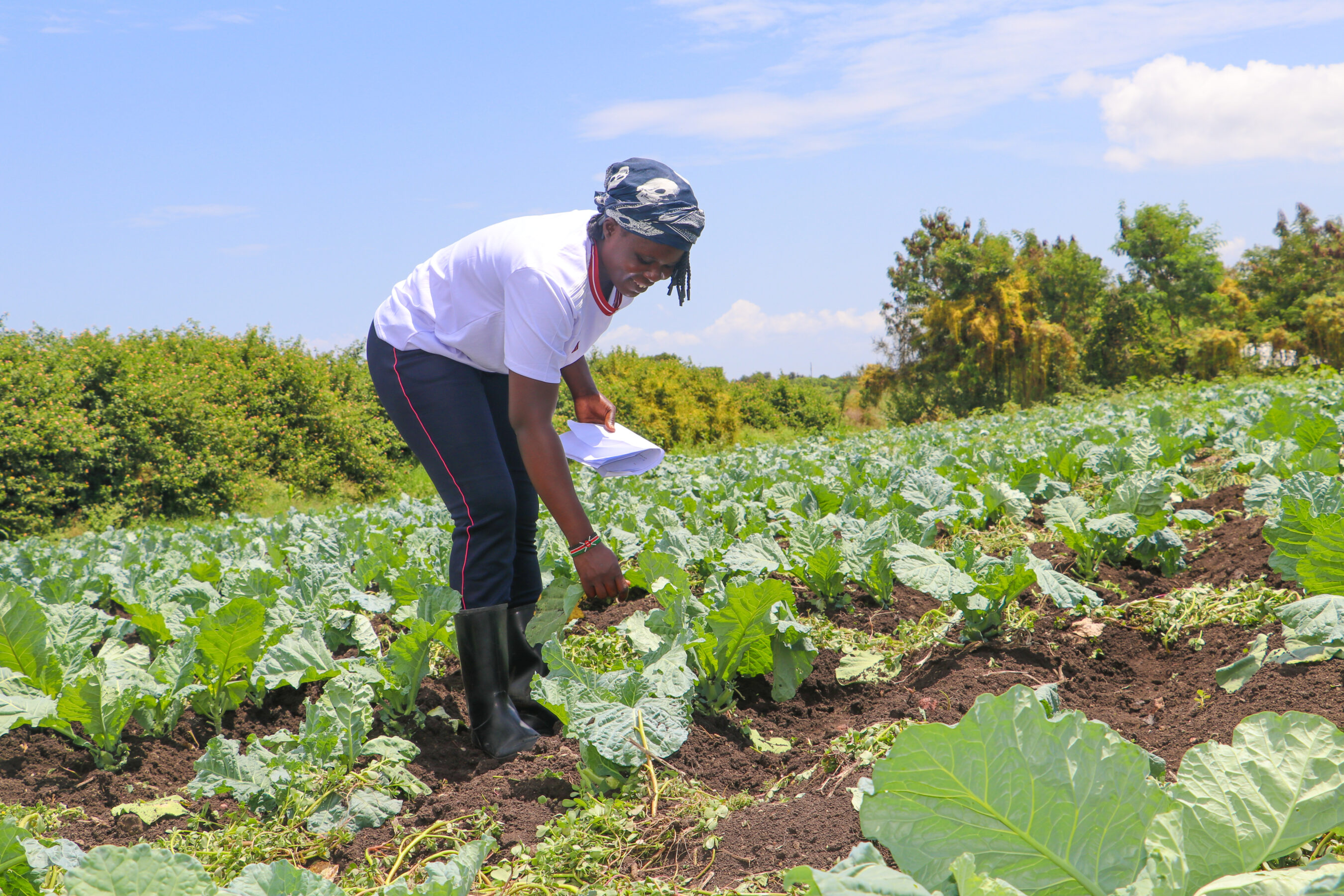
For more than 40 years, Practical Action has been working directly with poor communities around the world and our experience shows that even slight alterations in weather patterns can impact on people’s lives. For example, rains in Kenya arriving as little as two weeks late can lead to the failure of a farmer’s crop, having a direct effect on the family’s livelihood and access to food for the rest of the season. As floods, droughts and food crises occur more often, communities find they have less time to recover. These poor communities, often living on the edge of disaster, need to be able to access new technologies and simple methods to adapt to the changing climate, to fight their way out of poverty. Wealthy nations, being signatories to the United Nations Framework Convention on Climate Change (UNFCCC), have a moral and legal obligation to help those already suffering who have contributed least to the problem. While there is development aid available to developing countries, this should not be diverted to tackle climate change. There must be separate funding available to allow vulnerable communities to adapt.
Every country which made a commitment and signed up to the MDGs must now face up to the fact that we are on course to fail – on course to fail those people who are living in dire poverty. Indeed, we are now facing a situation where they will not be met for decades, if ever. Climate change is creating many more obstacles. The recent report by Intergovernmental Panel on Climate Change (IPCC) indicated that global greenhouse gas emissions must be reduced by at least 80% over the next four decades to give us a chance of keeping temperature increases to less than 2ºC. If not, the world will face irreparable damage to its natural resources.
Case study 1
Building channels and establishing early warning systems in the face of floods in Nepal
“Western countries can control their greenhouse gas emissions but to mitigate the effects will take a long time. Until then, they can help countries like Nepal to adapt. Unless the country learns to adapt, then people will suffer greatly.”
Gehendra Gurung, Practical Action, Nepal
“During the last flooding, my family survived by sheltering in the tree top for three days. Our animals and crops were lost. We only had flood water to drink, and I had to stay awake to stop the children sleeping and falling into the water. What will we do if the next flood is more severe?”
Sabitri Mallah, desperate mother in Nepal
Floods are a regular occurrence in Nepal – they kill people and destroy crops. The villages become submerged after a few hours of monsoon rain. Terrified families are forced to cling to rickety roofs as screaming children are swept away by rushing flood waters. Practical Action helps communities to build dykes and early warning systems which save lives. These networks of sirens, radios, bridges, shelters and boats enable local people to warn their families of impending danger – and get them to safety before disaster strikes. With an early warning system like this, local people can be in control of their own lives, instead of being at the mercy of the elements. Besides this, these warning systems rely on simple, effective technology. Sirens with the range of several kilometres are powered by hand while simple FM radios require rudimentary power. These may be basic machines but they can provide enough warning to save lives in an emergency.
Millennium Development Goals: the challenge ahead
There is widespread acknowledgement that these goals are failing, despite the fact that the world has been trying to address these goals for more than eight years. This is a view that Practical Action strongly believes. Every year, more than 11 million children die mostly from preventable diseases such as diarrhoea, cholera and malaria. Half of the developing world still lacks access to basic sanitation and most of sub-Saharan Africa is not on track to achieve any of the Millennium Development Goals. For example, the proportion of people living there on $1 a day has only declined from 45.9% to 41.1% since 1999 – a small decrease but far from the vision outlined of extreme poverty being halved by 2015.
Gordon Brown, Prime Minister, United Kingdom
Eradicate extreme hunger and poverty
- Reduce by half the proportion of people living on less than a dollar a day.
- Achieve productive employment for all.
- Reduce by half people suffering from hunger.
Achieve universal primary education
- Ensure primary schooling.
Promote gender equality and empower women
- Eliminate gender disparity in primary and secondary education.
Reduce child mortality
- Reduce the mortality rate among children under five.
Improve maternal health
- Reduce the maternal mortality ratio.
- Universal access to reproductive health.
Combat HIV/AIDS, malaria and other diseases
- Halt and begin to reverse the spread of HIV/AIDS.
- Universal access to HIV/AIDS treatment.
- Halt and begin to reverse malaria and other major diseases.
Ensure environmental stability
- Integrate sustainable development into country policies.
- Reduce biodiversity loss.
- Improve sustainable access to safe drinking water and basic sanitation.
- Significant improvements for slum dwellers.
Develop a global partnership for development
MDGs: ambition made even harder by climate change
Poverty
Poverty and hunger is likely to increase as our climate changes, making day-to-day living even more of a struggle for billions across the world. Many people in developing countries rely on agriculture for their livelihood, and increasingly erratic weather patterns mean that crops will fail. The result is that farmers and their families do not have a sustainable food supply or livelihood as they often rely exclusively on their own crops. Poor people also live in areas more prone to flooding, cyclones and droughts, leaving them exposed to environmental vulnerabilities as they have little capacity or funds to cope. With climate change, poor people will become even poorer, meaning we are likely to see the number of people living under $1 a day increase – the exact opposite of the vision set out by the MDGs.
Education
As crops fail and water becomes more scarce, education will be one of the first casualties. Unsurprisingly it becomes a low priority following the loss of a home or the need to migrate following a flood, storm or drought. Children are more likely to suffer from malnutrition as there is less food to eat. In addition, children may have to spend more time on household chores such as helping collect water, which shockingly can take up to three days in a week.
Gender
For centuries, women have had the responsibility for fetching water, firewood and often food in developing countries, meaning they bear disproportionate hardship when provision of these basic necessities is scarce. Women make up two thirds of the world's 1.3 billion people living in poverty and account for 75% of the world's illiterate adults. This is often because girls are removed from school to help with household chores, communities are forced to move and educational opportunities seem less important. Access to resources and information is essential if women are to overcome poverty and the challenges posed by climate change. A society where women are more equal stands a much greater chance of achieving the MDGs by 2015.
Health
Easily preventable diseases such as diarrhoea kill around 11 million children a year. AIDS, malaria & tuberculosis together kill millions, yet many of these lives could be saved by scaling up existing programmes which promote simple, low-cost solutions. Progress will be severely threatened by climate change as people become more vulnerable due to the spread of disease. Floods and drought will increase outbreaks of diarrhoea and cholera, associated with dirty water and warmer temperatures.
Water resources
Access to clean water will be threatened as our climate changes. The lack of access to safe drinking water and adequate sanitation is a major cause of ill health and lifethreatening disease in developing countries. Half the people in developing countries do not have access to toilets or basic sanitation – in Africa the number has actually increased from 335 million in 1990 to 440 million in 2004.
It is not a matter of aid, but of justice
At present the funds available to assist poor people to adapt to climate change are too low – almost non existent. It has been estimated that around $50 billion each year will be needed. Yet international climate change agreements have not suggested the introduction of compulsory adaptation funding. Existing UN funds are simply not sufficient to cover this enormous task.
The Strategic Priority on Adaptation, the Least Developed Countries Fund and the Special Climate Change Fund altogether only amount to $232 million, a mere drop in the ocean. In addition, the Adaptation Fund will be created through a 2% levy on carbon credits generated under the Clean Development Mechanism, but this will not be active until at least 2010.
Practical Action believes bottom-up, community-based adaptation projects must be put in place urgently. There should be special funds to provide adequate and sustainable resources for adaptation, which should be over and above the committed development aid, that is 0.7% of the Gross Domestic Product of developed countries. These funds should be targeted to ensure the most vulnerable communities are served first and foremost.
Practical Action would support the ‘Adaptation Financing Index’ developed by Oxfam to establish who should pay based on responsibility, capability and equity – that is 75% by the EU and US. Poor people have a right to adapt – it is not a matter of aid but of justice.
Case study 2
Fish farming in Bangladesh
Assisting already vulnerable people to find additional food sources is going to be an important part of the adaptation process to climate change. In Bangladesh, Practical Action has developed a simple technique to breed fish in pools and ditches.
In Tambulkana village, Faridpur, ponds and ditches, channels and pools make land scarce, and farming is fraught with problems. Using a simple technique of building fish cages with bamboo (a ‘hapa’), all that is needed is to feed the fish with food and waste. In just a few months the fish grow to full size. These fish then reproduce. So what was previously a difficult environment with excess water has now been turned into a resource – a source of food, and even an income. Malika’s son used to be weak and pallid but today he is strong and healthy thanks to the fish she is "growing". With Practical Action’s help, she’s found a way to protect her children from malnutrition and improve life for her whole family.
Case study 3
Solar lanterns in Kenya
Energy is a basic requirement for human development, yet over 70% of people living in rural East Africa have no access to grid electricity or any other form of modern commercial energy. Practical Action has introduced solar lanterns which have transformed the lives of local residents. Margaret Warrumu is 40 years old. She is a small-scale farmer in Kenya with one plot of land around her house. She has a large family of seven children but has managed to make considerable savings by using a solar lantern instead of kerosene.
“It helped me because I used to buy kerosene more frequently than now, so my costs have gone down. Unless I use my small lamp for the kitchen, I don't have any need for kerosene any more. In a month we would spend 120 Ksh on around five litres of kerosene. Now I spend only about 40 Ksh per month.”
Mitigation: urgent cuts in emissions needed
Greenhouse gas emissions continue to rise, despite promises by industrialised countries to make cuts. Millions of dollars are paid in fossil fuel subsidies every year. Industrialised countries are responsible for most of these emissions and, based upon principles of justice, it should be incumbent on them to make the larger cuts. We strongly believe those who have created the mess must now help to clear it up.
EU leaders in 2007 endorsed proposals to cut CO2 emissions by at least 20% by 2020 (30% if global targets can be agreed on) and to set a binding 20% target for the use of renewable energy sources. The UK Government has also introduced a Climate Change Bill which currently includes the longer term target of a 60% reduction by 2050 and excludes the emissions from aviation and shipping. The government has announced that these will undergo a review process. It is essential the bill is strong enough if it is to achieve any meaningful outcome for the world’s poor.
However, these cuts are simply not enough to make a difference. These targets, if adopted by other industrialised countries, are not strong enough to prevent dangerous climate change. The time for half-hearted measures has passed. We now need to see stringent mitigation policies and action from countries with historically high emissions. Without a commitment for global warming to be kept within a 2°C temperature rise and for global emissions to come down by at least 80% over the next four decades, not only will we fail to meet the MDGs but we will see those who have contributed least continue to suffer the most.
We would like to see the UK government taking a lead on the international stage and implementing strict policies to ensure that the UK reduces its own emissions by 80% by 2050.
Practical Action’s manifesto to tackle climate change for the world’s poor
Practical Action believes that climate change is seriously undermining progress on the MDGs. To put it in simple terms, climate change is killing the developing world. For the world’s poor, global warming is not merely a matter of academic debate – it is a matter of life and death. However, positive action taken now could transform their future. Every government and individual around the world has a role to play – climate change and poverty go hand in hand. If we take action now to tackle these issues we can make a difference to the world’s most vulnerable communities, today and for generations to come.
We know we must see an integrated approach if we are to tackle climate change and reduce poverty.
The international community needs to act strongly and act now. By transforming this into a reality we can take the first step to tackle the moral injustice of climate change.
Urgent cuts in emissions
People in developing countries will continue to suffer from the adverse impacts of climate change if urgent cuts in emissions are not achieved. Recurring and severe disasters such as floods and droughts will result in more malnutrition, more hunger, more poverty and many more deaths; meaning the MDGs will become an almost impossible task for the world. This is unacceptable in the 21st century – as measures to tackle climate change canbe put into place. The technology and know-how exists – it is political will that is lacking.
Developed countries which have continued to pump out CO2 must bear the primary responsibility of reducing emissions by at least 80% by 2050. Without this commitment, the temperature rise will exceed 2°C and the consequences will be devastating for millions across the world, who have done little to contribute to the problem.
Additional resources for adaptation
The impact of climate change can be minimised by assisting poor people to adapt. Practical Action’s experience shows that communitybased projects using inexpensive, appropriate technologies such as simple bamboo baskets to breed fish in ponds as a supplementary food source, or building dykes to avoid floods are very effective in saving lives. But these projects need to be massively scaled up in order to help millions of poor people to escape the vicious cycle of poverty. A significant amount of funding is required in order to deliver this.
Adaptation for poor and vulnerable communities must be at the heart of any international climate change negotiations. Developed countries must bear the major responsibility for generating funds for adaptation. These funds should be additional to development aid already committed. In other words, providing resources for adaptation should not be viewed as aid but as a matter of justice – compensation for the massive injustice of climate change.


RSS newsfeed